Buckle up…its Blueberry picking time

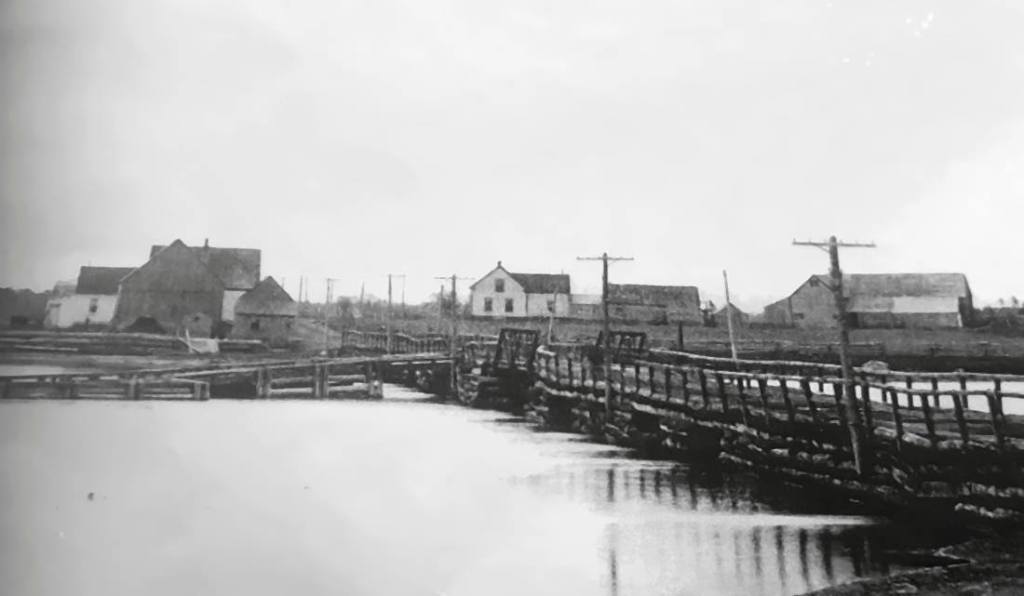
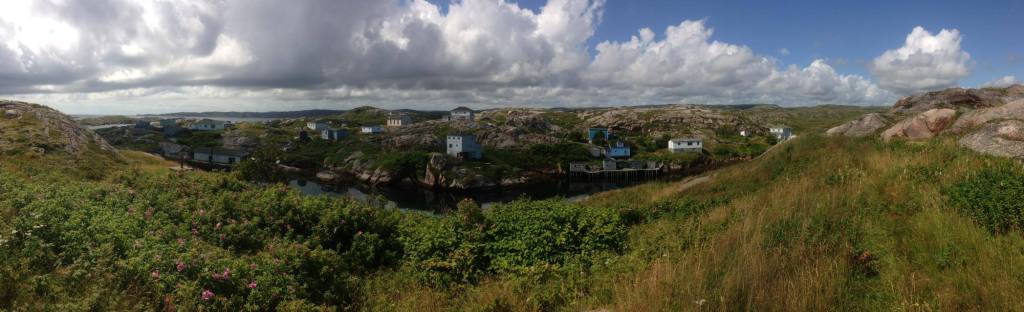
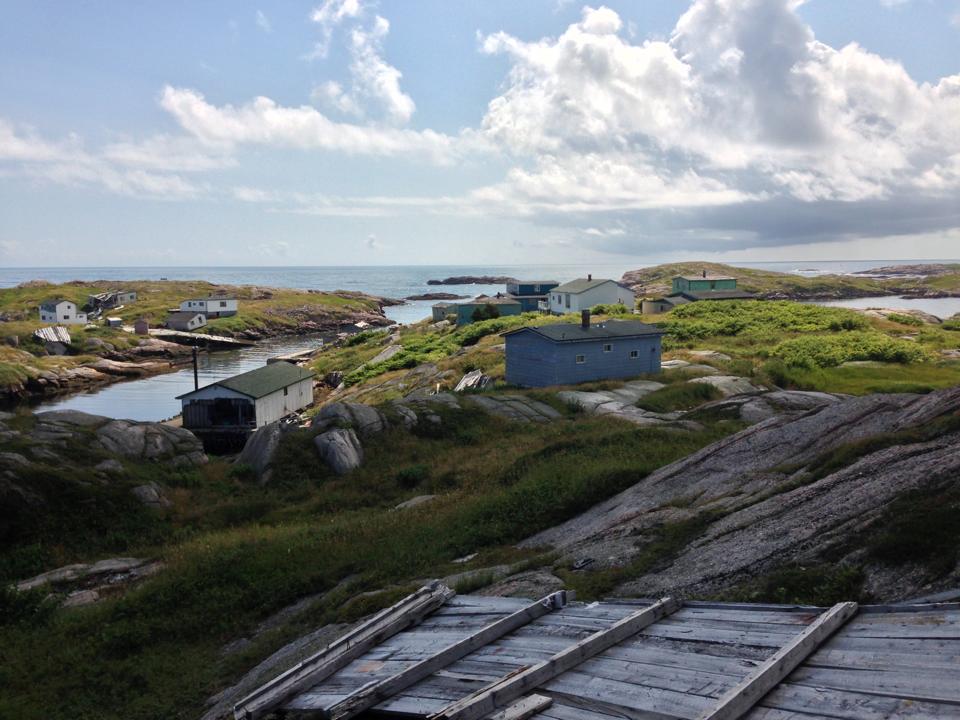
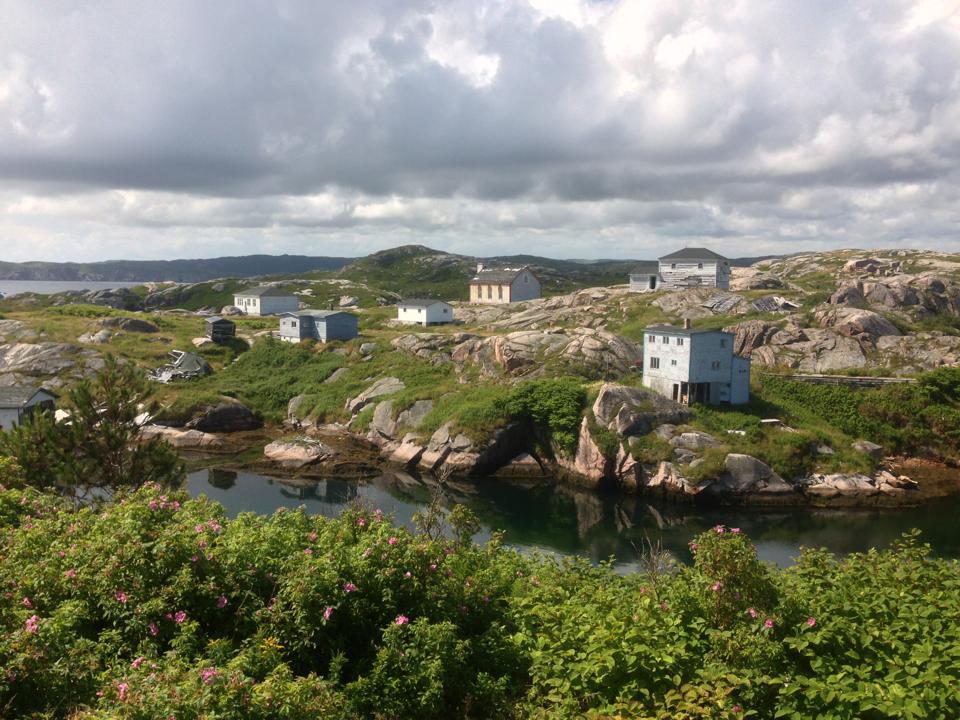
The resettled community of Petites, NL. Photo courtesy of Paul Graham 2013/

Blueberries feature large in the My Mother’s Cookbooks collection, muffins, pies, cakes, even blueberry vinegar. Some recipes have unusual names like Blueberry Grunt, Blueberry Bang Belly and Blueberry Buckle, a legacy of this delicious little berry’s reputation with those who came to live in Northern Appalachian/Acadian region’s coastal district.

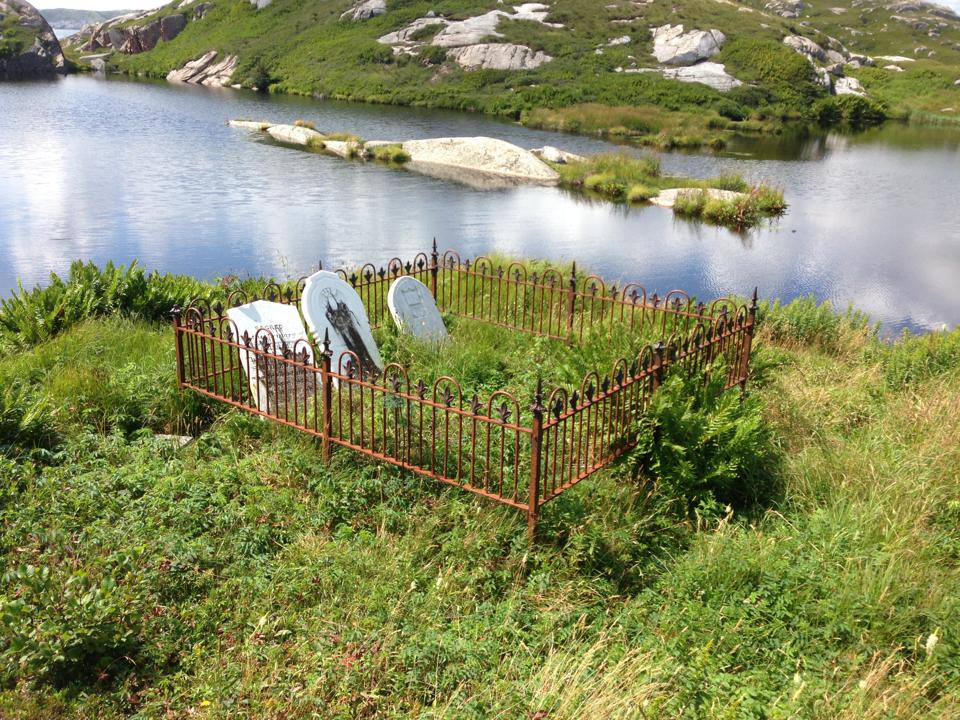
Today’s commercial harvest of wild blueberries takes advantage of the natural Blueberry barrens of largely coastal areas of Atlantic Canada. But blueberries grow in other areas too, near timber cuts, at the edges of farm fields, along rail lines and in village green spaces. I am told the some of the best blueberries grow near grave yards…

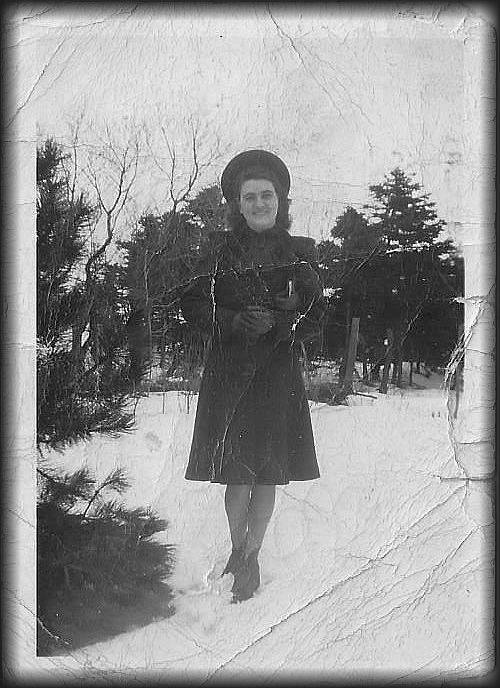
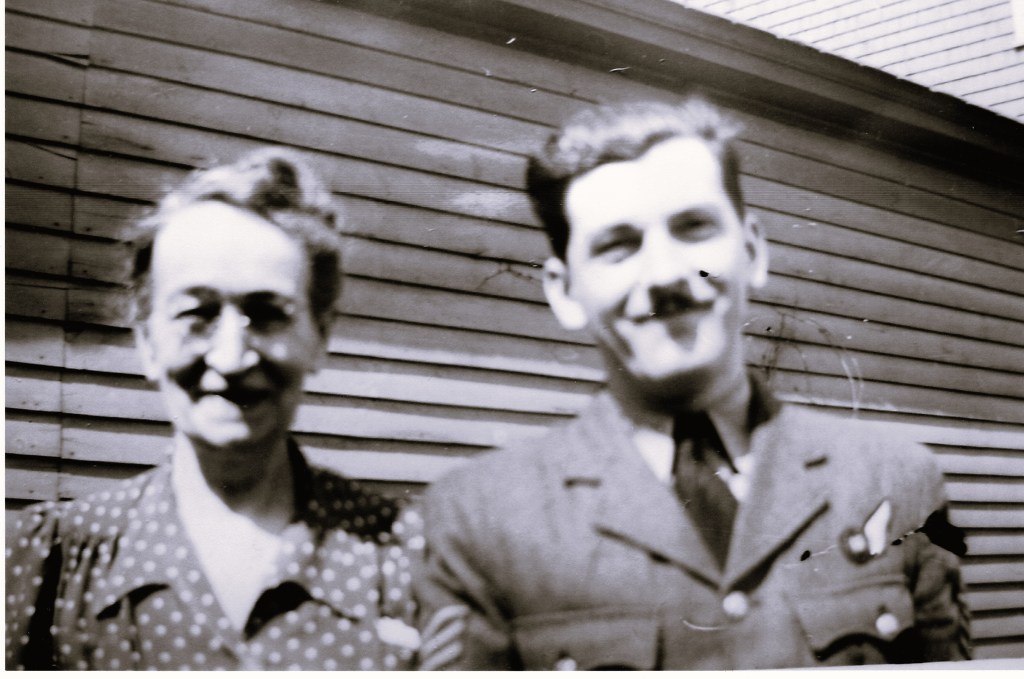
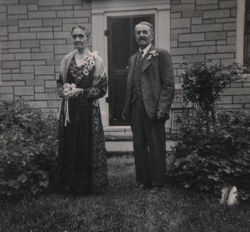
Evelyn Mauger c. 1942

Evelyn Louise Mauger Morrison, born in the small out port community of Petites, Newfoundland grew up picking the blueberries which grew on the scarce acidic soil of her home. It was only logical that she would teach her children to appreciate the bounty of this sweet fruit which grew near their home town of Glace Bay, Cape Breton.
Petites, located on the Southwest coast of the island of Newfoundland, existed because of fish. The long history of migrant Basque, Portuguese, French, English, and the Channel Islands fishers eventually lead to permanent settlement of coastal areas of the island of Newfoundland. Evelyn’s Mauger family arrived from the Channel Islands, prior to 1790 to engage in the fishery.
Growing up in Petites in the 1920’s the rhythm of Evelyn’s early life was set around the arrival of the fishing fleet to it’s small sheltered and well equipped harbour. Transportation in the region was by boat, no roads existed. The arrival of the summer fleet brought a temporary end to the community’s isolation. Boats arriving to off load their catch for processing by locals and to resupply before heading back to the fishing grounds. While others loaded the fish heading for Canadian and International markets. During summer, Petites was a bustling industrial community, but winters were remote and isolated. It is easy to imagine that the late summer blueberries which grew locally, would be a welcomed treat, but also a harbinger of the coming winter and its isolation.

Blueberry fields surrounding the resettled community of Petites, NL – Photo courtesy of Paul Graham. c 2013

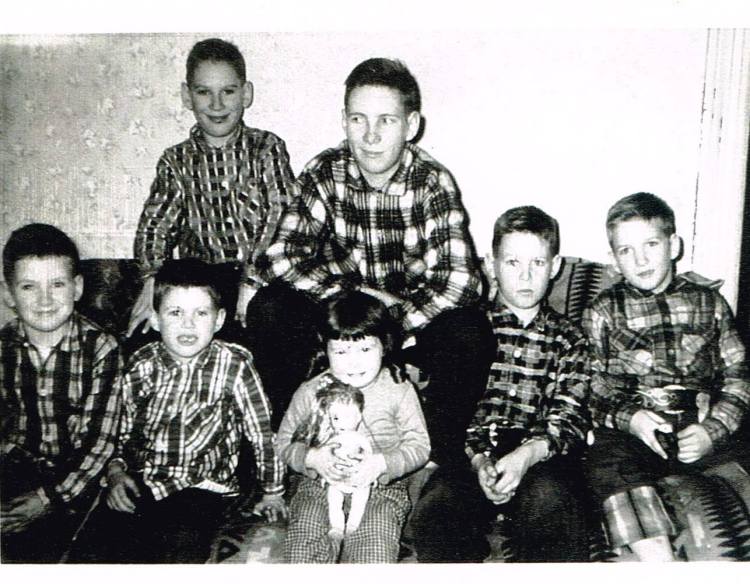
That Evelyn would transform this traditional late summer activity of her home community to her family’s experience in the shadows of Cape Breton coal mines is not surprising. As long summer days began to shorten, and blueberries appeared Evelyn would gather together the children and the assortment of cans and containers which they would use to collect the precious fruit. The little band of children, some her own, others neighbour children, would wind their way through the pit yards, along the rail way spurs and on the side hills near the community’s grave yards in search of blueberries.

One of several small grave plots of Petites, surrounded by blueberries – Photo courtesy of Paul Graham

Once the fruit necessary for family consumption in treats like her blueberry buckle, was gathered, her children would sell their surplus fruit to neighbours, mostly seniors with no young children to do their berry picking.

Picking blueberries is no easy task… in addition to constant stooping, it takes a good deal of patience to stick with picking such small easily compressed fruit, it can seem to take for ever to cover the bottom of a container. Young enterprising boys learned quickly to gently invert the container of settling fruit just prior to offering it for sale. But the experienced older women, who were their customers were wise and on to the trick… taking the container out of the lads hands, “how much?” was the question. Hearing the price of 35 cents, the customer would tap the container, and reply, “how about 25”.

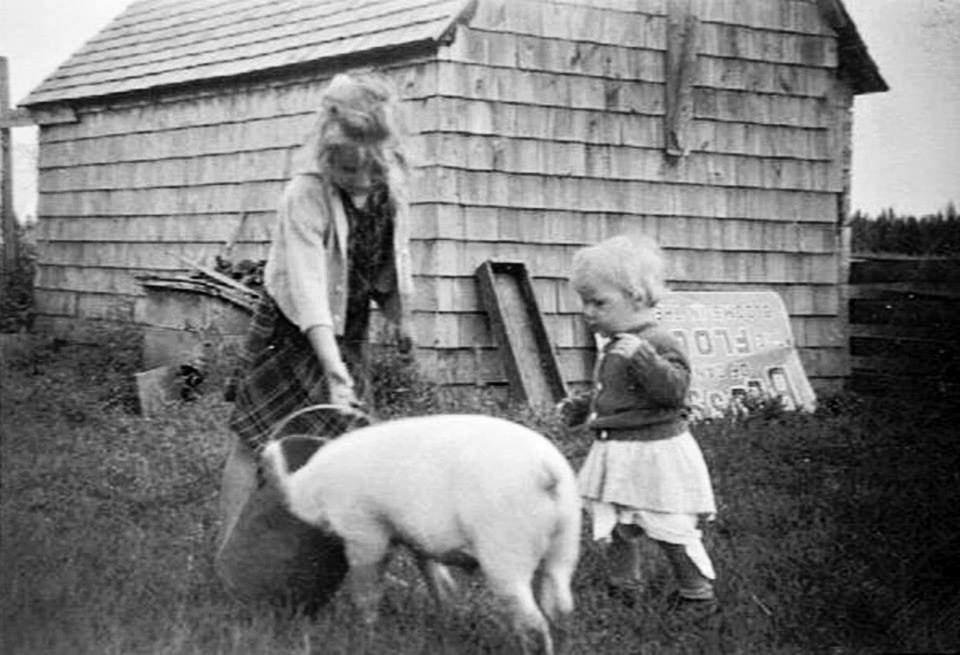
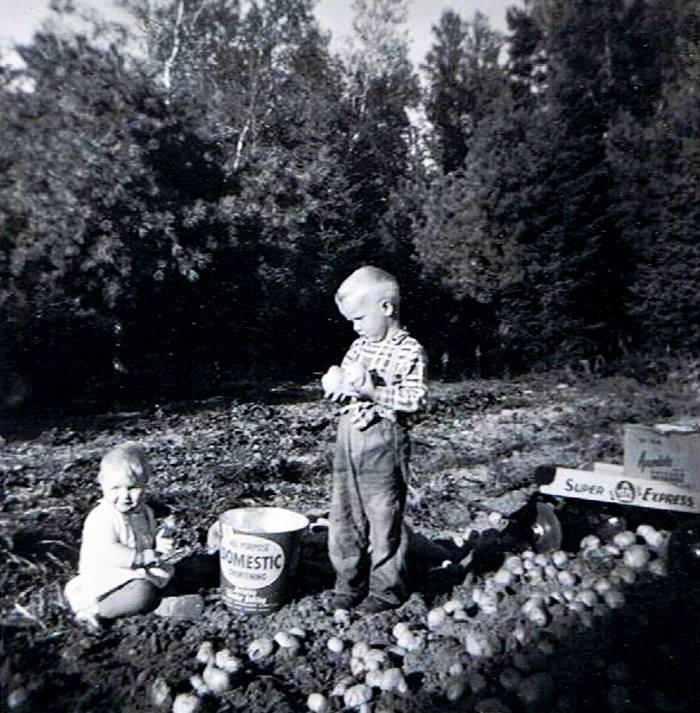
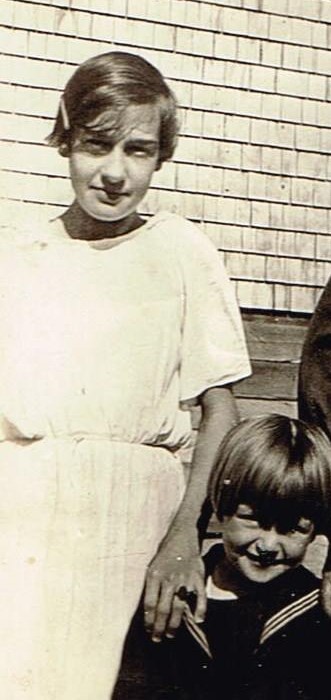
Evelyn’s berry picking crew

The annual task of berry picking served to raise additional monies for the upcoming school year, it also afforded Evelyn’s children an opportunity to share a little of her early life in Petites. She taught her children an appreciation of the natural world, the right places to look, the best picking styles, the patience necessary and the right recipe to use as reward for their hard work… a blueberry buckle.

Evelyn’s Newfoundland Blueberry Buckle

Ingredients:
1/4 cup Butter
1/2 cup Sugar
1 Egg at room temperature
1 cup All purpose flour
11/2 tsp Baking powder
1/4 tsp Salt
1/3 cup Milk
3 cups Fresh Blueberries
Crumb mixture:
1/3 cup Sugar
1/3 cup All purpose flour
1/4 cup Butter

Method:
1. Preheat oven to 350 degrees F.
2. Grease and flour an 8 inch x 8 inch square baking dish
3. Cream butter and sugar, add slightly beaten egg
4. Assemble dry ingredients in a separate bowl
5. Alternate adding milk and dry ingredients to the sugar / butter mix
6. Stir until incorporated, spread batter on to prepared baking pan
7. Layer blueberries on top of batter
8. Combine crumb mixture and layer on top of the berries
7. Bake about 40 minutes or until a cake is done.

Petites, Newfoundland:

Petites, Newfoundland is located on the southwest coast of the Island, about 50 km from Channel Port Aux Basques. The community which was resettled 2003, is accessible only by water, a short boat ride from its neighbouring community with road access, Rose Blanche.

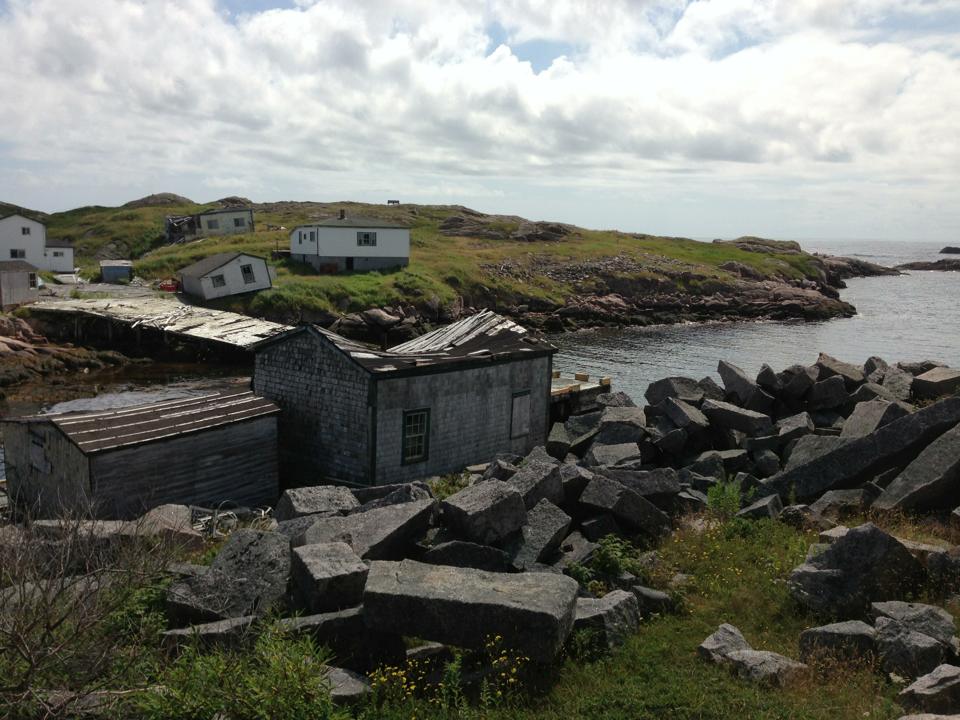
Petites c. 2013 – Photo courtesy of Paul Graham

Exactly when Petites was founded by Europeans is unknown, the rich fishing area of Rose Blanche banks was the location of the French migrant fishery from the early 1700s forward, with official year round settlements beginning in the early 19th century. The records are scarce but in the 1845 census, Petites boasted 10 permanent families with a total of 61 souls, 30 of whom were under 14 years of age. By 1921 the population had grown to 210 souls in 43 households. The census of this period lists the oldest Petites born resident Elias Mauger1 born 1845.

Petites was conveniently placed to provide for the fishing fleet, in addition to having a sheltered harbour, in close proximity to rich fishing grounds, the community is graced with pools fed by spring water. Additionally, the large granite deposit which dominates the landscape was desirable enough to support a quarry, some of the cut stone making its way into the courthouse in St John’s.

Some of the cut granite leftover from Petites’ stone industry – photo courtesy of Paul Graham 2013

A community of fewer than 250 residents, Petites boasted no less than 12 stores catering to almost any need. The economy of Petites was the fishing industry, but also its related industry of local trade and supply by boat. By 1900, that was beginning to change, the interior regions were opening up as timber companies drove roads, and built mills, drawing young people to the timber towns which seemed to appear over night.

By the last half of the 1930’s, the community of Petites was long familiar with the exodus of young people leaving to seek work and life outside of the community. A position as a domestic in the home of a Glace Bay physician would lead Evelyn to meet and marry Stephan Morrison.

Although strongly associated with the coal industry, Glace Bay, NS has strong association with the fishing industry as well, the links between the two communities are many. The family ties which developed over more than a hundred years of trade, shared fishing grounds, challenge, and tragedy provide an enduring link between the two communities.

Footnote:

  1. The Mauger/Major Family in Newfoundland appears to have been founded by one Elias Mauger born about 1725 in Guernsey, Channel Islands, who settled in Fortune Bay, NL. The Mauger family of Petites were of three brothers, Phillip, James and Elias all born in Fortune, and all probable descendants of the original settler Elias Mauger.

Resources:

  1. “Growth and Development of the Wild Blueberry” Wild Blueberry Fact Sheet 2010. Department of Agriculture, Aquaculture and Fisheries, Province of New Brunswick. (2021)
  2. “Exploration and Settlement” Newfoundland and Labrador Heritage Web Site (1997) https://www.heritage.nf.ca/articles/exploration/exploration-settlement-default.php (2021)
  3. “Voluntary Settlement – the peopling of Newfoundland to1820.” Newfoundland and Labrador Heritage Web Site (1997) https://www.heritage.nf.ca/articles/exploration/voluntary-settlement.php (2021)

The contemporary photos were generously shared by Paul Graham, a Petites descendant who shares ancestry to Evelyn’s Grandmother Elizabeth Groves Mauger.

The ‘making’ of Cape Breton Pork Pies…

On the surface many areas of Northern Appalachia / Acadia appear to have been marked by the settlement of a single group of Europeans. The ‘tastes’ of the region are more reflective of the complexity and nuance of reality.

Cape Breton Pork Pies don’t contain pork, but they do resemble the hat1. The origin of this tiny tart, a shortbread base, filled with dates and topped with a carefully piped cap of maple icing is unknown, although some credit Acadians for inspiring them.

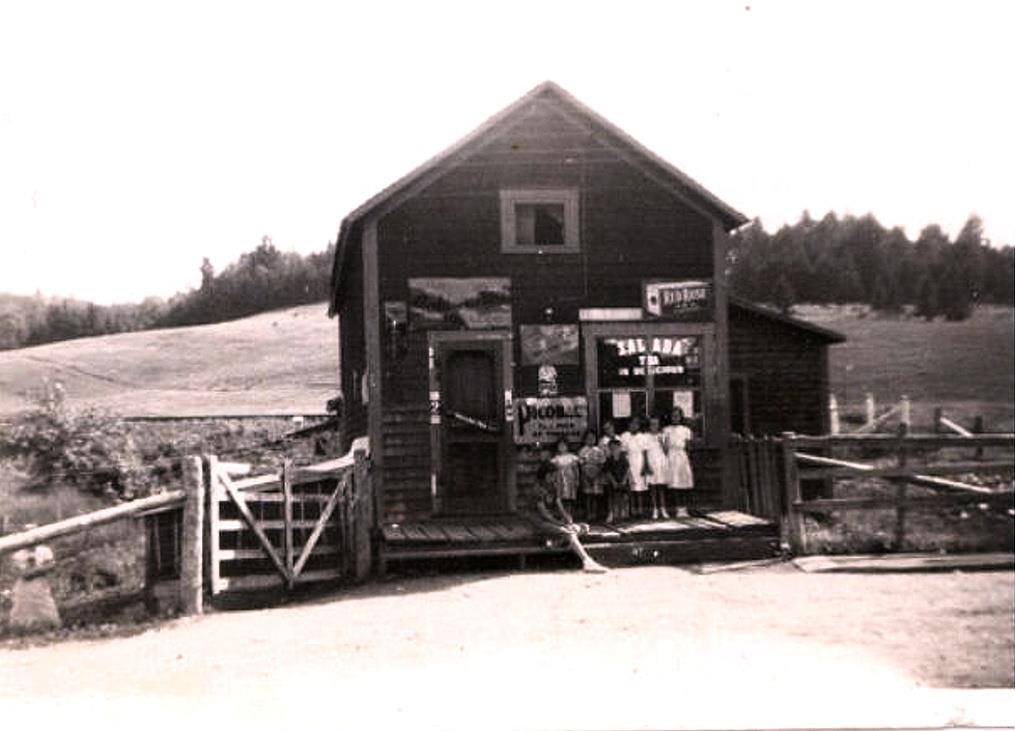
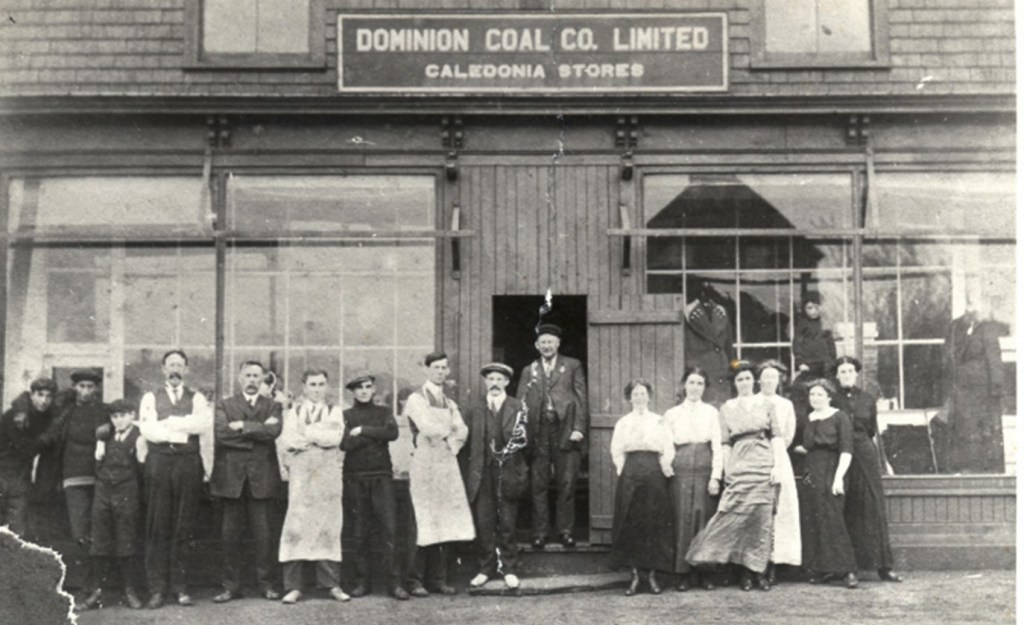
The company store and staff, Dominion Coal Co. Ltd c.1912 Photo courtesy of the Nova Scotia Archives and the Beaton Institute CBU, 80-13-4193.

There is little doubt that Acadian settlers to the region depended heavily on pork and pork fat in their diet. From the very beginning of Acadia, despite an abundant source of wild game and fish, pork was the preferred source of protein. After being forced from their homes and farms, some Acadian families fled to Cape Breton, joining two major settlements, Cheticamp on the north western coast and Isle Madame on the south coast of Cape Breton Island. Although fishing would largely replace farming as a means of providing for their families, raising pigs for food remained an integral part of life. There are many traditional Acadian dishes which contain pork and pork fat, including fruit desserts.

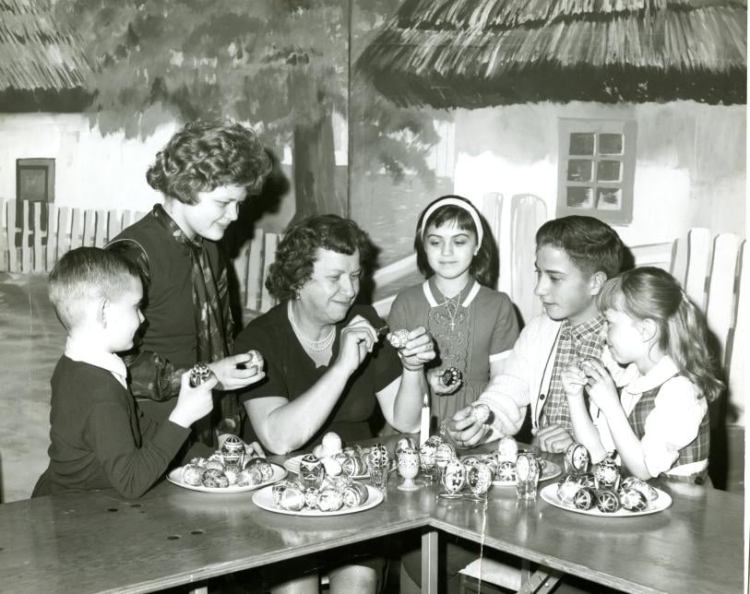
A group of Children learn the traditional craft of egg decoration Ukrainian style c. 1950

Despite both this association and the name, the fussy little tarts are made with shortbread a Scottish tradition, dates which originated in the middle east and maple, which is purely and completely First Nations in origin. So how did they come to be a Cape Breton Holiday tradition?

Cape Breton Pork Pie recipes began appearing in community cookbooks in the early 1930s, it is entirely likely they were developed during the first two decades of the 20th century. The new century which brought widespread social and political change, unprecedented growth, upheaval, and greater cultural diversity to Cape Breton would result in Cape Breton Pork Pies.

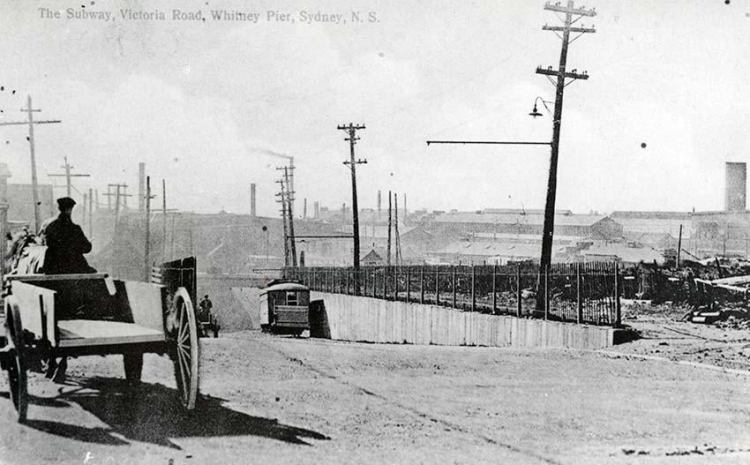
Whitney pier, Cape Breton Steel plant c.1900 Photo courtesy of the Nova Scotia Archives.

By the time Bessie Mauger arrived in North Sydney from her home community of Petites Newfoundland about 1890, the industrialization of Cape Breton was well underway. Mines, steel mills, construction of infrastructure, and housing were bringing workers from across the region and around the world to work in Cape Breton. Young women like Bessie found work in the homes of company officials, merchants, physicians, and in the company stores, hotels and boarding houses serving the growing number of workers.

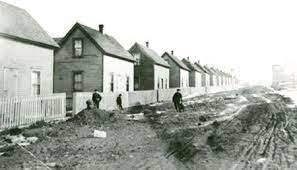
Company homes in the Sydney coal fields c1890 Photo courtesy of the Nova Scotia Archives

Elizabeth McIsaac Topshee, her Syrian born Traveling merchant husband George, their four young children, Elizabeth’s Mother Lizzie and her brother Leslie McIsaac were living together on Robert street, Sydney in 1921. Lizzie and Leslie who were born in Boston, Mass returned to their parent’s Cape Breton home with their mother, after their father Peter died. A bright and capable person Elizabeth worked for while as a Teacher, before marrying George.

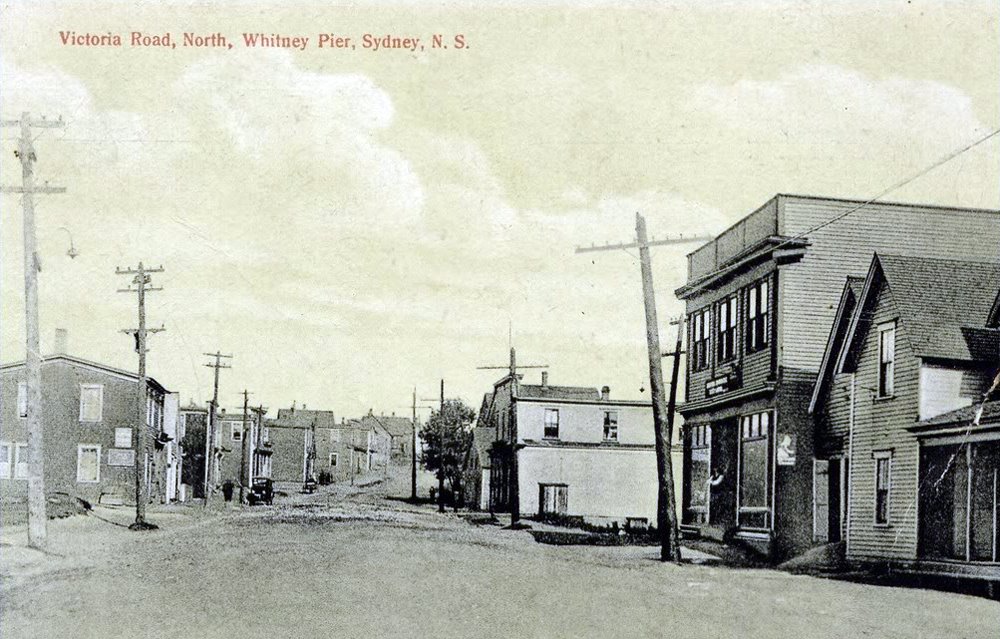
For women like Kathleen Bryan living in the neighbourhood of Whitney Pier provided opportunity to add to her family’s resources by taking in boarders. The large numbers of men, single and married flocking to the area for work had to be housed, some would lodge, others board in family homes, sharing the cramped and inadequate housing and food. Most families who took in boarders, took in those they knew, single lads from home, married men working to bring their family to Cape Breton from their homes in Newfoundland, Lebanon, Wales, Ireland, New England and the long list of local and exotic locales. Kathleen and her husband Lambert welcomed boarders from their home in the British West Indies.

Victoria Road, North, Whitney Pier, Sydney, NS Nova Scotia Archives Beaton Institute Collection.

The system which favoured powerful white Protestant English speaking people2 over others left many Scots, Acadians, First Nations people and a growing number of others on the outside looking in. As industrialization took hold, the disparity between those who owned and operated the industries and the souls who toiled in them grew.

By 1921, Bessie and John had managed to purchase a home for their family in Dominion. With already more than 30 years in the industry John worked his way from miner to mechanic, improving his wages and vastly improving his family’s lot. A new social order and improvement in their living conditions, fostered new found independence and pride. In the 1921 census, for the first time in their married life John and Bessie openly declared John’s deep Acadian heritage. John’s ‘Young’ family had their name converted from the original Lejeune sometime in the early part of the previous century, as they struggled to survive in a social system which discriminated against Acadians and favoured those with English names.

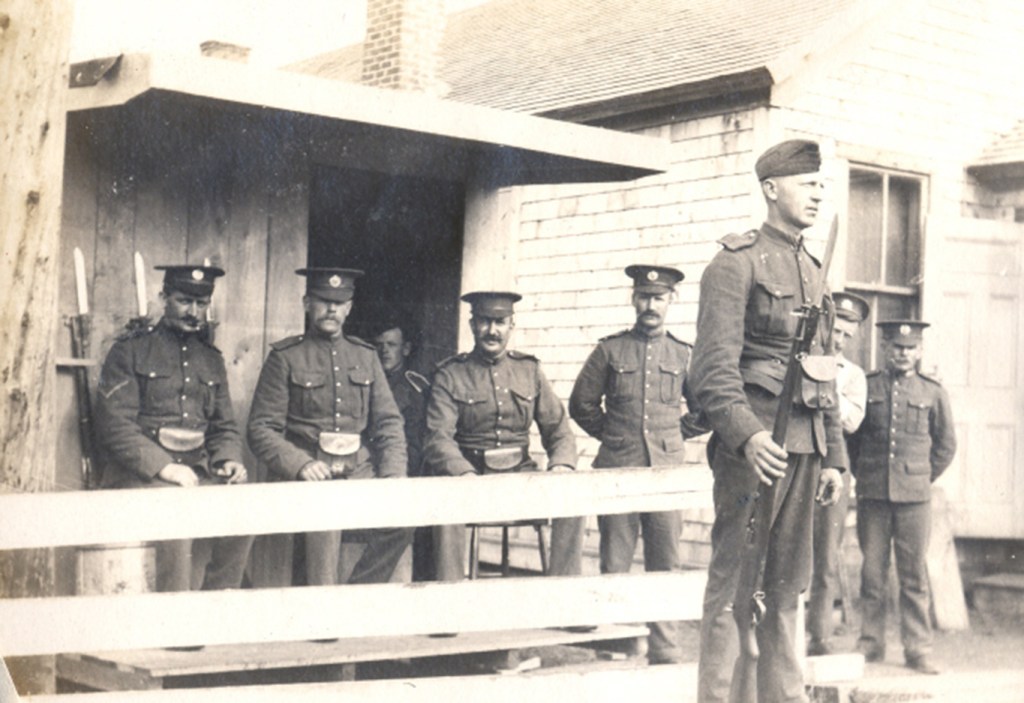
Dominion #3 c. 1909 Coal strike, Army officers stationed at Glace Bay, 12 July 1909. Photo Courtesy: Beaton Institute, CBU. Bourinot family collection MG12.16(E):78-735-2485

Despite nearly a century of being known as “Young”, John and his family managed to retain their Acadian heritage personally if not officially. The benefit realized by highlighting his mother’s Scottish heritage had not eroded John’s Acadian heritage entirely. His family name was lost, their language lost, yet he still identified as ‘French Acadian’. It is likely food, traditional Acadian food played a role in maintaining John’s Acadian heritage.

The struggles of the new century would continue in to the 1920s, the labour unrest which would see police, and military deployed against workers strained and severed traditional relationships but also fostered new ones. Solidarity between and among Union members was critical to their successful skirmishes against the company. When the entire community, women, neighbours, well to do, poor; Polish, French, English, Walsh, Assyrian, Italian, Ukrainian, West Indian, Scottish, etc. stood in solidarity, long term meaningful change finally took hold, and a more diverse identity was born.

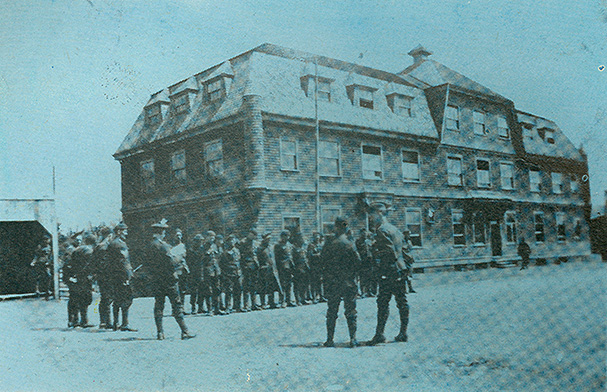
185th Battalion drilling in front of the Crown Hotel, Broughton, Nova Scotia 1916. Photo courtesy of the Nova Scotia Archives.

Dates have been grown in the middle east and Asia for thousands of years, during that time they became ‘staple’ in the diet of the region and spread as an imported food to other areas of the world. North American cultivated dates began appearing in the 1920s, just in time for the Cape Breton Pork Pie.

There has been much speculation about the relationship between the term pork pie and it’s suspected Acadian origins. Did the first pork pies contain pork? It is quite possible cooks like Bessie, Kathleen and Elizabeth sometimes made the shortbread base with pork fat rather than butter, it is also possible pork fat was added to the filling as a flavour enhancer.

The even more likely source of the relationship between the pork pie and Acadian culture is the maple icing. Maple sugar and flavouring are firmly rooted in First Nations culture, and by virtue of the longstanding and positive relationships between the two nations, in Acadian culture.

This Holiday season Cape Breton Pork pies will take their rightful place on our table, a wonderful way to celebrate a little of what it means to be from Cape Breton…


My Mother’s Cookbook’s…

Cape Breton Pork Pies

Pork pies are small tarts, about 11/2 inches in diameter, mini tart molds / cups are required.

Ingredients:
Base:
2 cups Flour
2 Tbsp Corn Starch
1/4 tsp Salt
1 cup Butter
1/2 cup Confectioners Sugar
1 Egg Yolk
1 tsp Pure Vanilla Extract
Filling:
2 1/4 cups chopped Dates
3/4 cup Brown Sugar
3/4 cup Boiling Water
1/4 tsp Salt
1/2 tsp Lemon extract
1/2 tsp Pure Vanilla Extract
Maple Icing:
2/3 cup Confectioners Sugar
2 Tbsps Maple Syrup
1 Tbsp Butter
Method:
1) Preheat oven to 325 degrees F (163 degrees C);
2) In a large bowl, cream butter and sugar until fluffy;
3) Beat in egg yolk and vanilla;
4) In a second bowl combine flour, cornstarch and salt;
5) Gradually add the dry ingredients into the butter sugar mix, kneading to a smooth dough;
6) Make 3/4 round balls of dough and press into 11/2 inch tart molds, pressing the dough evenly over the bottom and sides;
7) Bake for 15 minutes or until golden; set aside to cool;
8) In a saucepan combine dates, brown sugar, water, and salt over med heat until it reaches a boil, reduce the heat and simmer for 4 minutes, stirring regularly;
9) Remove from the heat, add lemon and vanilla, set aside to cool;
10) In a small bowl, cream butter and sugar, add maple syrup and whip to fluffy consistency;
11) Fill shortbread cups with date filling and cape with a dollop of icing.

Explanations and Resources:

1. The Pork Pie hat, or the porkpie, is a round hat with a turned-up brim and a flat crown.
2. The British Colonial settlement of Atlantic Canada favoured white, protestant community members over others, although the labour struggles and social actions of the early 20th century challenged the system, it did not translate into equal opportunities for all. First Nations people and others of visible minority groups continue to be disadvantaged and marginalized by a system which favours whites over others.
3. History of Acadie – Canadian Encyclopedia https://www.thecanadianencyclopedia.ca/en/article/history-of-acadia
4. Acadian History – https://acadie.cheminsdelafrancophonie.org/en/historical-capsules/


Acknowledgement: I acknowledge that the land on which I live and write about is the traditional unceded territory of the Wolastoqiyik (Maliseet) and Mi’kmaq Peoples. This territory is covered by the “Treaties of Peace and Friendship” which Wolastoqiyik (Maliseet) and Mi’kmaq Peoples first signed with the British Crown in 1725. The treaties did not deal with surrender of lands and resources but in fact recognized Mi’kmaq and Wolastoqiyik (Maliseet) title and established the rules for what was to be an ongoing relationship between nations.

Blueberry Muffins…An Appalachian treat?

A classic recipe from the Northern Appalachian and Acadian region, wild blueberries grow through out the region from the Adirondacks to Newfoundland and Labrador.

One of my favourite recipes in the My Mother’s Cookbook collection is for a ‘traditional’ blueberry muffin. As a child I thought blueberries only grew near the railway… that this Blueberry muffin recipe came into the collection while our family was living in Cumberland County, NS some 60 miles(in 1968) from the nearest railway, is not coincidence.

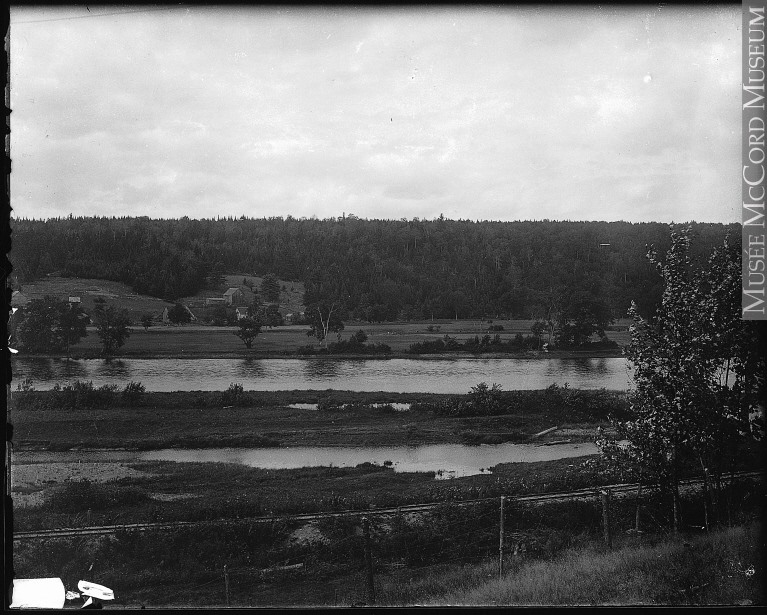
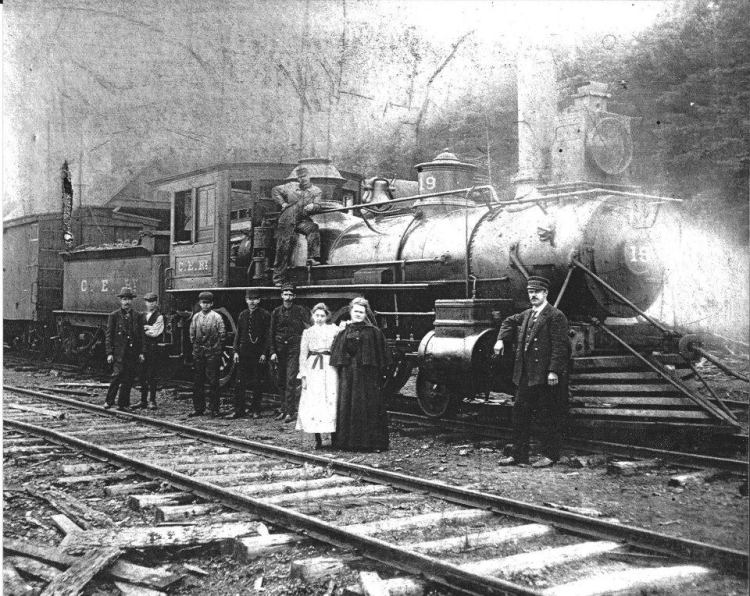
Canadian Eastern Railway c. 1910 Train crew and others. Photo courtesy of the Our Miramichi Heritage Family Facebook site.

The first European settlement of the Atlantic region occurred on the coast and on the banks of navigable rivers and streams. From the earliest periods the building of roadways, were mostly to improve portages around natural obstructions or to create short cuts, roads as a primary transportation link did not appear until much later.

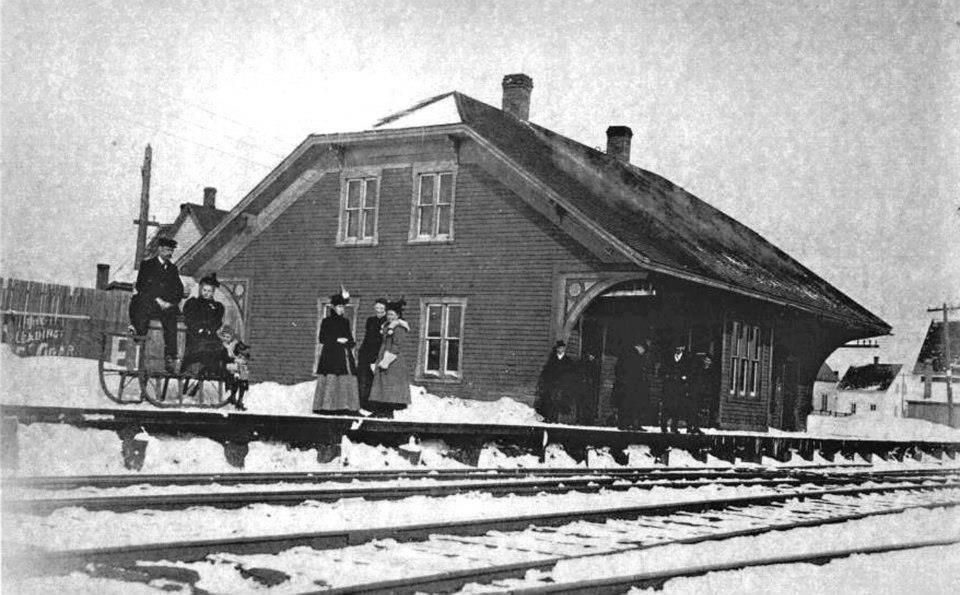
Chatham Train station c.1880 ~Photo courtesy of Our Miramichi Heritage Family Facebook site age Facebook site.

The railway’s arrival beginning in the mid to late 19th century served to open many areas previously isolated by their lack of access to water. Suddenly communities with names like Oxford Junction, Stephenville Crossing and Weaver Siding sprang up. The railway also served to provide the means for business and manufacturing to develop and for communities like Amherst, NS to thrive.

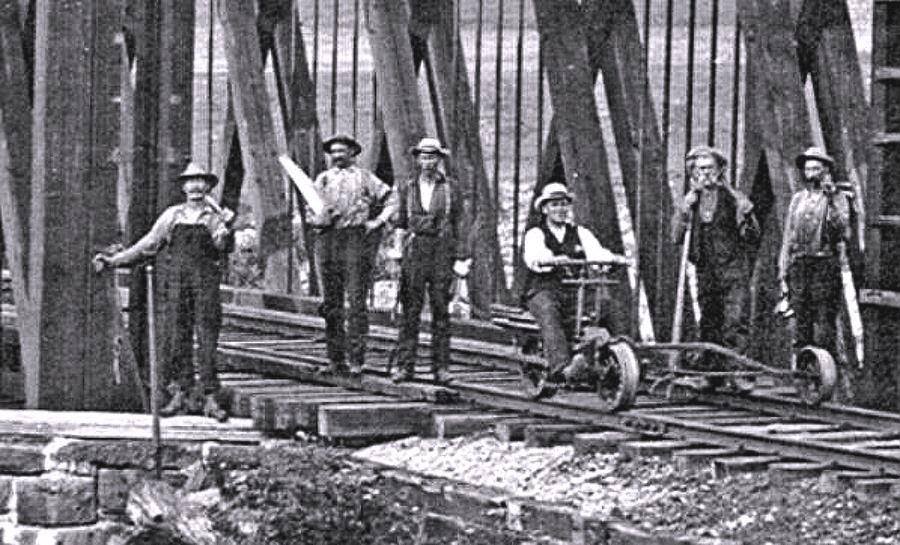
A single self propelled man cart c. 1900 Photo courtesy of the Our Miramichi Heritage Family Facebook site.

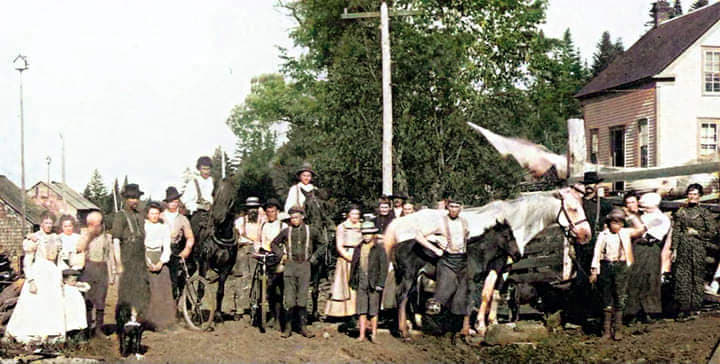
For communities like Carrolls Crossing, NB, the addition of ‘train tracks’ not only provided vital transportation link, it ingrained its self in to the community, the tracks were used for many purposes: short cuts, access to the best swimming hole, the location of entertainment on long summer evening walking up the tracks to the point where the darkening sky was just right for ghost stories, playing ‘tin can alley’ in the station yard, hitching a ride, (on the handcar) across the railway bridge on the way to pick blueberries.

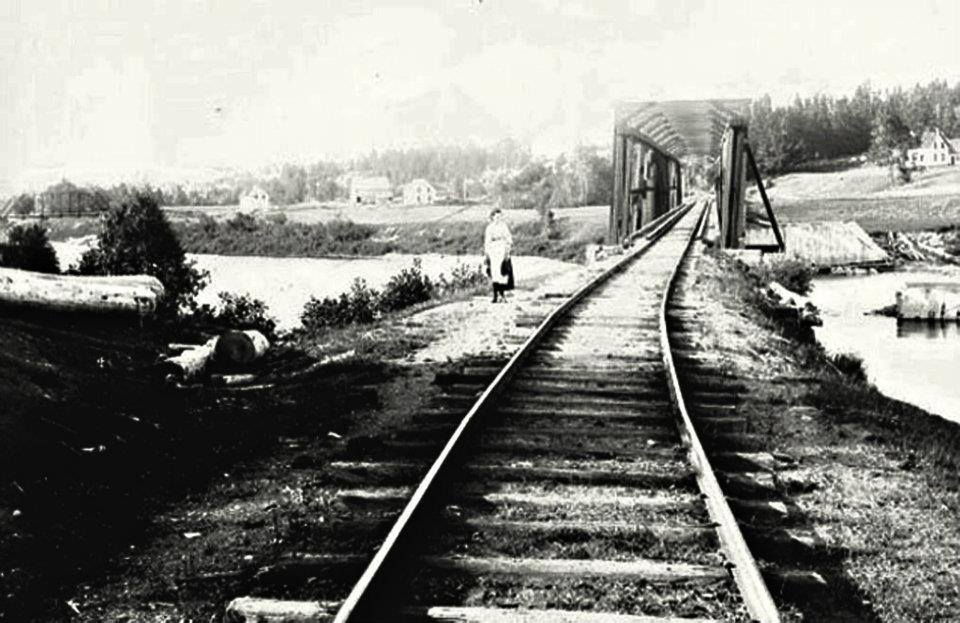
Railway bridge c.1880 Blackville, NB Photo courtesy of the Our Miramichi Heritage Family Facebook site.

Amherst, Cumberland County, Nova Scotia was founded as a result of the New England Planters farming and fishing activity on the shores of the Bay of Fundy, by 1850 Amherst boasted a grist mill, tannery and other basic services. By 1880, the railway had arrived and the community’s reputation as a manufacturing center had began to build, boots and shoes, pianos, trunks, caskets and eventually engineered steel would be produced in Amherst.

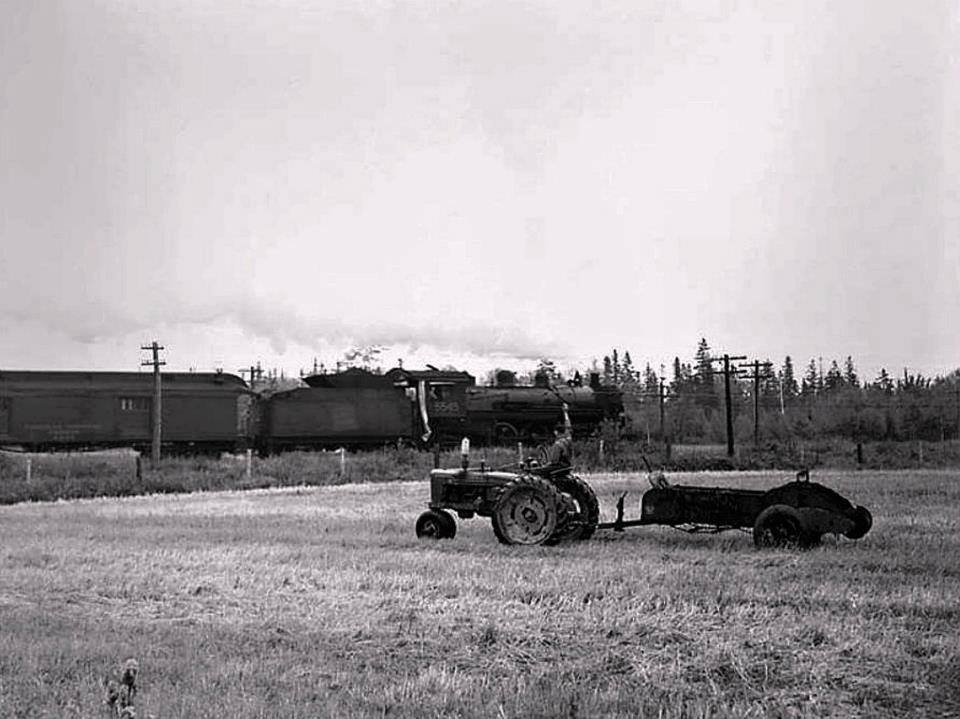
New Brunswick farmer waving at the train as it passes his farm field c.1950 Photo courtesy of the Our Miramichi Heritage Family Facebook site.

Even as the railway was sending Amherst’s goods to market, it was drawing workers, farmers, fisherman, lumberman, miners, shipwrights, etc. to work in Amherst’s factories and those in other centers across the region. The railway also connected the region to New England states via land, for the first time providing an alternative to sea voyage. Access to larger markets came with increased out migration from those communities not served by rail service and from many which were, as younger people sought opportunities in larger centers.

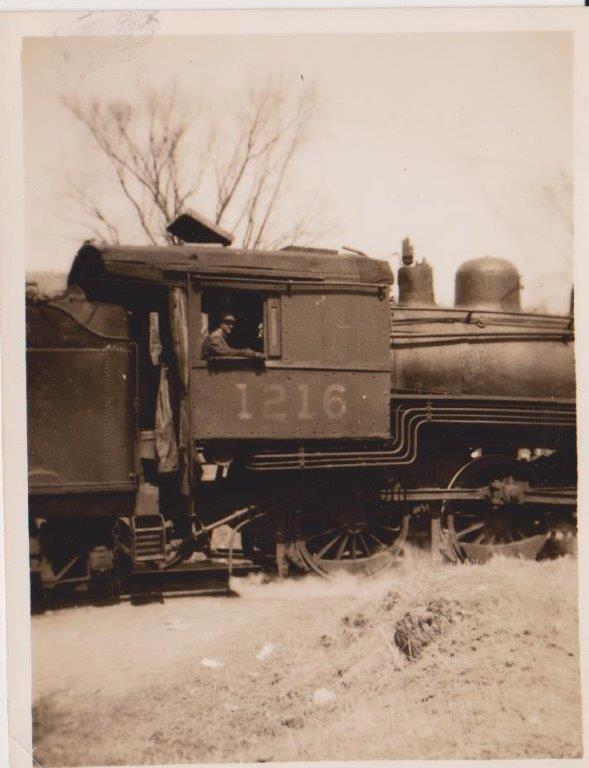
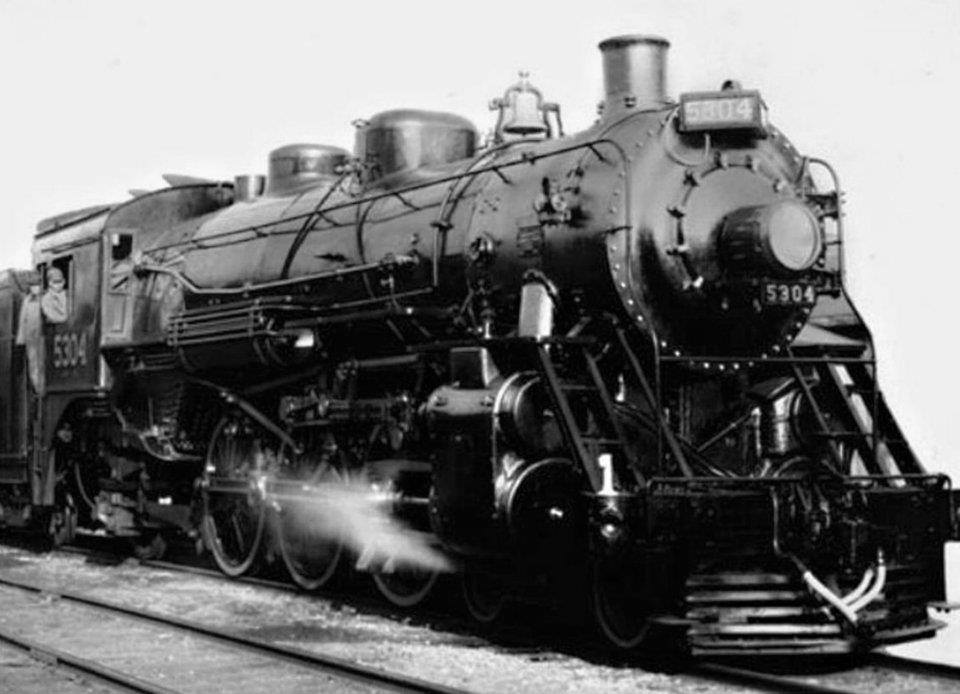
Canadian National Railway engine c.1922 Photo courtesy of the Our Miramichi Heritage Family Facebook site.

Many young people including Edna Jane O’Donnell Babcock born in 1900, used train travel to expand her opportunities. In 1922 Edna left her home, the tiny railway hamlet of Carroll’s Crossing, NB to work as a domestic in Portland Maine. Her time in Portland would end with a train voyage back home to marry the Canadian soldier she’d met while in Portland. Eventually, Edna and her young family would settle in Amherst, NS, her husband William finding work as an inspector in the Robb Engineering factory.

The train would remain a vital link to home for Edna allowing her children to meet and spend time with their extend family at home in New Brunswick. Edna would not have found it difficult to locate blueberries to use in her baking at her new home, she might well have taken her children on blueberry picking walks on the railway tracks near her humble home on Cornwall street, Amherst, just as she had done at home.

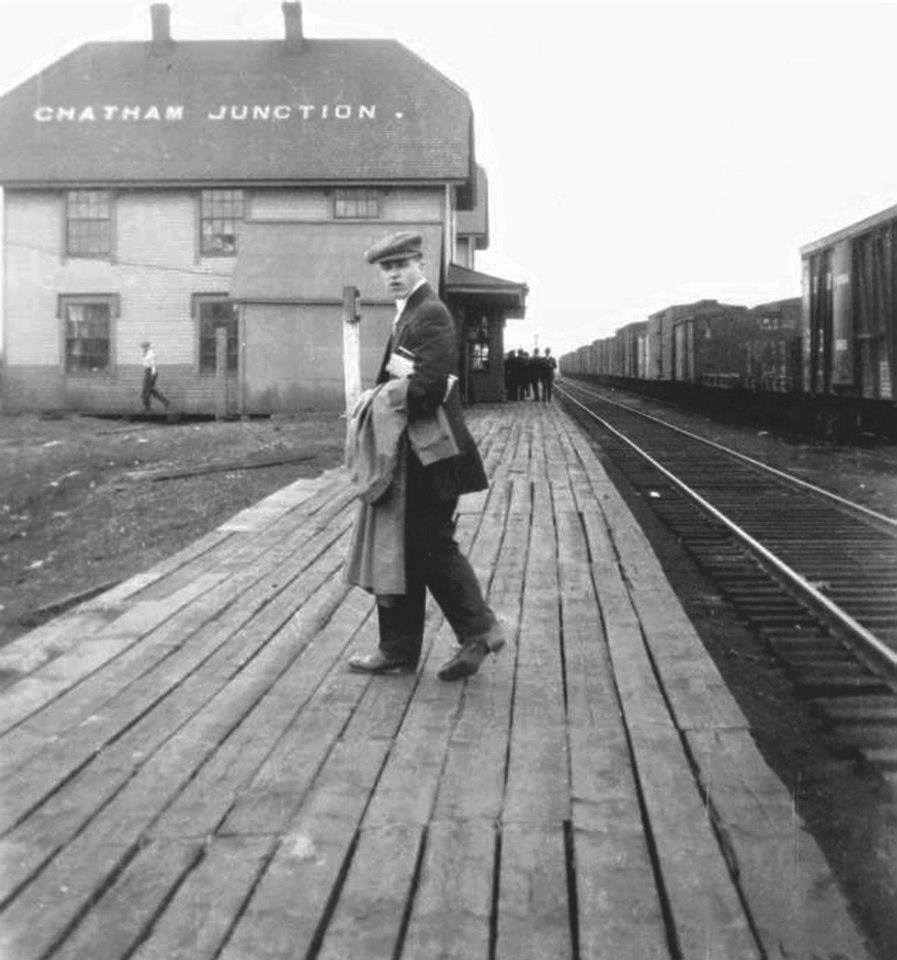
a young traveler returning home to Chatham, NB c.1940. Photo courtesy of the Our Miramichi Heritage Family Facebook site.

Train travel also provided a reliable way for those who had moved to distant larger centers, Boston, New York and beyond to visit home. It is likely train travel figured large when in 1927 Gussie Deuchler Mills made her first visit to her new husband Carl’s home in Advocate Harbour, Cumberland county, Nova Scotia from her home is Staten Island, New York. Advocate Harbour is located on the Bay of Fundy in an area known as the Parrsboro shore. From the 1870’s to the late 1950’s a short rail line operated between Springhill Junction, NS and Parrsboro, NS. The line built originally to transport coal from the mines at Springhill to ships at Parrsboro and eventually other ports of call. By the 1880s, an interconnected web of short lines linked to the larger Regional and National lines providing extensive coverage through out much of the region.

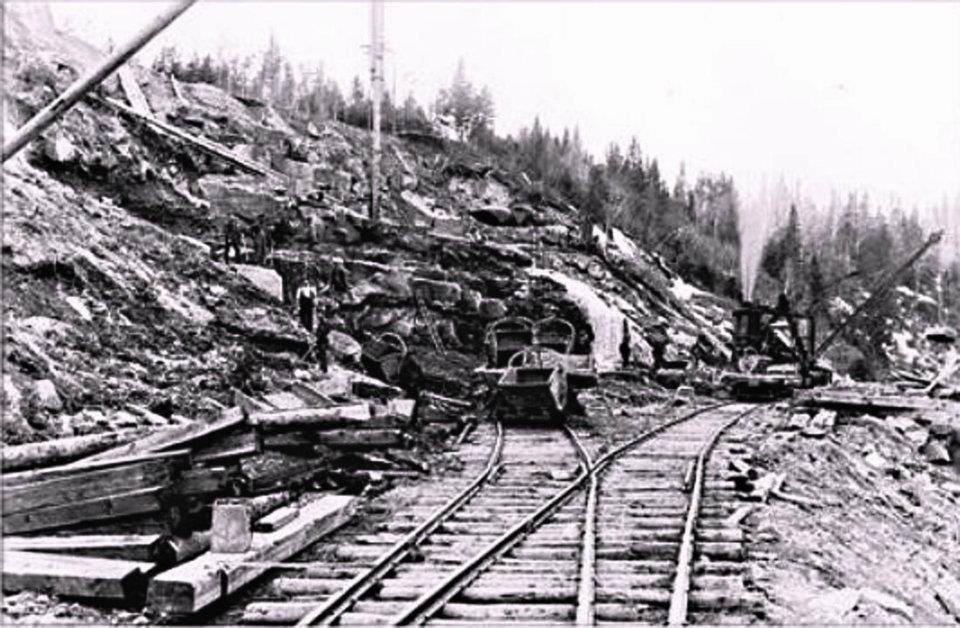
Railway Construction crew near Blackville, NB c.1870 Photo courtesy of the Our Miramichi Heritage Family Facebook site.

Gussie, Carl and both Gussie’s Mother Louise and her sister Deal spent many summer seasons in Advocate Harbour before Carl and Gussie retired there in the late 1960’s. So where did Gussie’s Blueberry Muffin recipe originate?

It turns out blueberries do grow near rail lines, at least in those areas with poor soil (particularly where the Appalachian mountain range left bare large swaths of acidic soil). The regular cutting back of vegetation near rail lines to prevent fires, allowed the low bush varieties native to New Brunswick and Nova Scotia to thrive. It is also true that Blueberries grow in much of North America. However the acidic soil and cool sea breezes of the Northern Nova Scotia and Eastern New Brunswick, which is part of the northern Appalachian range, delivers natural Blueberry barrens. Cumberland county, Nova Scotia in particular has earned a reputation in recent years of being Canada’s wild blueberry capital as a result of being blessed with bounty of blueberry barrens.

Blueberry muffins made with wild NB blueberries, this photo c. 2021 is courtesy of Lynn Lyons

The history of muffins (the quick bread variety) is not entirely clear, the habit of using individually sized baking containers for quick breads appears to have begun in the United States some time during the last half of the 19th century.

So, the mystery of where Gussie’s blueberry muffin recipe originate deepens. Did the recipe begin with one of Gussie in laws during early years of blueberry farming on the Parrsboro shore? It is more likely the recipe is one which originated with Gussie’s family on Staten Island. Staten Island a borough of the mega city of New York owes its existence the Appalachian mountain range and like Atlantic Canada several varieties of blueberries grown naturally on there. It is likely that Gussie’s immigrant family learned early to use the bounty of the local area to augment their diet… just as they had done in Germany. Blueberries, both high bush and low bush varieties still grow in undeveloped areas of Staten Island, although increased development threatens their continued existence.

This recipe is a traditional muffin recipe. Commercially baked muffins have increased the overall size of muffins and have replaced traditional muffin recipes with those containing higher levels of sugar and fat, This recipe contains less sugar and fat. It is possible to alter the recipe further by replacing some of the all purpose flour with whole wheat and the fat with yogourt.

Gussie’s Blueberry Muffins


Ingredients:
1/3 cup butter at room temperature
1/2 cup sugar
1 egg at room temperature – lightly beaten
3/4 cup milk
2 cups of flour, separated
3 tsp baking powder
1/2 tsp salt
1 cup fresh wild blueberries, winded and washed
Method:
1. Preheat oven to 400 degrees F.;
2. In a medium mixing bowl, cream butter and sugar, add slightly beaten egg stir to combine;
3. In a separate bowl combine 1 3/4 cups of flour with other dry ingredients and stir to combine; add remaining 1/4 cup flour to a bowl containing cleaned blueberries;
4. Alternate adding the dry ingredients with the milk, folding to combine and being careful not to over mix; Add blueberries and gently toss to combine;
5. Fill muffin tins with muffin papers or grease and flour before adding batter.
6. Bake for 20 – 25 minutes, remove from pans after permitting to cool for 5 minutes.

Gratitude Season, Warm Spices and War

Mable Hunter Stewart’s war effort and her fruit cake.

Harvest, Thanksgiving and Remembrance Day draws us toward feeling gratitude for nature’s bounty, for the effort, and sacrifice of others. Fall is a sort of Gratitude season that comes scented with warm spices. This guest blog post recalls a time when cinnamon, nutmeg, and clove were more associated with molasses, candied peel, dried fruit and rum, than pumpkin.

Mabel Hunter Stewart and Sgt. Ronald P. “Jerry” Gerelli

Janet Stewart Lindstrom does not remember her Grandmother well, she was only 8 years old when Mabel died. Mabel Jewett Hunter Stewart is no mystery to Jan, her quiet goodness and steadfastness remains vivid, thanks to memories of their shared time but more directly in the quiet, steadfastness and goodness inherent in a man far more familiar, her father. Jan describes her grandmother Mabel and her father Andy as deeply proud of their Hunter Family Highland Scottish heritage as well as tried and true Royalists.

A Highlander and a Royalist? That Mabel was a Royalist is not in the least surprising, despite the complicated history between the English Crown and Highland Scots. Mabel lived thru two world wars, wars fought for King and country. Mable knew well the sacrifice families made on both sides of the Atlantic. She understood the worry, loss and grief faced by families at home and she was grateful for the young pilots and flight crews training at the nearby Moncton site of the The British Commonwealth Air Training Program (BCATP)1. Mabel knew the risk these men faced, and that there was a good chance some would die in defense of King and Country. She made her war effort a personal expression of gratitude that came flavoured with warm spices.

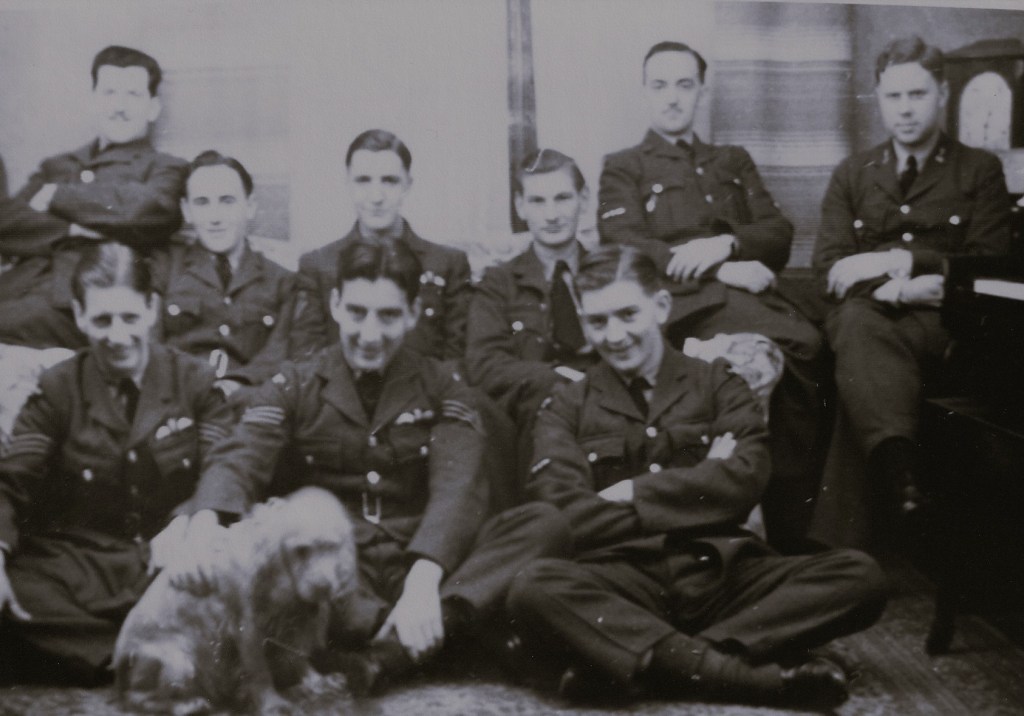
A group of Airmen, gathered in the home of Mabel Stewart, Moncton, NB c. 1942

Jan wrote this short story about Mabel’s ‘War effort’ to share with her children and Grandchildren. I am thrilled she has agreed to share both her Grandmothers’ war effort and her recipe with My Mother’s Cookbooks.

Janet Stewart c. 1949

Mabel’s War Effort…

So…you say you don’t like Fruitcake…

Picture this – Your Grandfather Stewart’s mother in her home in Moncton during World War II “entertaining the troops”. My Grammie at the piano playing for a sing-song, and leading good conversation, never allowing talk of religion or the war of course. This on top of serving a wonderful meal to the small groups of British airmen she hosted. My Grammie always called this her ‘war effort’. Grammie knew the young men, who were in Moncton getting their “wings” so they could return to the UK to take part in the war, would be lonesome for their families and wishing for a good family meal.

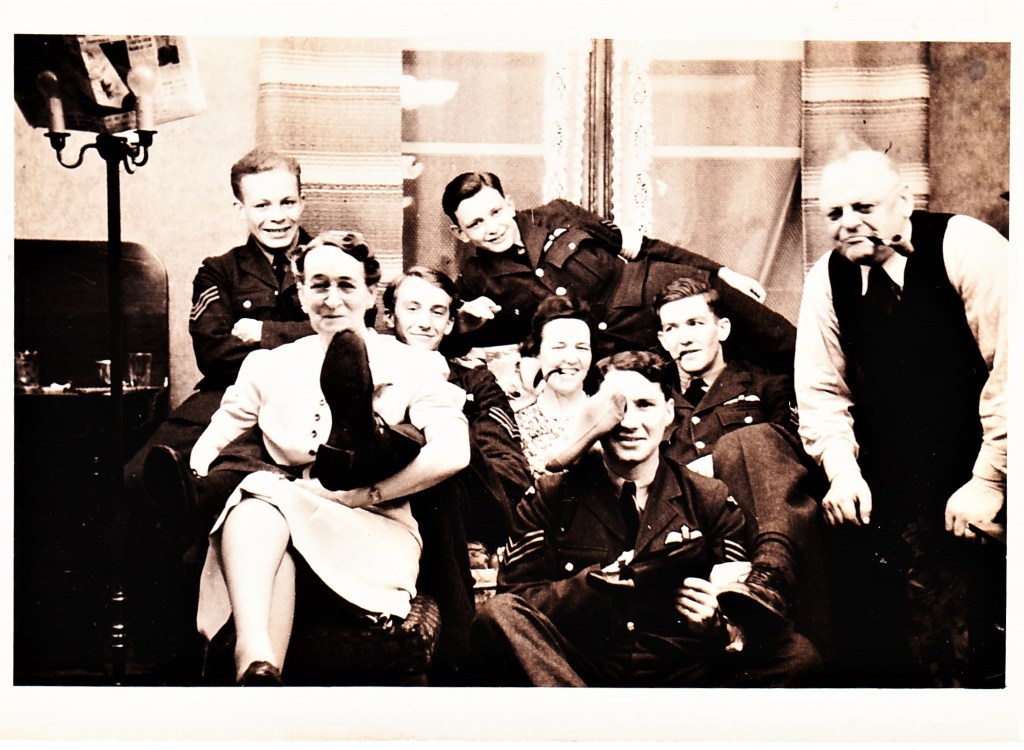
The Stewarts entertaining the troops Moncton, NB c.1942

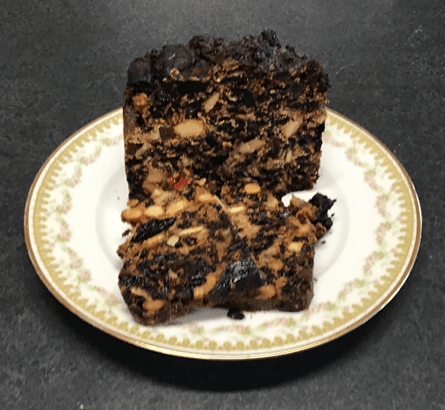
One of the highlights of the meal was the serving of a plate of her fruitcake on her prized Limoges China, just like in the photo above.

If you love a house filled with the aroma of a spicy, fruity, nut filled cake being baked or if you enjoy a quiet time with a cup of tea and a piece of cake, this cake is for you!

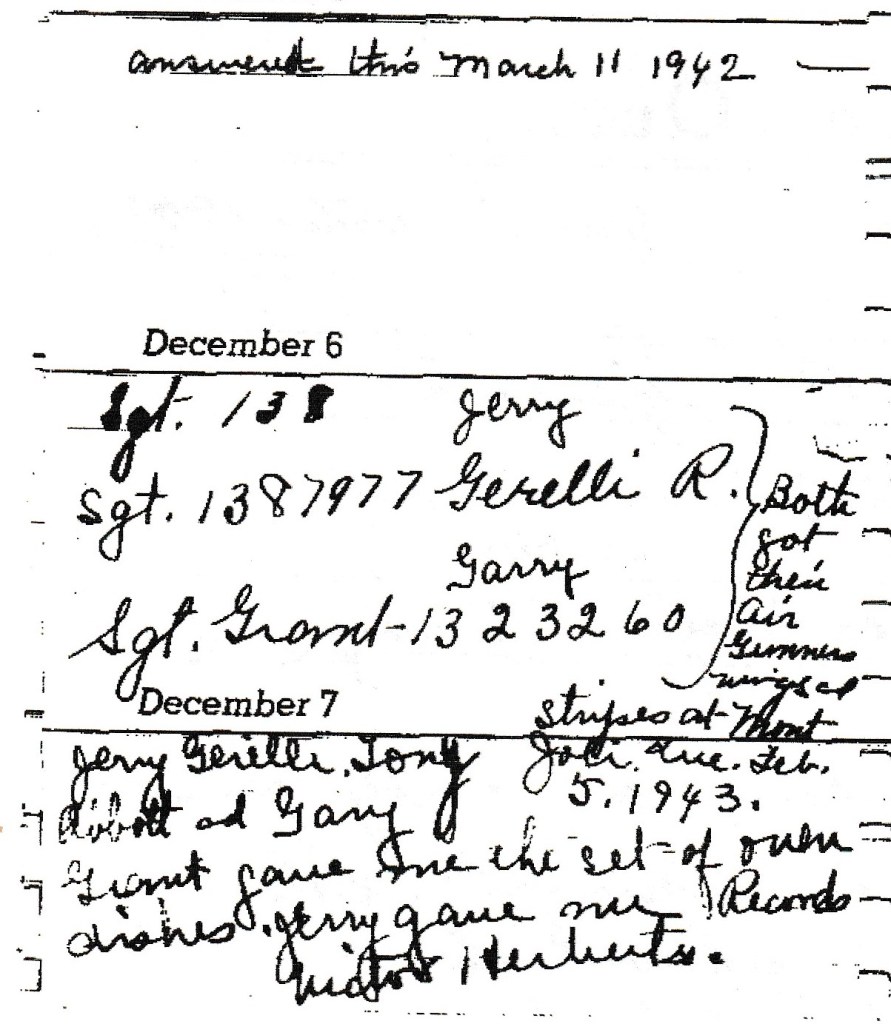
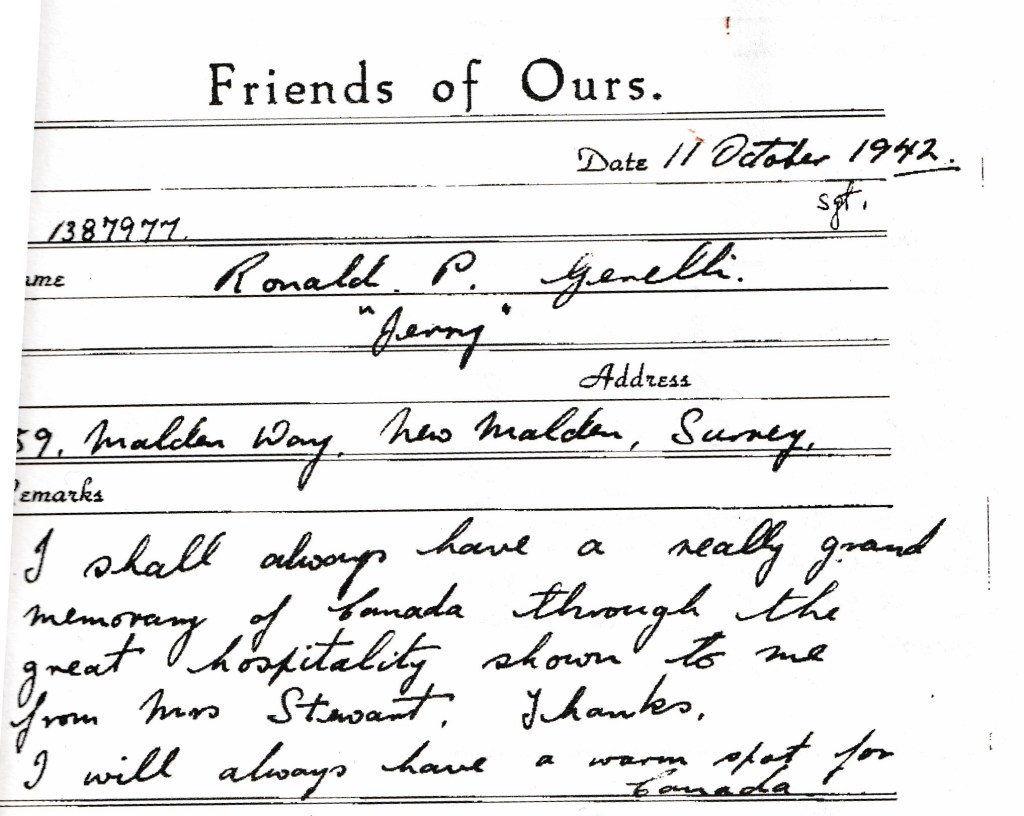
From Mabel Hunter Stewart’s Guest book, with notes and gifts of gratitude

My love of this fruitcake is not just because it was my Grammie’s cake but because of memories of Mum and I baking it annually, in October around Thanksgiving. Why so early, if it is intended for Christmas? It gives the cake time to “ripen”, and moisten, in it’s wrapping of cheesecloth soaked in rum or brandy!

Sgt ‘Jerry’ Gerilli and what Mabel Stewart’s war effort meant to him… It seems Jerry’s prediction was correct he remembered Canada since he remained in contact with Mabel’s family until his death in 2010.

I can see the three of us, getting out the fruitcake pans and lining them with greased brown paper. The large bowl filled with the carefully measured fruit pieces coated with flour. After mixing up the cake batter in a separate bowl, the fruit was poured in, and then came my favourite part…
getting my hands right in the bowl in order to mix it all together. Messy, but fun.

Its baking for four hours filled the house with that wonderful fragrance! If we could only bottle the smell!

I wondered how long fruitcake recipes have been around? So, I checked, some historians claim fruit cakes have existed since ancient Egypt, BCE (Before the Common Era)! We are told that Roman soldiers took them into battle and that fruitcakes were taken on the Crusades in the Middle Ages.

The church had quite an influence, regularly making pronouncements the faithful were expected to honor, like in the 1400’s when they prohibited butter during Advent. The boatloads of sugar which began arriving in Europe in the 1600’s saw its use in preserving fruit including for use in cakes. In the 1800’s when the church tried to declare fruit cakes “too decadent’, style won out when Queen Victoria served Fruitcake as her wedding cake,

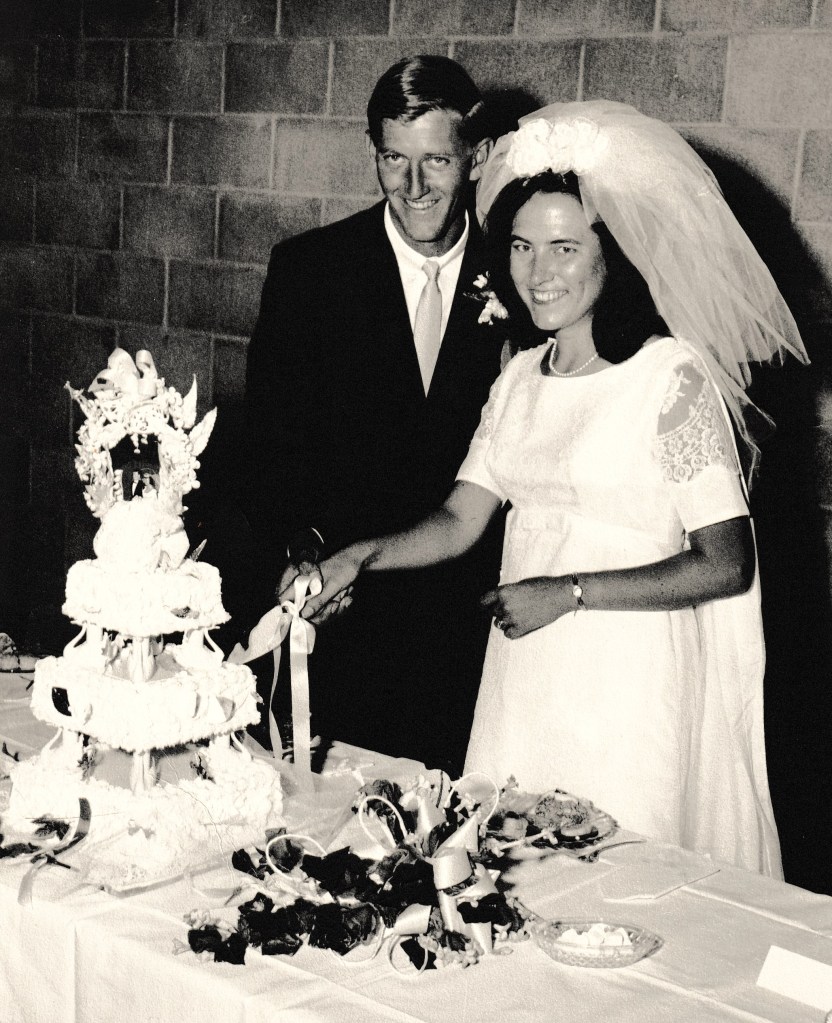
When your father (Papa) and I were married in 1967, we had a white wedding cake which we cut for guests to eat at the reception. We also had a fruitcake, cut up and sent home with the
guests to sleep on!

The Lindstrom’s c,1967

But, of course, you want to know where this recipe came from!
Well, I don’t know the origin, for me it will always be “Grammie Stewart’s Fruitcake”. The recipe is at least 80 years old. Not a lot has changed in the recipe in that time except….it
would have taken Grammie a lot longer to prepare than it does me: the recipe calls for 1½ lb of blanched almonds – she would have had to actually blanch the almonds, I can buy them already blanched; the recipe calls for 1 lb pitted prunes – she would have had to cook the prunes, let them cool and pit them herself, I can buy pitted prunes. Lastly, the recipe calls for specific measurements of lemon, orange and citron peels- which she could buy individually, but which more and more only comes as “mixed” peels. So things have changed!

Here is My Grammie Mabel Hunter Stewart’s Dark Fruit Cake
Ingredients:
1 lb. butter, softened
6 cups flour – use 4 of those cups of flour to mix with the fruit
9 eggs
1½ lb. (675 grams) citron
1½ lb. (675 gm) lemon peel
½ lb. (227 gm) orange peel
1 lb. (450 gm) pitted prunes
1½ lb. (675 gm) whole blanched almonds
1 cup strawberries
1 cup molasses
2 tsp each lemon flavouring and vanilla
2 tsp each cloves, cinnamon, allspice and mace
1 glass brandy or rum (2 oz)
1 tsp baking soda
4 lb. (1.8 kg) seedless raisins
4 lb. (1.8 kg) currants
1 lb. (2 cups) brown sugar
Notes and Method:
1) If you can’t find the 3 different types of peels, use mixed peel. I can usually only find the orange peel and so use a combination of that and mixed peel.
2) Cook the prunes in about 1/2 cup water until soft. Let cool.
3) In a very large bowl, mix together the fruit, fruit peel and almonds with 4 cups of flour.
4) In a separate mixing bowl, beat the eggs, butter, molasses, flavourings, spices, rum, soda, brown sugar and the remaining 2 cups of flour.
5) Combine the two mixtures in a very large bowl using your hands if necessary (I do!) until there is no sign of dry flour.
6) Pour into 3 brown paper lined and greased fruit cake tins and one 9”x9” cake pans. Put a pan of water on the bottom rack in the oven.
7) Bake at 280°F for 4 – 4½ hours. Remove and cool.
8) When cold, wrap in brandy soaked cheesecloth followed by plastic wrap and foil.
9) Let “ripen” for at least a month before eating.

The Stewart family – Mabel seated between her husband Charlie (center) and Jan’s Mum Marion, Dad, Andy in front.


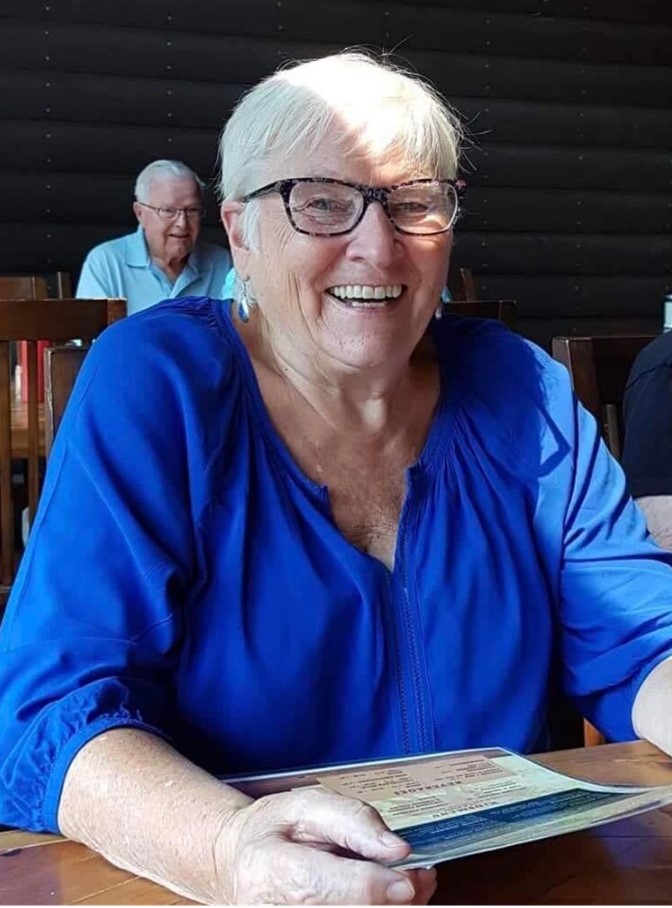
Janet Stewart Lindstrom describes herself as a Maritimer, despite being a resident of Northwestern Ontario for several decades. Jan prepares her Grammie Mabel’s Fruit cake each holiday season. Thank you Jan, for these memories, and gratitude in warm spices.

Janet Stewart Lindstrom c. 2024

Molasses cookies and knitted bandages…

The second blog profiling the life of women during war, and the service of veteran Marion Leane Smith Walls. The first blog War, Women and Warcake.

The My Mother’s Cookbook recipe for Molasses Cookies, the rolled out version, demonstrates the skill of home cooks to ‘make do’. The recipe is an older style which dates back beyond its contributor Marguerite Stillwell, to her mother Bertha Blanch Barton Stillwell.

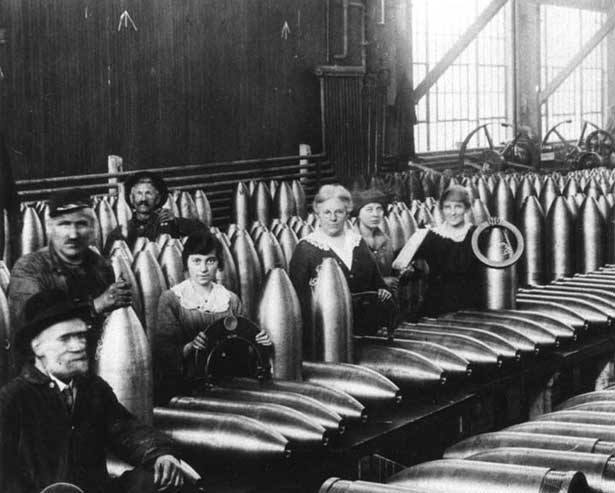
New Brunswick munition workers, at McAvity’s, St John. Photo courtesy of the PANB image #P149/11

Molasses has been a staple in Atlantic Canadian and New England Kitchens since ships from the West Indies began arriving to collect timber bound for Europe in the earliest days of British colonial settlement1. Cheap molasses had little or no market in Europe but filled the needs of settlers to the colonies. The trade soon grew to include fish from Atlantic Canada shipped to the West Indies as a cheap source of protein to feed enslaved and indentured sugar and cocoa plantations workers. It is small wonder molasses and salted /smoked fish maintain a presence in the diet of both Atlantic Canada and Caribbean nations such as The Dominican Republic, Trinidad & Tobago and Haiti, among others even today.

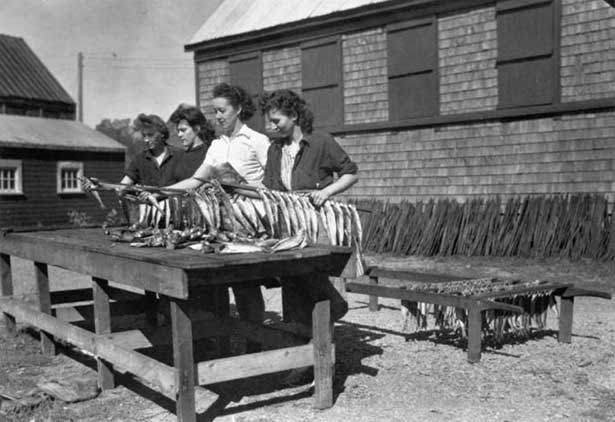
Women stringing herring to cure, Grand Manan c. 1945 Photo courtesy of the PANB Image # P93-CH/204

Growing up in the rural farming community of The Range, Waterbourgh Parish, Queens County, New Brunswick, Bertha Barton Stillwell’s diet was comprised in large part by dried salted meat, fish, beans, buckwheat and molasses. As other foods like sugar and wheat became more affordable, there is every likelihood Bertha’s family table still saw a pitcher of molasses and many a meal ended with bread and molasses.

Rural New Brunswick at Doaktown c.1890 Photo courtesy of the Our Miramichi Heritage Family FB site.

The dawn of the 20th century saw many rural Canadians choosing a life different than those of their parents. Limited economic opportunities, over crowding, poverty and the promise of an easier path saw many choosing to relocate to larger centers. Out migration was motivated by need in many cases, but not all, some families chose to leave, drawn by the promise of a modern life2.

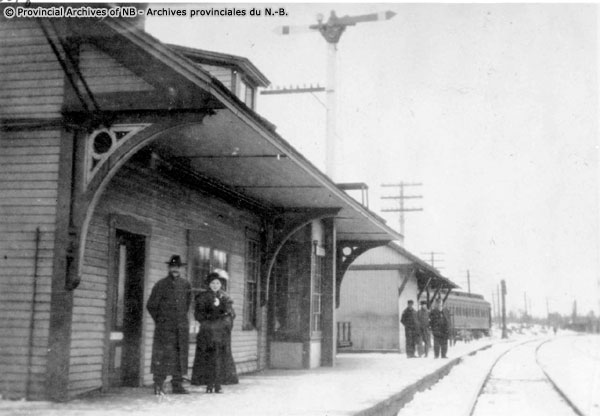
Fredericton Junction, NB Train station c. 1915 Photo courtesy of PANB Image number P55-8

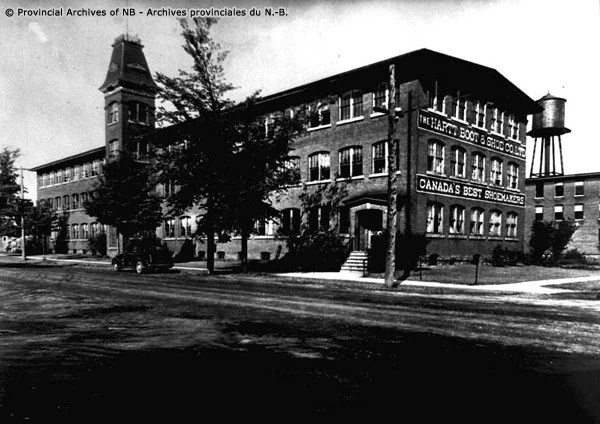
Bertha and her husband Thomas’ decision to move from their family farm to Fredericton might well have been motivated by the lure of town life and the modern conveniences it provided. Certainly, they were successful, Thomas found work in the Hartt Shoe factory working his way up to Foreman by 1921, they rented a home in North Devon (a neighbourhood of Fredericton’s Northside). Eventually the Thomas and Bertha would purchase a home in an upscale neighbourhood on Fredericton’s south side. Despite the resources they had, life presented challenges the First and second Wars, Influenza Pandemic, the Great Depression impacted everyone.

Hartt Boot and Shoe Company factory c. 1940, Photo courtesy of the Provincial Archives of New Brunswick Image Number P194-466

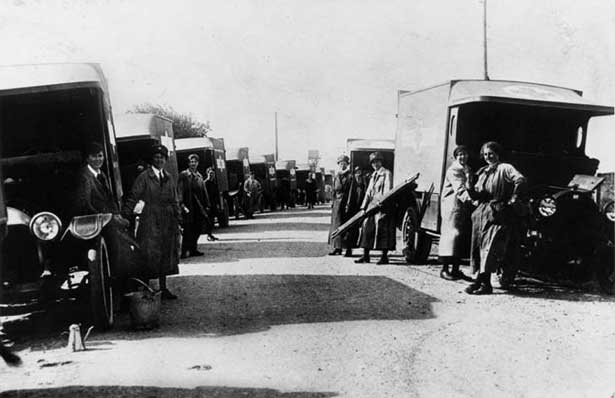
During the First War, women at home did everything they could for the war effort, the Canadian wing of the Red Cross3 together with their church and community auxiliaries provided the vehicle. The Red Cross had established it’s self during the Boar War as an organization able to provide the necessities of life to those impacted by war, soldiers, and civilians.

Canadian Women’s Motor Ambulance c. 1940 Photo courtesy of the PANB Image # P249/25

Bertha, a young mother, would have volunteered her time knitting bandages and comfort items; scarves, mittens as well as contributing to care packages being sent to POWs and those recovering from wounds and injuries in United Kingdom hospitals and convalescent homes. The Red Cross provided the organizational and logistical supports necessary to deliver the efforts of Canadian women in to the hands of those who needed it, loved ones and strangers.

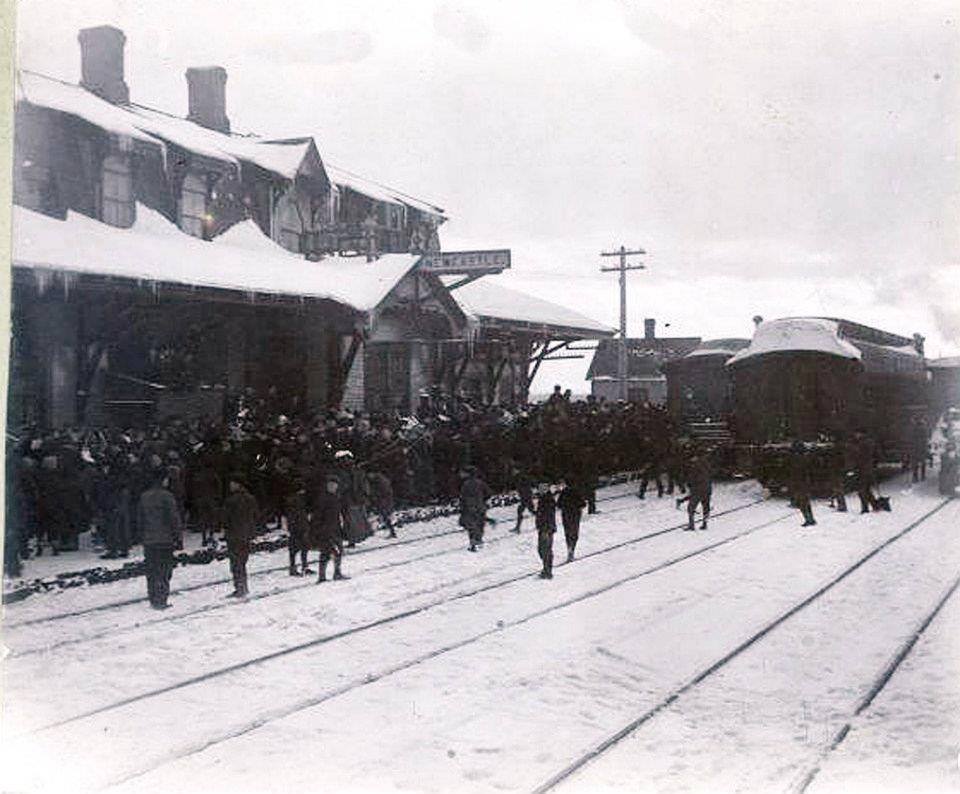
Train station Newcastle, NB awaiting a troop train. c1918 Photo courtesy of the Our Miramichi Heritage Family FB site.

At the beginning of the World War 1, Bertha found herself depending upon the old skills and techniques she’s once considered outdated. As some of the products she’d once depended upon in her modern city home became scarce, she would revisit old ingredients, old recipes and old habits. Even the old habit of collecting fat and bones became popular again, not for making soap but for use in munitions.

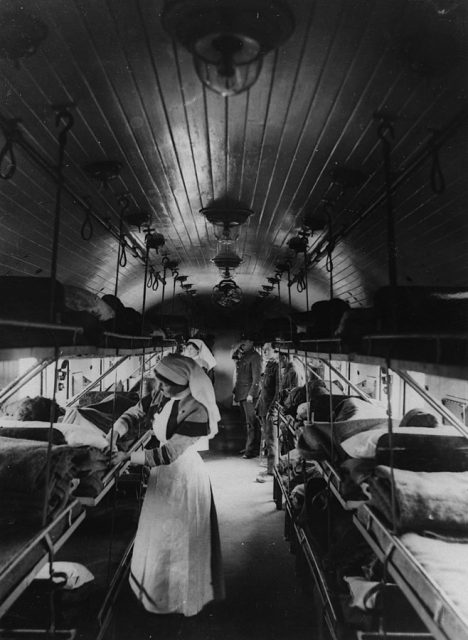
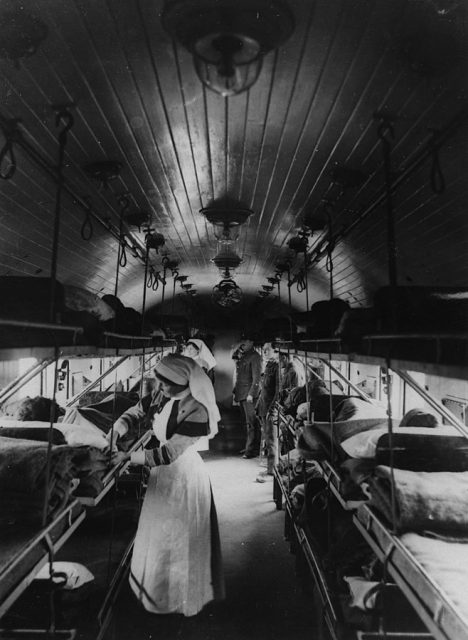
Nursing Sister assists a wounded soldier aboard an British Ambulance Train in France c. 1916

In her role as Nursing Sister on the Hospital trains4 in Northern France and Italy, Marion Smith Walls saw first hand the devastation war produced. She also saw the practical ways the Red Cross aided those suffering its effects. Marion would have used more than a few of those home knitted bandages to bind the wounds of her patients and seen the expressions of joy on the face of young soldiers receiving a care package from home. It is not in the least surprising that at the out break of the second World War Marion, with the aid of the Canadian Red Cross began to develop a similar program in her adopted home of Trinidad and Tobago.

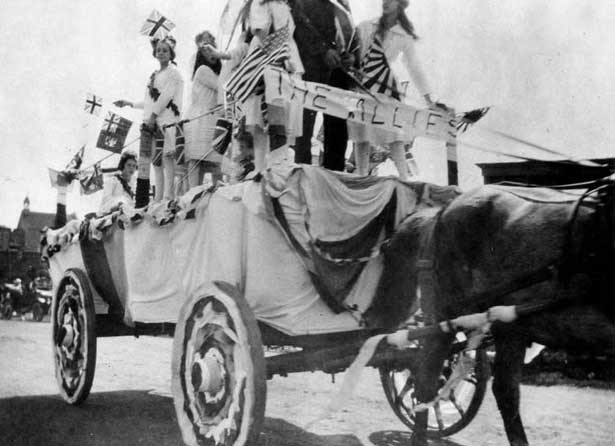
Victory Parade Float with young girls c. 1919 Photo courtesy of the PANB Image # P140-156

In November of 1924, Marion and her husband Victor Walls made the voyage to San Fernando, Trinidad. Victor had been appointed as Principal at the long standing Presbyterian education mission at Naparima College5. The College, a residential school had been founded in 1894 by Dr. Kenneth Grant a fellow Atlantic Canadian, friend and mentor of Victor’s. Naparima served the educational needs of the male children of indentured Indian sugar, and chocolate plantation workers.

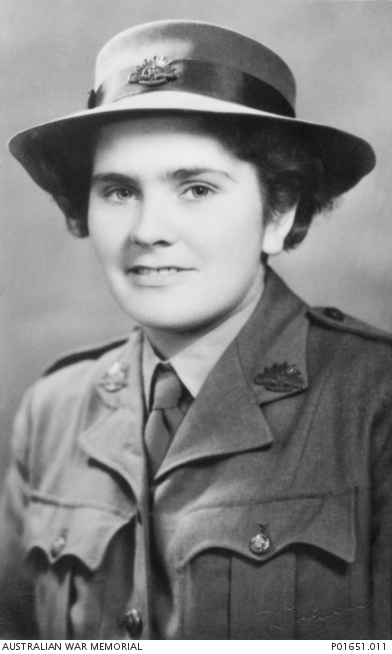
Nursing Sister Marion Leane Smith c.1918 Photo courtesy of the Australian War image #P01651.001

During their first 15 years in Trinidad and Tobago, Marion and Victor continued to build on the school’s success, and infrastructure. Marion established a school infirmary and assured nutritious and sufficient meals for students. She began educational programs on first aid and nursing, established the country’s first Nurses council and wrote text books on first aid and nursing in tropical climates. Marion was a nurse, she did what she knew to do, and that which needed doing. At the onset of World War 2, Marion and Victor mobilized, using the resources and network they had established at Naps, to begin Trinidad and Tobago’s contribution to the war effort.

Not only had Marion and Victor established themselves as excellent school and community leaders, they found themselves in the heart of the community’s very white elite, whites comprised only 3% of the population but controlled 99% of the political and business power. When Lady Young, the Australian born wife of the Governor Young decided to establish a Red Cross Committee both Marion and Victor agreed to be members. Marion and Victor realized the value a powerful figurehead would bring to the program, they placed their full support and resources behind the new organization.

Sadly, Lady Young’s leadership of the committee was fraught with conflict, some of which which grew to include accusations of racism during a spat with another high profile community member. Despite the dissension and the specific challenge of being the only ‘non white’ on the committee Marion faced, she managed to do her part. The committee and its work continued apparently in large part because of the hours of dedicated service of Marion Walls, the first Commandant of the Red Cross in Trinidad and Tobago. Marion Smith Walls was awarded the Distinguished War Service Medal for founding the Red Cross in Trinidad and Tobago and for her contributions to nursing and community development.

World War 2 in Canada saw an immediate upswing in support for the Red Cross, as the familiar programs from the first war were revisited with renewed vigor. The Canadian government played a far more active role, promoting nutrition guidance, encouraging Canadian’s to eat ‘patriotic foods’, teaming up with the Red Cross to engage Canadians in the cause. City dwellers dug up what ever land they had, backyard or front lawn to grow food, and create Victory Gardens. Young women worked in farm fields and became factory workers. Bertha, now in her sixties, drew on her old fashioned skill set, guiding and encouraging, as she watched her children and Grandchildren rediscover the value of the tried and true.

Formal food rationing programs began in January 1942, with sugar first, it would be followed by tea, coffee, butter and finally meat. This traditional recipe includes warm tea, a rationed commodity…waste not, want not!

My Mother’s Cookbooks rolled out Molasses Cookies

Ingredients:
1 cup brown sugar
1 cup shortening
1 cup molasses
1 egg at room temperature
1 cup warm tea
5 cups sifted flour
1 tsp salt
3 tsp ground ginger
3 tsp soda
3 tsp baking powder
Method:
1. Pre-heat oven to 400 degrees F
2. In a mixing bowl cream sugar and shortening, add molasses, well beaten egg and tea;
2. In a second bowl sift flour and other dry ingredients together;
3. Add the dry ingredients to first bowl and mix to combine; set aside to rest for 10 minutes;
4. Roll out thick (1/2 inch /15 mm) and cut into cookies;
5. Bake 12 -14 minutes or until done.

About the contributor of this recipe…

Marguerite Bertha Stillwell born 1916, the youngest child of Bertha and Thomas, grew up in North Devon. After high school, Marguerite trained as a secretary, eventually working in government where she served as secretary to various provincial government leaders. The last number of years before retirement, Marguerite served as Executive Secretary to Premier Richard Hatfield.

Marguerite never married, choosing to live with her family until her father’s death. In the 1960’s Marguerite purchased a new home in a neighbourhood bordering the Universities, her elder brother Percy made his home with her until his death. I know Marguerite made these cookies, back in the early 1980’s she shared this recipe with me after she’d made a batch for our shared nephew, Chris. I have every confidence Bertha was smiling down at her daughter sharing old fashioned molasses cookies with her Great Grandson.

Bertha Blanch Barton Stillwell

Bertha was born 3 May 1876, The Range, Waterborough Parish, Queen county, NB. Her parents Mary Jane Flower and John William Barton were descendants of Loyalists settlers to Queens county.

Bertha and Thomas Stillwell had 7 children, sons: Cleveland, Percey and Ernest, daughters: Velma, Gladys, Doris and Marguerite.

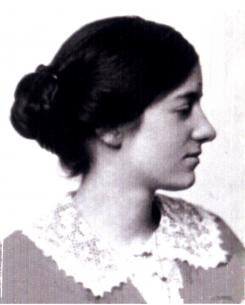
Marion Elizabeth Smith

Marion Elizabeth Smith was born in Liverpool, New South Wales, Australia on 12 Mar 1892. Her parents George Smith and Elizabeth Leane Smith welcomed Marion to their family of two. When Marion was two years old her parents took their growing family first to England then to Canada, finally settling in Fredericton Junction, New Brunswick.

Marion Elizabeth C.1913

George Smith was a native of Hambledon, Hampshire, England and Elizabeth Leane Smith was born in Liverpool, Australia to William Leane and Lucy Walker Leane. It is with out doubt Elizabeth’s parentage through her Mother Lucy, was a major part of the family’s decision to leave Australia.

Elizabeth Leane Smith and George W. Smith c.1910

The Dharug peoples traditional lands are in what is now known as New South Wales, in the immediate area of Sydney, Australia. All Aboriginal nations in Australia have been negatively impacted by European settlement, but none more than those of the south including the Dharug clan.

The traditional way of life of the Dharug was hunting and gathering, lacking the necessary ‘farming’ relationship to the land to be viewed by European settlers as owners. Disease, violence, displacement and famine during and after colonization decimated first nations clans, including the Dharug. The social and political environment for a couple of mixed race was characterized by discrimination and violence. These conditions experienced first hand by Marion’s mother Elizabeth would have impacted the family’s decision to relocate.

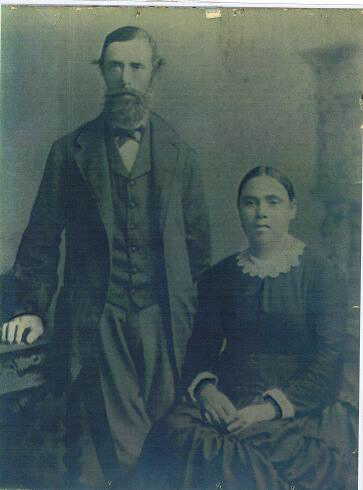
William Leane and Lucy Walker Leane – Marion’s Grandparents. c. 1890

Mixed race children like Elizabeth were caught between two worlds, never really being fully a part of either. The decision to leave Britain after several years and the arrival of several more children was also very likely driven by opportunity for their family. The legacy of Elizabeth’s Mother Lucy’s Dharug heritage would follow the family, particularly Marion, as she and Victor set out on their lives together as Presbyterian missionaries in the West Indies.

There is little doubt had the Smith family remained in Australia, Marion would never have been able to complete school and train as a nurse. Australia’s only known Aboriginal woman to serve during the first world war, Marion Elizabeth Smith would not have been.

Explanations and Resources:

1. Triangular trade is the pattern of trade established by the European empires, where raw materials from the colonies were transported to Europe for processing and manufacturing. The slave trade, where Africans from West Africa were transported to the West Indies to toil in the sugar plantations, was key to triangular trade. The end of slavery did not end the lucrative trade. Trinidad and Tobago, a nation of two islands in the former British West Indies, was home to both sugar and cocoa plantations. Depending first on the labour of African slaves, by the mid 19th century, indentured servants from the Indian sub continent joined former slaves, toiling in the islands’ plantations.

2. Between 1900 – 1911 a full 25% of the population of Queens County New Brunswick moved out of the county. A prosperous farming area, the out migration has been explored by academics who have determined many of the migrants were seeking a modern life, feelings of isolation and being left behind encouraging families to move. https://journals.lib.unb.ca/index.php/JNBS/article/view/24244/28027

3. The history of the Canadian Red Cross: https://www.redcross.ca/about-us/about-the-canadian-red-cross/historical-highlights

4. Ambulance Trains – or mobile hospitals, saw service in conflicts before 1900, and would continue service through both World Wars. The trains were staffed by 3 medical officers, 3 nursing sisters and a large number of orderlies. Ambulance trains could transport as many as 500 wounded. The trains contained not only stretcher wards but operating theaters.
5. Naparima College Naparima College (informally known as Naps) is a public secondary school for boys in Trinidad and Tobago. Located in San Fernando, the school was founded in 1894 but received official recognition in 1900. It was established by Dr. Kenneth J. Grant, a Canadian Presbyterian missionary working among the Indian population in Trinidad. The school was one of the first to educate Indo-Trinidadians and played an important and crucial role in the development of an Indo-Trinidadian and Tobagonian professional class. Naparima is derived from the Arawak word (A) naparima, meaning ‘large water’, or from Nabarima, Warao for ‘Father of the waves’.

War, Women and Warcake

On this Indigenous Veterans Day I am happy to reshare this blog. It is one of two featuring the service of Marion Leane Smith Walls, don’t miss the new release which explores Marion’s WW2 service which lead to her being awarded the Distinguished War Service Medal… Molasses Cookies and Knitted Bandages.

There are no less than three versions of Warcake in My Mother’s Cookbooks, which is not surprising since a large number of the recipes originate with women of a certain generation. Women like Myrtle Walls Leban’s and Marion Smith Walls’ who were born at the beginning of the last decade of the 19th century. Women whose lives were marked by two world wars.

Female clerks with customers in front of Blackville, NB store, c. 1900 Photo courtesy of Our MIramichi Heritage Facebook site

By 1900 the constraints on young women were loosening, with employment and educational opportunities opening up for ‘respectable’ young women. For many this afforded employment locally in shops and offices, before eventually marrying, and having a family. For others employment or advanced education meant leaving for larger centers, often to areas where other family had already settled.

In eastern Canada, the larger center often meant “the Boston states”. Marion Leane Smith, sought opportunity and education in Massachusetts. Marion studied nursing at the New England Hospital for Women and Children in Boston, then took a job in Montreal with the Victorian Order of Nurses in 1913.

By 1914, Aunt Myrt had married John Lebans, was mother of two and was living in Blackville, NB. John was a millworker, during the following 10 years, Aunt Myrt and the family would live in several Miramichi communities as John sought employment in mills across the region. Myrtle’s experience of the war was similar to most other rural Canadian women and vastly different than Marion’s.

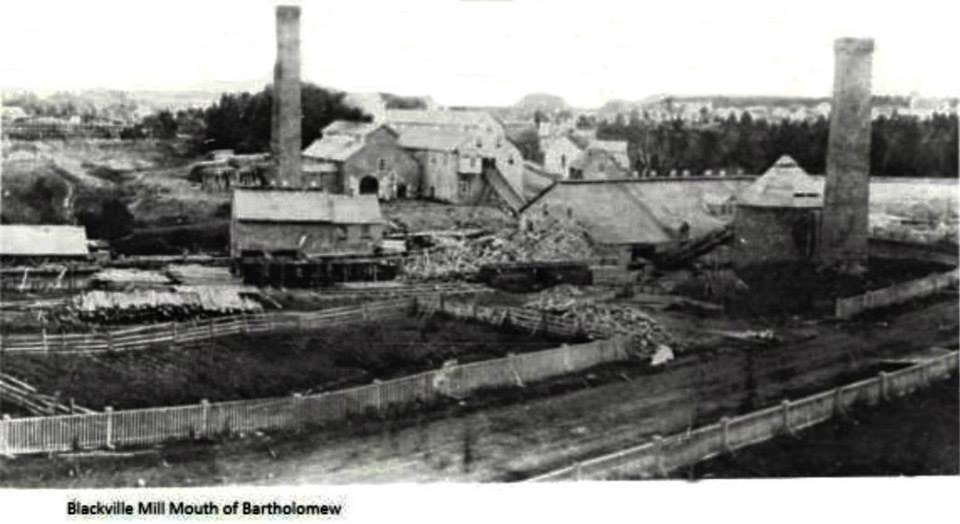
Mill at Mouth of the Bartholomew river, a tributary of the Southwest Miramichi c. 1915 Photo courtesy of the Our Miramichi Heritage site.

When the war began support for it was high, and remained so, despite sacrifice, change and loss. On the home front, Aunt Myrt dealing with restrictions, shortages and limits saw it as doing her part for the war. She probably experienced concern about the social change her country was experiencing. Change such as young women, and others previously denied access to the jobs in factories and other workplaces filling the labour shortage. Labour unrest, women’s suffrage, prohibition, and taxation were altering the lives of Canadians, even as strict moral standards remained largely unchanged.

On a personal level both Aunt Myrt and Marion experienced fear, worry and grief, as their brothers, uncles, cousins and friends went off to war, some never to return. Working as nurse in the urban center of Montreal, Marion would also have had direct involvement with those devastated by the war, those marginalized and blamed for the social ills plaguing the country, the poor, those with venereal diseases, unwanted pregnancy, etc.

In 1917, Marion enlisted1 with the Queen Alexandra Imperial Nursing Service and saw service with the 41st Field Ambulance train2 in France. Ambulance trains were difficult and dangerous workplaces, despite their white cross designation, they were not immune to attack by enemy forces.

Nursing Sister assists a wounded soldier aboard an British Ambulance Train in France c. 1916

After completing her contract with the train ambulance service, Marion served in Italy with the Italian Expeditionary force and at the University War Hospital in Southampton UK. At some point during her work with the British forces, Marion met a young medic from back home in New Brunswick. Victor Walls, Myrtle’s brother, left his studies at Dalhousie University, putting his plans to become a Presbyterian minister on hold temporarily, to serve his country. At the end of the war, Victor returned to his studies at Dalhousie and Divinity School. Uncle Victor and Aunt Marion married in 1924.

Marion and Victor Walls c. 1924

Now about the Warcake… When things get restricted, limited and difficult, we all rely on tradition to aid and comfort us. So of course women in this region, including Aunt Myrt, used molasses when sugar was expensive, scarce or rationed (as it was during WW2). Warcakes were made throughout both wars, and appeared on tables regularly for many years after.

The ties which bind Atlantic Canada and the West Indies did not end with the disappearance of wooden sailing vessels and slavery. The connections established more than 100 years of trade were not just commercial, they were personal as well.

In the following weeks we will look again to Marion, this time to her World War 2 service which would bring her the Distinguished War Service Metal for her work in the West Indies, Trinidad and Tobago.

So here is the recipe from My Mother’s Cookbooks which Mum used most often…. And yes it does contain some sugar.

Warcake – aka Molasses cake

Ingredients:
1 egg at room
1/2 cup white sugar
1/2 cup of lard or shortening
1 cup molasses
2 1/2 cups all purpose flour
1 tsp soda
pinch of salt
pinch of spices
1 cup boiling water
1 cup raisins (optional)
Method:
1. Preheat oven to 350 degrees F.
2. Grease and flour a 9 inch x 13inch pan;
3. Cream shortening and sugar together add egg;
4. Add molasses;
5. In a separate bowl mix dry ingredients, Add raisins if using;
6. Add flour to shortening sugar mix, combine thoroughly;
7. Add boiling water, beat well;
8. Pour into pan and bake until cake tester comes out clean. About 45 to 50 minutes.

Marion Elizabeth Smith

Marion Elizabeth Smith was born in Liverpool, New South Wales, Australia on 12 Mar 1892. Her parents George Smith and Elizabeth Leane Smith welcomed Marion to their family of two. When Marion was two years old her parents took their growing family first to England then to Canada, finally settling in Fredericton Junction, New Brunswick.

Marion Elizabeth C.1913

George Smith was a native of Hambledon, Hampshire, England and Elizabeth Leane Smith was born in Liverpool, Australia to William Leane and Lucy Walker Leane. It is with out doubt Elizabeth’s parentage through her Mother Lucy, was a major part of the family’s decision to leave Australia.

Elizabeth Leane Smith and George W. Smith c.1910

The Dharug peoples traditional lands are in what is now known as New South Wales, in the immediate area of Sydney, Australia. All Aboriginal nations in Australia have been negatively impacted by European settlement, but none more than those of the south including the Dharug clan.

The traditional way of life of the Dharug was hunting and gathering, lacking the necessary ‘farming’ relationship to the land to be viewed by European settlers as owners. Disease, violence, displacement and famine during and after colonization decimated first nations clans, including the Dharug. The social and political environment for a couple of mixed race was characterized by discrimination and violence. These conditions experienced first hand by Marion’s mother Elizabeth would have impacted the family’s decision to relocate.

William Leane and Lucy Walker Leane – Marion’s Grandparents. c. 1890

Mixed race children like Elizabeth were caught between two worlds, never really being fully a part of either. The decision to leave Britain after several years and the arrival of several more children was also very likely driven by opportunity for their family. The legacy of Elizabeth’s Mother Lucy’s Dharug heritage would follow the family, particularly Marion, as she and Victor set out on their lives together as Presbyterian missionaries in the West Indies.

There is little doubt had the Smith family remained in Australia, Marion would never have been able to complete school and train as a nurse. Australia’s only known Aboriginal woman to serve during the first world war, Marion Elizabeth Smith would not have been.

Explanations:
1. In 1917, George H. Smith, Marion’s younger brother was killed in France while serving with the Canadian Expeditionary force.
2. Ambulance Trains – or mobile hospitals, saw service in conflicts before 1900, and would continue service through both World Wars. The trains were staffed by 3 medical officers, 3 nursing sisters and a large number of orderlies. Ambulance trains could transport as many as 500 wounded. The trains contained not only stretcher wards but operating theaters.

Resources:

  1. http://www.thecanadianencyclopedia.ca/en/article/wartime-home-front
  2. https://www.warhistoryonline.com/world-war-i/recovery-on-rails-ambulance-trains.html
  3. https://www.railwaymuseum.org.uk/objects-and-stories/ambulance-trains-bringing-first-world-war-home
  4. https://www.deadlystory.com/page/culture/articles/anzac-day-2018/marion-leanne-smith


War, lobster and Lottie

A sheep shearer’s war effort, and My Mother’s Cookbook’s lobster roll.

This blog is 3rd in the series Atlantic Canadian Women of the Cloth – Homebased textile production.

Happy to reshare this blog from 2024, about one woman’s war effort, and a recipe for lobster roll too.

I have difficulty believing people order lobster in the shell in high end restaurants. It’s not that I don’t see lobster as luxury food, or that I don’t love the taste. For me a ‘feed’1 of lobster from the shell, is an outdoor activity. One that requires, all the tools, a newspaper covered picnic table, and freedom to let the juices drip off my elbows. Fortunately, I am local to two lobster fishing seasons, and to a large lobster processor. I have options and unless it is a family lobster boil, I usually buy fresh cooked (same day) and shelled by the processor. A feed of lobster is very much a luxury in our home.

Marie Doucet feeding the cows in Cape St Mary’s 1950 Photography by John Collier, JR in the collection of Alexander H. Leighton NS Archives 1988-413 #2504-d

Charlotte (Lottie) Melanson2 loved the physical demands of farm life but when it came to suppling herself an income her options were limited. The time Lottie’s father John Melanson spent working as a carpenter, assured his children were well equipped with skills like, sloping pigs, milking cows, tilling, planting, harvesting crops, and shearing sheep. From an early age Lottie preferred outside work, and did not take well to life in the classroom or one involving refined womanly activities.

Wool being washed and hung to dry. Richards, Dufferin Collection: the Provincial Archives of New Brunswick Ref # P368-32.

In 1930’s Nova Scotia paid work was still highly gendered, women could choose jobs in retail, as housemaids, as factory workers, they could be teachers, or nurses but not paid farm labourers. Acadian women like Lottie and her sisters, faced the additional disadvantage of open and accepted discrimination against them for nothing more than their being Acadian. Many single women left Atlantic Canada for work in the factories or large homes of the “Boston States”3. If like Lottie, they wanted to stay local it often meant working in a lobster cannery.

Lobster processing c.1950 Cheticamp, NS Nova Scotia Information Service – Nova Scotia Information Service Nova Scotia Archives #13392

Fishing lobster for export began in Atlantic Canada as soon as canning technology allowed the preserving of the tasty fish. When markets in New England and Britain beaconed, Atlantic Canadian fishers stepped up. The Lobster industry like any built on a luxury item, is subjected to market forces which are unpredictable and capricious4. Boom bust cycles effected fishers and processors alike from the very beginning. Market cycles which took lobster from ordinary food on Atlantic Canadian dinner tables to New York and London luxury restaurants, delivered it back with regularity5.

The period between the first and second wars was dominated by the Great Depression, high unemployment and widespread suffering. The depression halted a period of mechanization, the move away from subsistence farming and development of specialty farms. Textile production moved from spinning wheels to factories6 that depended upon imported wool. Although some farms still raised sheep, by the end of the 1930s they were in far fewer number.

Bottle fed lambs at Portage Pork Plus Farm, Portage, Westmorland, NB. Owned and operated by Arndt & Gabriele Becker and family who supplied this photo

Canada’s declaration of war on Germany in 1939 further entrenched the austerity began during the Depression but finding work was no longer the problem. Self sufficiency intensified further, cows and sheep repopulated farms and front lawns became vegetable gardens. Choosing homegrown and homespun became patriotic7 again, and the lobster on dinner tables and in school lunch cans was rebranded as patriotic too.

Grazing sheep and Lobster pots. W.R. MacAskill Nova Scotia Archives 1987-453 Ref #1317.

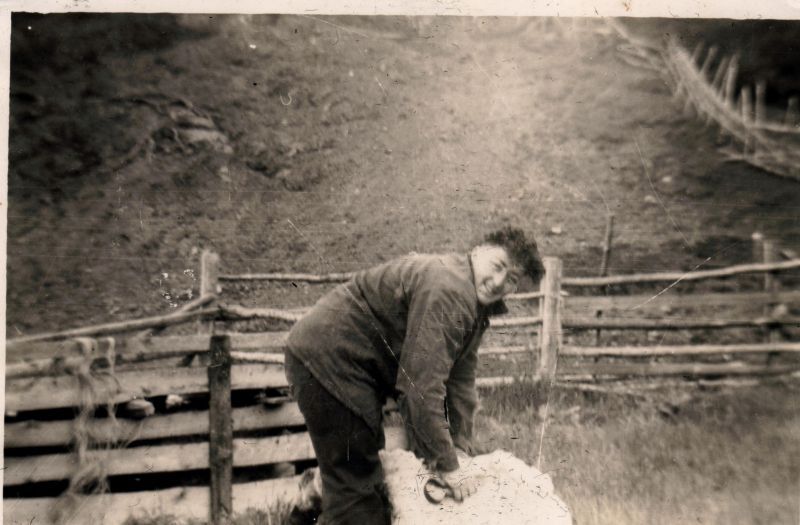
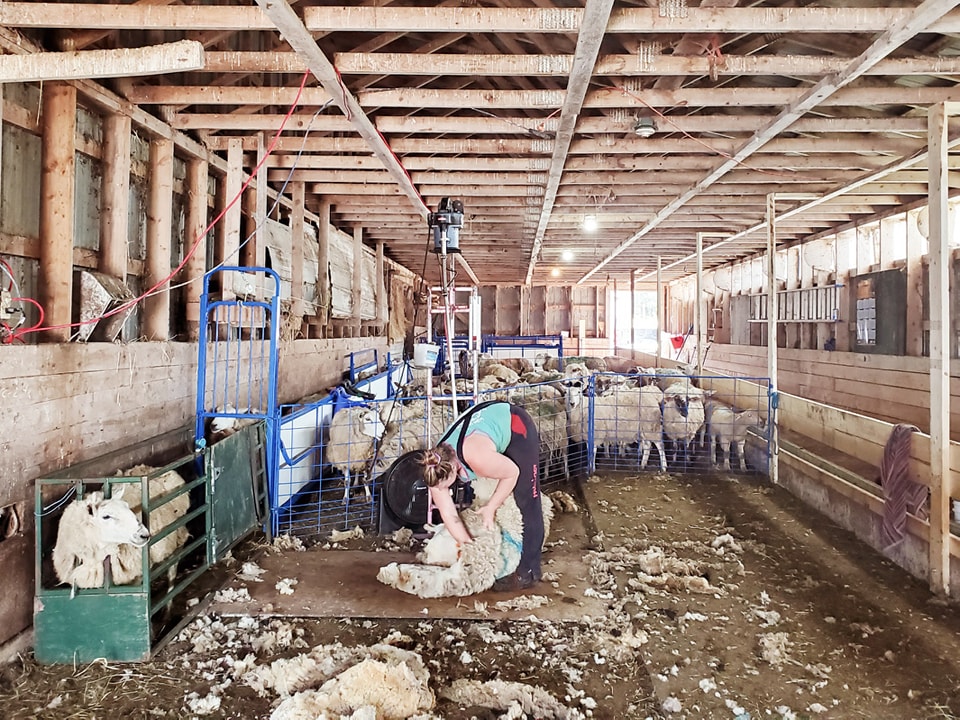
The recruitment of troops from rural Canada, emptied farm fields of labourers and raised a new problem. Who would till the soil and raise the animals? Just like in armament factories, the answer was women, women were now welcomed as employees on farms and in farm fields. For Lottie the war was an opportunity, she put her skills to work in aid of her country and earned income while her husband John MacPherson served overseas. Lottie found her niche as a farm hand with a particular skill set, she was a fast, efficient and effective sheep shearer.

Charlotte (Lottie) Melanson MacPherson at work using hand powered shears c.1943 Photo courtesy of Find a grave and Photographer/Contributor David Phillips.

During shearing season, Lottie moved from farm to farm in Antigonish, Guysborough and Inverness counties shearing sheep as she went. As an itinerate worker, Lottie depended upon farm families to host her during her time shearing their sheep. Lottie took to life on the road well, she used her work hours to hone her skill as a shearer and spent her leisure hours enjoying the company of her host families, attending local parties and social events.

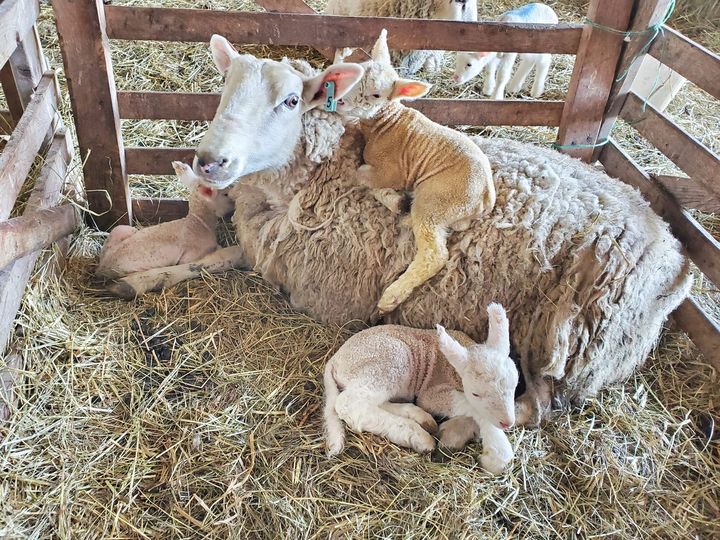
A tolerant Mama and triplet lambs -Portage Pork Plus Farm, Portage, Westmorland, NB. Owned and operated by Arndt & Gabriele Becker and family who supplied this photo

Lottie, was a sturdy farm woman, tall, strong and willing, she was also what my Mum called ‘rough around the edges’. Lottie challenged gender norms with a salty tongue8, and a reputation for being able and willing to use her physical strength to contain wayward men as easily as the sheep she was shearing. The strong affection for Lottie held by those who remember her from those years, proves Lottie was more than a man-ish woman with a skill set. Her love of telling ghost stories to the children in the families she visited, and the respect other women had for her proves a depth of character beyond her sheep shearing capacity.

As a shearer few could surpass her ability, using only hand powered shears9, Lottie averaged about 80 sheep per day. In 1945 Lottie sheared more than 5700 sheep in her work season, and proved her capacity to shear a sheep in a record 2 minutes 45 seconds.

Shearing at Portage Pork Plus Farm, Portage, Westmorland, NB. Owned and operated by Arndt & Gabriele Becker and family who supplied this photo

The end of second world war began a period of intense modernity, sheep raising, and homebased textile production waned. Lobster stopped being a patriotic food choice and disappeared from lunch cans. Lottie’s war effort ended too, sheep ranching for textile production all but stopped in the region, only resurging minorly after Lottie was beyond her ability to shear.

By the time I encountered Lottie, her physical health was failing but her reputation as a champion sheep shearer remained intact. I wish I had taken more time to know her and learn more about her life, I might have confirmed the good possibility, that some of those farm house tables delivered Lottie a feed of lobster.

Because I purchase lobster already cooked and shelled, I can serve it as lobster salad or build a fancy version of the school lunch box sandwich, the lobster roll .

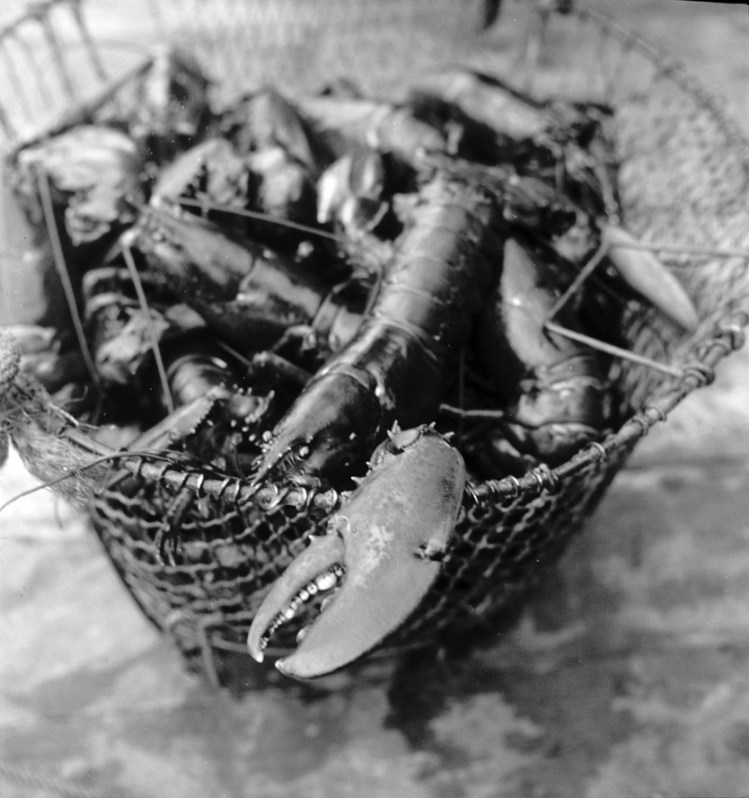
A buyer’s basket of lobsters Cape St Mary’s 1 Dec 1950. Photo in the collection of Alexander H. Leighton at the NS Archives 1988/413 #1317. Photographer John Collier jr.

My Mother’s cookbooks Lobster Salad / Roll:

Ingredients:
3 cups of chopped lobster
1/2 finely chopped celery
1/4 c My Mother’s Cookbook cooked salad dressing
up to 1/4 c Mayonnaise
salt and pepper
Method:
1. Place ingredients in a bowl and mix to combine, adding 1 T at a time of the mayo until it reaches desired consistency.
2. Serve with sides of potato salad, and mixed greens, or toast a brioche bun, slather with garlic butter and stuff with lobster salad.

My Mother’s cookbook cooked salad dressing:

Ingredients:
3 T flour
6 T sugar
1 egg
2 tsp dry mustard
6T white vinegar
1/2 c milk
2 T butter
Method:
1. In a medium sauce pan, combine flour, sugar, mustard together and mix well:
2. Add vinegar and egg which has been beaten, mix well;
3. Add milk and place over medium heat;
4. Stir constantly until the sauce reaches a soft boil and thickened,
5. Remove from heat, add butter, permit to cool and refrigerate.

*** Homemade boiled salad dressing can be used to replace sweetened dressings in potato salad, chicken salad, Cole slaw, etc.

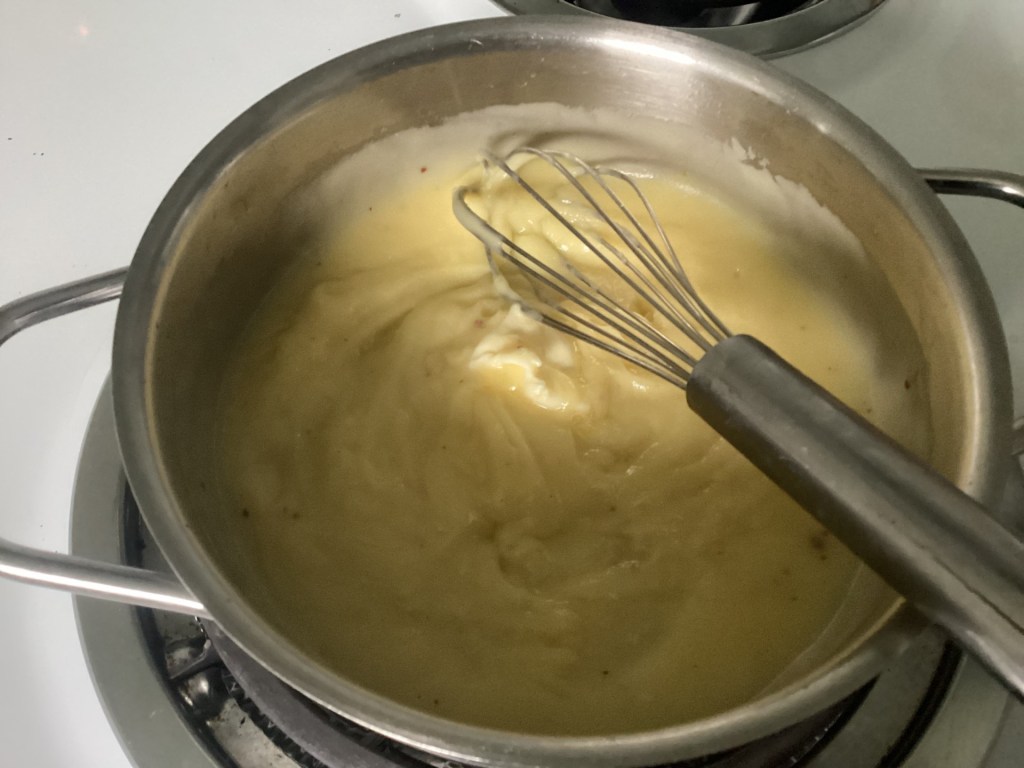
Boiled salad dressing – Photo Elizabeth Lyons Morrison

Footnotes:

Atlantic Canadian Women of the Cloth – Homebased textile Series Reference list:

  1. “Flax, Farming and Food: How Scottish – Irish Immigrants Contributed to New England Society in the 18th Century”, Worcester Historical Museum, Worcester, Mass. https://worcesterhistorical.com/worcester-1718/flax-farming-and-food-how-scotch-irish-immigrants-contributed-to-new-england-society-in-the-18th-century/#:~:text=Accustomed%20to%20spinning%20wool%20and,fever’%20in%20the%20local%20population
  2. Bitterman, R. “Farm households and wage labour in the Northeastern Maritimes” Labour/LeTravail, 1993. https://www.erudit.org/en/journals/llt/1993-v31-llt_31/llt31art01.pdf
  3. Rygiel, J. A “Women of the cloth – weavers in Westmorland and Charlotte Counties New Brunswick 1871 -1891”; UNPUL thesis Carleton University, 1998.
    https://repository.library.carleton.ca/concern/etds/37720d
  4. Rygiel, J.A. “Thread in Her Hands –Cash in Her Pockets; Women and Domestic Textile Production in 19th-Century New Brunswick” UNPUL thesis Carleton University,
  5. MacLeod, E. and MacInnis, D.; “Celtic Threads: a journey in Cape Breton Crafts”; Cape Breton University Press, Sydney, NS. 2014
  6. Introduction to the Spinning Wheels collection in the National Museum of Scotland https://blog.nms.ac.uk/2020/12/14/introduction-to-the-spinning-wheel-collection-in-national-museums-scotland/
  7. Goodrich, W.E. “DOMESTIC TEXTILE PRODUCTION IN EARLY NEW BRUNSWICK” Keillor House Museum.
  8. Toal, Ciaran “Flax to Fabric – The history of Irish linen and flax” Lisburn Museum https://www.lisburnmuseum.com/news/history-of-irish-linen-flax/
  9. Dunfield, R.W. “The Atlantic Salmon in the History of North America” Fisheries and Oceans Canada 1985. https://waves-vagues.dfo-mpo.gc.ca/library-bibliotheque/28322.pdf
  10. Wallace -Casey, Cynthia “Providential Openings – The Women Weavers of Nineteenth-century Queens County, New Brunswick” Material Culture Review. 46, 1 (Jun. 1997). https://journals.lib.unb.ca/index.php/MCR/article/view/17740/22230
  11. Eveline MacLeod and Daniel W. MacInnes “Celtic Threads: A journey in Cape Breton crafts” Cape Breton University Press, Sydney, NS 2014.
  12. MacMillan, A.J. “A West Wind to East Bay: Short History and a Genealogical Tracing of the Pioneer Families of the East Bay Area of Cape Breton.” Music Hill Publishing, Sydney, NS 2001.
  13. Campbell, Joseph “Information regarding the avalanche at John Campbell’s farm 5 Feb 1856”, a recording by Mrs. Archie MacDougall 25 July 1966. In the holdings of the Beaton Institute, Sydney, NS.
  14. Roach Pierson, Ruth. “Canadian Women and the Second World War” The Canadian Historical Association. Ottawa 1983.
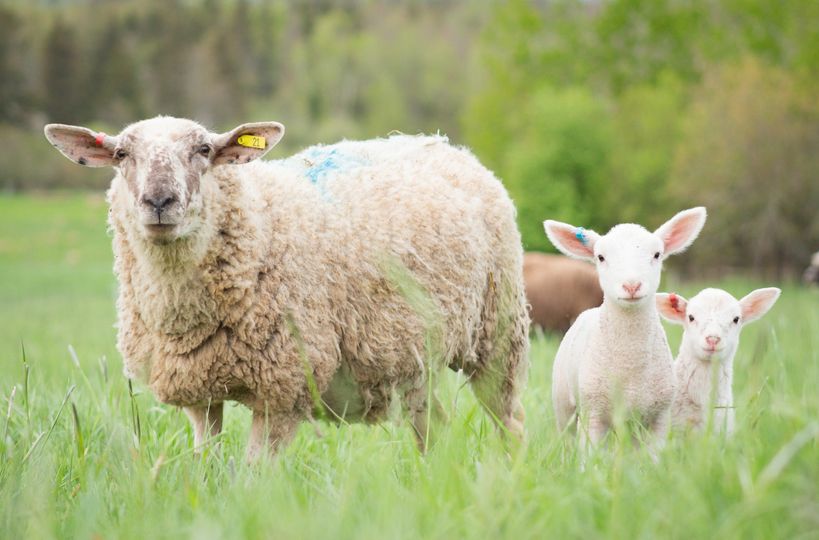
Spring lambs and their Momma at Portage Pork Plus Farm, Portage, Westmorland, NB. Owned and operated by Arndt & Gabriele Becker and family who supplied this photo

Acknowledgement: I acknowledge that the land on which I live and write about is the traditional unceded territory of the Wolastoqiyik (Maliseet) and Mi’kmaq Peoples. This territory is covered by the “Treaties of Peace and Friendship” which Wolastoqiyik (Maliseet) and Mi’kmaq Peoples first signed with the British Crown in 1725. The treaties did not deal with surrender of lands and resources but in fact recognized Mi’kmaq and Wolastoqiyik (Maliseet) title and established the rules for what was to be an ongoing relationship between nations.

Plum pudding, Cook Scows, and Bake Ovens.

A seasonal reshare… It is pushing it a bit to call this recipe seasonal…ideally preparation of this traditional Christmas pudding would have happened long before the first week of November but ideal is not reality. The product will be delicious regardless, admittedly even more so the longer it has to cure. Betsey probably made one every fall but it would not be consumed until the following Christmas.

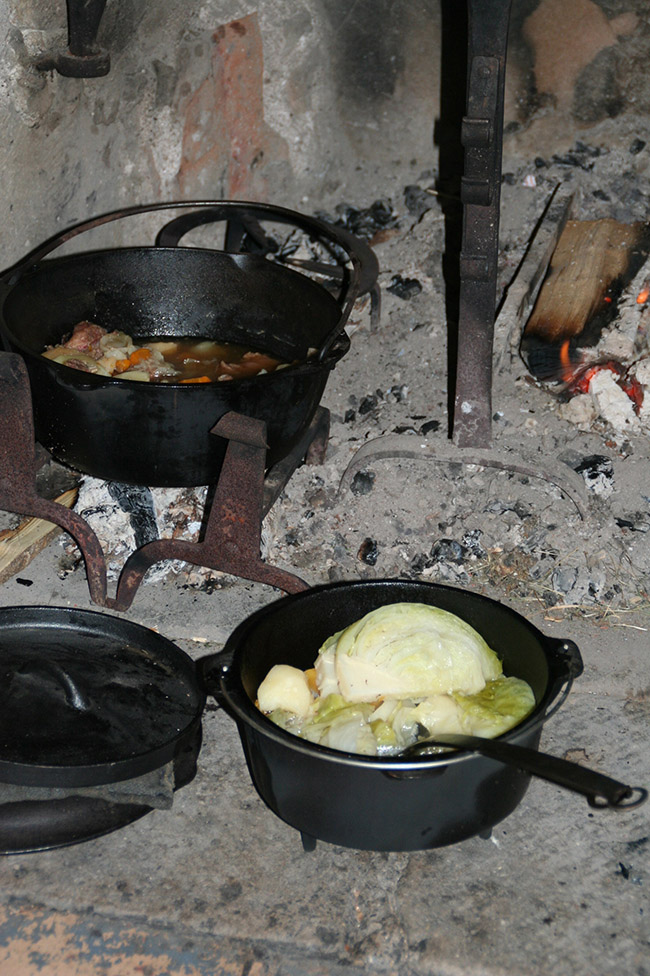
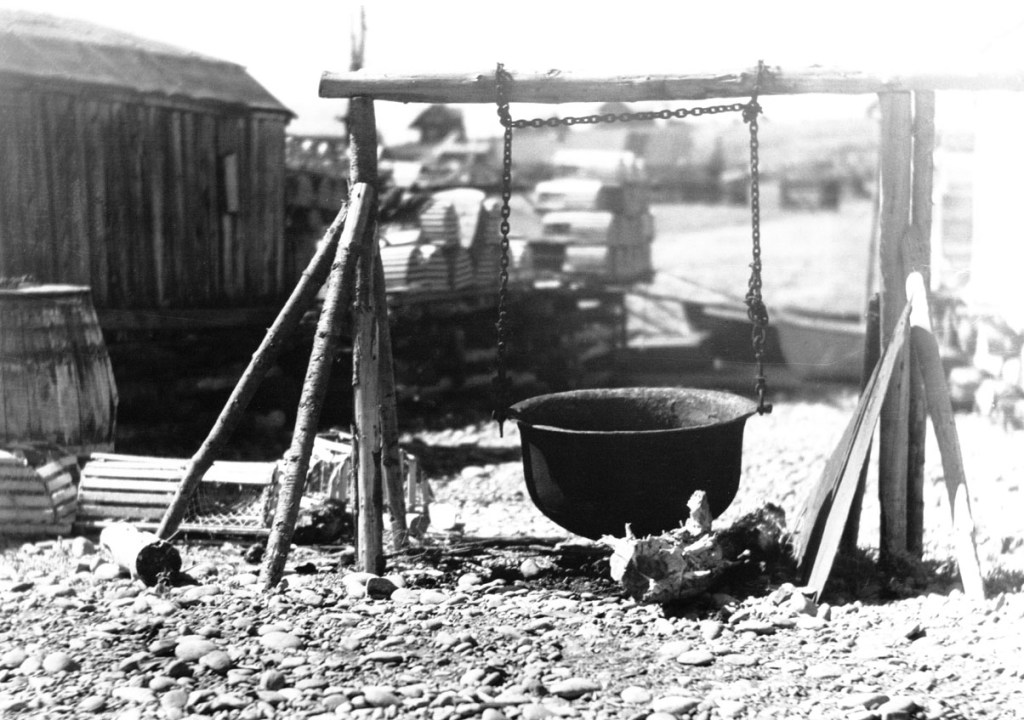
Cast iron cookware seems everywhere at the moment, although only skillets and frying pans and not the large pots, bake – ovens1 (aka Dutch Ovens) and utensils once common in households. Cast iron cookware retains heat wonderfully, and provided it is properly seasoned is non stick2! Although the newly manufactured variety come pre-seasoned, many people choose vintage cast-iron cookware. Yes, cast iron cookware is durable too.

Hearth cooking methods used 1850 – Photo courtesy of the NS Archives Ref: Highland Village Museum H2013.30.37

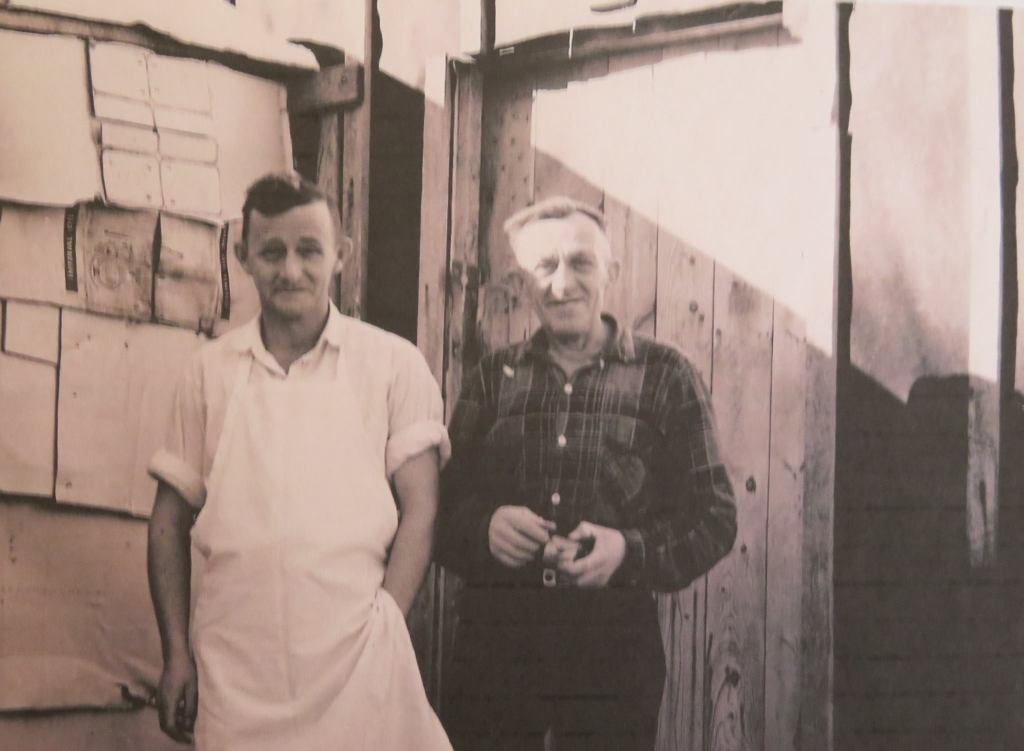
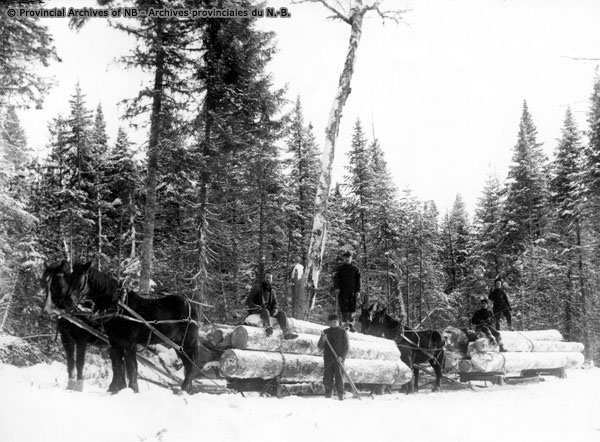
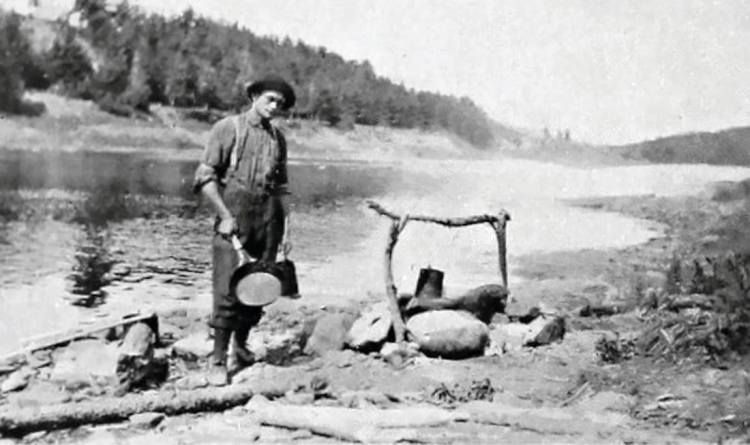
My Dad and his brother’s learned early to cook, or at least sustain themselves with minimal parental intervention. After my Grandmother Florence died, Grandfather did not remarry despite having 6 young sons to raise. Grandfather Tully was a woodsmen, a teamster with a knack for getting the best from horses. His gentle and quiet style earned him high respect from both man and beast but delivered little in the way of monetary benefit. Most Logging industry Walking Bosses, the successful ones at least, understood good horses and teamsters, were as important as a good cook to a logging operation. That knowledge did not however translate in to high wages for either teamsters or cooks, especially in central New Brunswick of the 1930s.

Lumber camp c.1900 – Photo courtesy of the PANB ERB, Isaac C-Photographs # P11-71

When Betsey and her husband Jeremiah Lyon moved to what would become Carrolls Crossing, Northumberland County, New Brunswick she brought her kitchen furniture with her. The move which ended more than 30 years of displacement for her family3, solidified their dependance on the region’s natural resources, particularly timber.

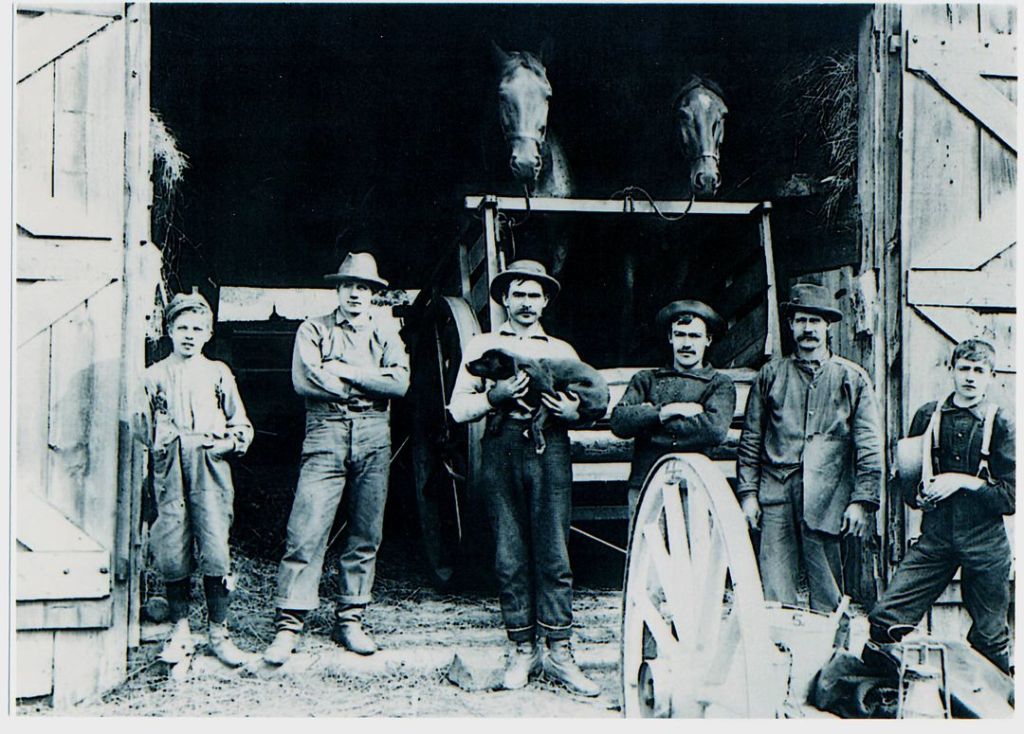
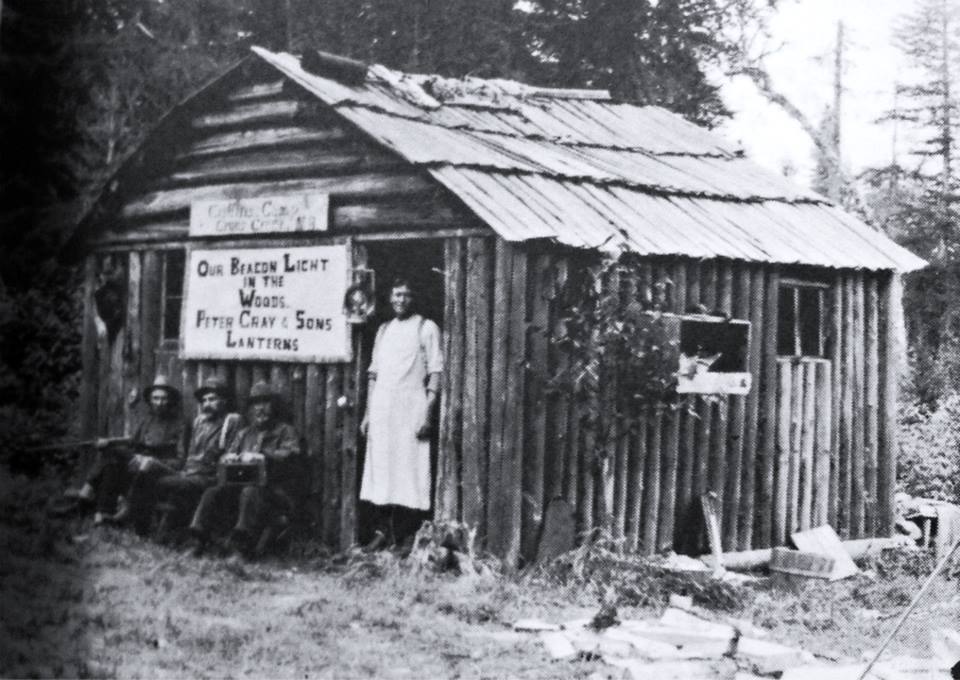
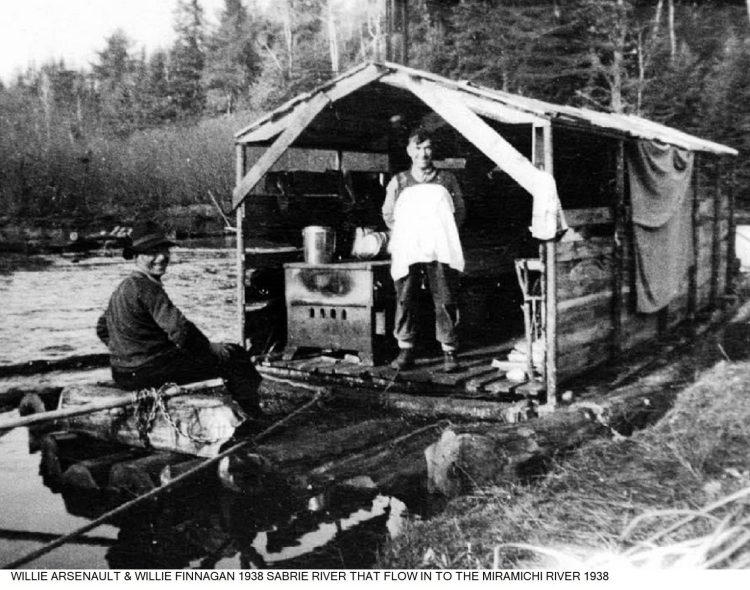
Logging Cook house c. 1900 Photo courtesy of the Our Miramichi Family Heritage FB site – Charles Asoyuf Album

Betsey’s first Miramichi home was humble, made of freshly felled trees and boasting at most a window, door and fireplace. It took a variety of implements, fire irons, utensils, pots and Dutch ovens (aka bake ovens) and lots of know how for Betsey to produce food for her family. Some of the cast iron Betsey depended upon, she might have inherited, since it was common for kitchen ‘movables’ to be included in wills during the colonial period.

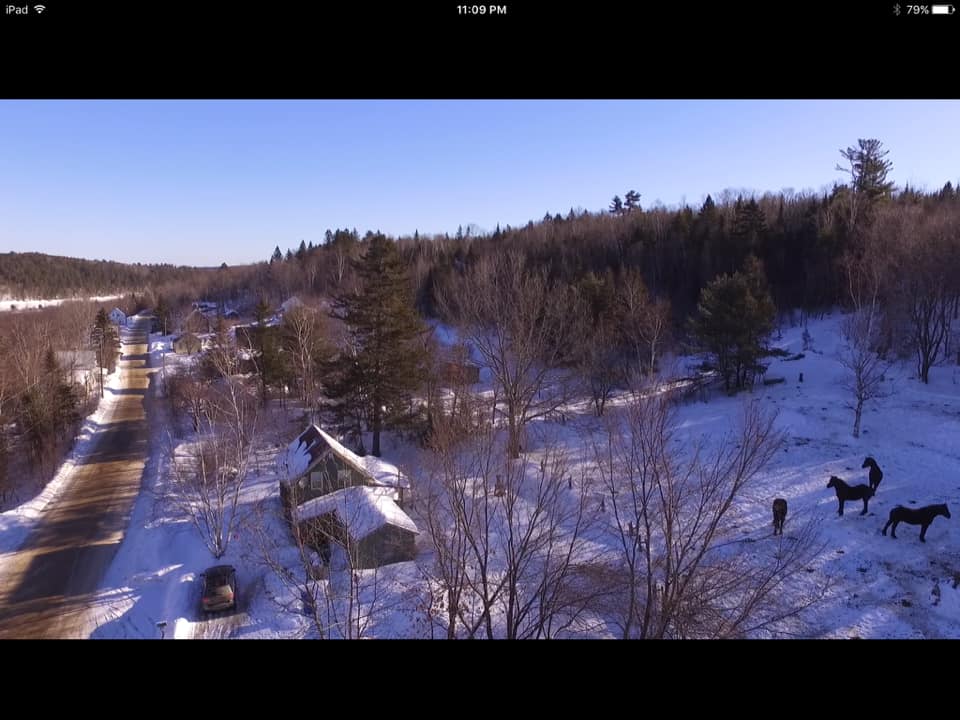
Some of the original Jeremiah Lyons land grant of 1809 at Carrol’ls Crossing c.2020. Photo courtesy of Catherine S. Colford on the Family Connections of the Upper Miramichi River Valley, FB site.

By 1809, Betsey’s family had already begun to dabble in the timber industry, harvesting and selling timber, as well as buying and selling timber land, but they did not ignore the other resources the land provided. Food was both foraged and grown, Betsey’s table included fish, game, wild fruits and greens from the natural environment along with buckwheat, oats, barley and potatoes from the land they cleared and farmed.

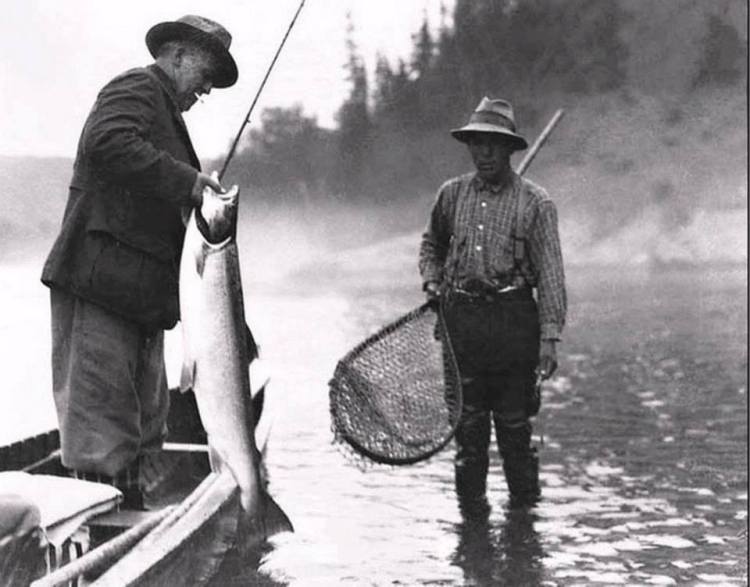
Iconic Atlantic Salmon – The Southwest Miramichi River once teamed with fish, jumping and rolling their way up river to spawn. This photo courtesy of the Our Miramichi Family Heritage FB site – Charles Asoyuf Album

Trade in timber was not the family’s only industry either. When a natural sand stone quarry was discovered on their son Daniel’s adjoining property, they became stone cutters as well as timber harvesters and bosses. For Betsey cash income helped build a permanent wood frame home in a familiar Colonial style, equipped with two fireplaces4. It also meant Betsey was able to purchase familiar food stuffs including spices5 to add variety to their largely monotonous diet.

Fish Stone Quarry at French Fort Cove, Northumberland county, NB. c.1890 Photo courtesy of Our Miramichi Family Heritage FB site – Charles Asoyuf Album

Despite the remoteness of Betsey’s home in Carrolls, ‘industry’ inserted traders and merchants in to the mix, and gave her access to products from all over the world, all be it limited access. Sugar and molasses from the West Indies, rum and corn meal from the United States, indigo from Spain, spices like mace, nutmeg, cinnamon, from the Spice Islands, ginger from South East Asia, were all available provided she had cash (or could arrange credit). Of course access was limited, once or twice a year at most, with cash in hand Jeremiah and their sons would make a trip to the trading centers at the mouth of the river, or to the capital Fredericton to collect supplies for the family.

Interval land along the Southwest Miramichi River at Carrolls Crossing, was included in the land granted to Jeremiah Lyons, 1809. During the spring freshet, interval lands flood as the winter’s snow melt and fills the steep valley. Photo courtesy of Catherine S. Colford on the Family Connections of the Upper Miramichi River Valley, FB site.

For much of the year the absence of roads thru the dense forest meant several days journey, by canoe and portage. In spring however things changed, the melting snow and resulting rise in water levels made the Miramichi river system navigable. The Timber which they had cut and yarded was ‘driven’ down river to the port and awaiting ships. The log drive provided opportunity to pick up a bit of spice which could be tucked in to a pocket for the trip home, but only as money or credit allowed.

Betsey used her stash of spices, dried fruits, wheat flour and other value ingredients to maximum effect, carefully assuring a reserve for the Christmas celebration. In colonial New Brunswick, there was neither the tradition nor capacity for lavish celebrations even at Christmas. The one exception was food, foods too ‘dear’ for daily consumption, were used to make the Christmas season.

What Betsey prepared depended upon what she had available, but it had also to be manageable over a fire. Feast food like pies and cakes required Betsey to use her Dutch Oven (aka bakeoven). The lidded cast iron pot with legs was large enough to accommodate a second pot or pan. Betsey would strategically place the bake oven in to the fire, using the additional insulation it provided the smaller vessel which contained a pie, tart or a cake, to create an oven effect. Betsey’s supplies might well extend to treats like blueberry pie(reconstituted) and mincemeat tarts, but only after the Christmas pudding6 was complete. For plum pudding Betsey’s dutch oven was used as a steam bath, filled with water to surround and moisten the fruit pudding as it cooked.

Large cast iron pot on an outside hearth, Gabarus, NS c.1930 Photo courtesy of the NS Archives – W.R. MacAskill NS Archives 1985-452 #4183.

Eventually, the cast iron pots no longer needed legs or hanging handles, fire irons and cranes were removed from the kitchen as cast iron cook stoves appeared in their place. The old style cast iron pots were often modified for use on top of the cookstove. Even the larger pots and bake ovens did not go far, despite their drop in value.

Over time change effected industry too, the timber trade became lumber trade, ships made and sailed out of foreign ports, were replaced with those built in New Brunswick. Eventually, the railway arrived meaning more jobs and local mills producing every thing from shingles to windows. Despite these changes, the industry still demanded a large work force to fell, deliver and process the logs in to lumber.

Mill Cook (in white) Bernard Lyons s/o Hollingworth Tully Lyons and Florence O’Donnell Lyons with Tim Story. C. 1947 Photo courtesy of Manny Stewart and the Family Connections of the Upper Miramichi River Valley Fb Site.

By the 1930’s and 40’s when Dad and his brothers were entering the work force, options were few, camp life or mill life. Since Grandfather Tully could not supply them with horses, becoming a teamster was out of the question, that left cooking. Only the oldest Marple avoided a career in the cookhouse, although Dad spent only a short but memorable period as a cookie, before moving on to harvesting and eventually mill work before and for a period after the war.

Two teams hauling logs to the yard. c. 1900 Photo courtesy of the PNAB ERB, Isaac Photographs # P11-75.

Lumber camps were hard places, requiring hours of physically demanding work. As Dad loved to point out, working in the cookhouse ‘looked’ like easier work, but it was just a ‘different kind of hard’ work. What his brothers Gerald, Bernard (Bun) and Leonard (Len) avoided in the way of the physical demands of felling, and yarding trees was replaced with long hours spent toiling over a hot fire, driven by deadlines, balancing likes and demands of both bosses and harvesters. The harvest crew worked from just after sunrise to near dark, with meal breaks mid morning, and again at noon, before heading back to camp for supper. Four meals each day were prepared and delivered on time and as necessary on location. The Cook who had to brew the coffee and prepare breakfast before the men rolled out of their bunks for the day, was woken by his cookie who had already built and lit the fire, every man in camp did their part.

Riverside camp site Photo courtesy of Our Miramichi Family Heritage FB site – Charles Asoyuf Album

As a Cookie, Dad tended fires, peeled potatoes, washed, cleaned and prepared basic foods. Nothing was more ‘basic’ in the diet of lumbermen than baked beans. All day everyday beans were in various stages of preparation. Cheap, high in protein, and carbohydrate, beans played an essential part in fueling the industry for more than 100 years. In camp or on the drive, beans were placed before the crew of more than 20 hungry men at every meal. With pancakes and biscuits for breakfast, with stew at lunch and with meat and potatoes at supper, beans appeared in their huge cast iron Dutch oven. Of course there were also pans of cakes and cookies, biscuits, and bread, because the cookhouse of a the 1940’s had a stove with an oven. So why the continued use of the heavy cast iron?

Camp cooks did not spend time preparing for Christmas. There was no need, weather permitting the men and horses, harvesters, cooks and walking bosses returned home for the holiday season. After Christmas, the harvest would continue until the snow began to melt and the focus became getting the yarded timber to market. The drive presented challenges to everyone, the water was cold, snow, ice and mud combined to make an already perilous job even riskier still. It was no easy feat to produce and deliver sustenance to the crew while afforded the conveniences of a cookhouse, the cookscow was whole new challenge and those old cast iron Dutch ovens played their part.

If the logging camp cookhouse was a rough and tumble place, a cook scow was even more so. A cooks scow consisted of a rudimentary cookstove precariously perched on a raft of timber, and covered by a make shift roof and walls comprised in part by canvas. The scow would be pulled along by horses, delivering the cook to the next camp site in time to prepare and deliver the next meal. The cast iron dutch oven filled with beans would stay warm for hours, and could be hung over an open fire when necessary. Although heavy and cumbersome they were durable enough to take the abuse the cookhouse and cookscow entailed.

A Sabbies River(a tributary of the Southwest Miramichi) Cook scow c. 1938 Photo courtesy of Our Miramichi Family Heritage FB site – Charles Asoyuf Album

I make no claim about Betsey’s cast iron being used in her family’s logging operations. There is no doubt that logging and wood camps played an important role in supporting her children, grandchildren, and great grandchildren. Even today many of Betsey’s descendants make their living from harvesting timber. So who was Betsey? The answer is we really don’t know much about her origins. We know her husband Jeremiah was born in Colonial New York, and that he served with the New York Volunteers a Loyalist unit during the Revolutionary war. Hollingworth Tully Lyons descended from two of Betsey’s sons, Joseph on his mother’s side and David on his paternal line. Patterns of marriage and intermarriage with other early Miramichi families assures a bit of Betsey lives on in a large number of us with roots in Northumberland county, the Upper Miramichi River Valley particularly.

My Mother’s cookbook’s Plum Pudding

Ingredients:
1 pint of dried bread crumbs
1 c. all purpose flour
1 c. brown sugar
1 pound seeded raisins -soaked in Brandy or Rum
2 c. mixed fruit
2 c. dried glazed cherries – soaked in Brandy or Rum
1 pound dates –
1/2 pound of raw suet
1 c. molasses
1 tsp soda
2 Tbsp hot water
2 well beaten eggs at room temp
Juice of 1 lemon
Method
1. Roll and sift 1 pint of dried bread crumbs, place in a large bowl;
2. Add flour, sugar, fruit, cherries, dates, suet, molasses;
3. Dissolve soda in hot water and add to fruit mix;
4. Add the eggs and lemon juice;
5. Line a heat proof bowl or mold with 3 layers of cheese cloth fill with pudding;
6. Place the bowl in a large Dutch oven;
7. Place Dutch oven in a 280 degree oven, fill the pan with boiling water about 1/2 way up the side of the bowl, cover with aluminum foil and the lid to seal the steam inside, Steam 3 hours, add more water as needed.

References and Sources:
1. Bake – oven also known as a Dutch oven, was a large lidded cast iron pot, with legs which permitted it to be set directly in a fire. The Dutch ovens we know today are very different, they don’t have legs, and are much smaller. Cast Iron Dutch ovens today are almost always lined with ceramic.
2. Seasoning cast iron is required if the cast iron is not lined with ceramic and has not been seasoned. Seasoning involves building up a film of oil on the interior of the pot / pan which is cured with high heat. After use cleaning involves washing the pot/pan, and retreating it with oil and time in a hot oven.
3. Exactly when Jeremiah and Betsey married is as yet unknown. Jeremiah and his wife Elizabeth sold the land he had been granted on the Keswick River in 1787. Since most of the older children were born in the Nashwaak River Valley, York county, NB, it is probable they lived on property owned by Jeremiah’s brother Daniel Lyon in Penniac, NB until relocating to Northumberland county. The brief two years, Jeremiah owned the grant in Keswick represents the only period of land ownership until 1809, the pattern of displacement appears to have haunted the refugee family.
4. The foundations of the first wood framed house on the land grant in Carroll’s Crossing, were integrated into a barn after the house was replaced about 1900. The foundations were removed later and revealed two chimney’s at either end of the house, remeniscent of colonial style homes of the period.
5. Spices and spice routes: https://en.unesco.org/silkroad/content/what-are-spice-routes
6. Christmas Pudding – By 1800 even those with Puritan heritage had begun to celebrate Christmas once again, Plum Pudding and/or its cousin the Christmas Cake (dark fruit cake) was found in most English speaking homes in North America as well as Britain.

Kindness with a side of German Apple Cake…

It’s a great time to revisit some of the seasonally appropriate recipes, Gussie’s German Apple Cake recipe fits to a tee. The recipe in My Mother’s Cookbooks first blog is on repeat in my home at this time of year. When the varieties of apples available is at its peak, this recipe works with minimal sugar, allowing maximum opportunity to enjoy the refreshing tart sweetness we all love.

Most of My Mother’s cookbook recipes are handwritten, a distinct few are typewritten in a cursive font. I have never seen this contributor’s handwriting, the cursive typewritten “Gussie” was her only signature.

Augusta C. Deuchler Mills was a typist. The 1925 census of Staten Island New York reveals Gussie’s career as a typist began before she was 16 years of age. By 1968 when we moved to Advocate Harbour, Nova Scotia, Gussie and her husband Carl had retired to Carl’s home community.

Augusta D. Deuchler c. 1923

The first and most significant shift for our family came in 1968 when my Dad entered ministry with the United Church of Canada and we moved to Advocate Harbour. Reputed to have been named by European explorer, John Cabot, Advocate is nestled on the shores of the Bay of Fundy at the mouth of the Minas Basin. Tucked between Cape D’or and the mighty Cape Chignecto. Advocate and surrounding area had been a major shipbuilding center during the age of Wood, Wind and Sail, by the late 1960’s it was reduced to a shadow of it’s former glory.

My parents could not have known how challenging this change would be for our family, Mum in particular. They could not know the extent to which the little woman, with a thick New York accent, would play in helping us settle into a new community and into our new role as the Minister’s family.

Two friends, left Evelyn Lyons and right Gussie Mills enjoying a family BBQ at horseshoe cove, NS c.1971

Gussie’s kindness came in many forms… Her support of our family, particularly my Mother, was unfailing and instant. An organizer by nature, she quickly assumed the volunteer position as ‘secretary’ to my father. She nattered at him for his bad handwriting and tut-tut-ed at his atrocious spelling.

But it was her underlying kindness which left the greatest impression. The fine china she gifted knowing the countless large lunches Mum was expected to hostess1. Or the large pots of fish chowder and plates of German Apple cake awaiting Mum after a busy day being the Minister’s wife2.

It was certainly not a given that my parents and the Mills would become friends, as couples or individuals. Nearly 20 years her senior Gussie’s life and up bringing had been vastly different than Mum’s life in rural New Brunswick. Gussie was born and raised in the traditional German enclave in Port Richmond Staten Island, New York. Gussie’s father John immigrated from Hesse Germany to New York in 1894 and later married Louise, Gussie’s Mother. Louise, born in Stapleton Richmond County NY was first generation German American, her parents having arrived in the 1870’s.

German immigration to New York began in earnest in the 1840’s and grew steadily, by the 1860s German immigrants numbered 200,000. The Stapleton community of Staten Island became a center catering to the entertainment of the large German community. Gussie’s Grandparents John and Augusta Feldmeyer spent the early years of their marriage running one of the many Breweries; saloons; beer gardens and theaters which dotted the community.

The New York German immigrant community was close knit, family centered and insular in the period leading to the turn of the 20th century. By the time of Gussie’s birth, the nature of the community was changing, anti German sentiments fanned by the first world war were forcing the community to identify more as Americans and less as German Americans.

Despite the negative sentiments toward German heritage resulting from the period of the two great wars, Gussie remained justifiably proud of her ancestry, and of her small but close knit family.

Her choice to first share her family’s German Apple cake and then supply the recipe to our family is a great honour. Her cake was always delicious, but when served with a side of kindness it is out of this world, capable of forging friendships and bridging diverse experience.

My Mother’s Cookbooks… Gussie’s German Apple Cake

Ingredients Recommended Ingredients
2 cups corded, peeled and sliced cooking apples i.e. McIntosh or Gravenstein
1/2 cup sugar (or if desired reduce to 1/4 c for a less sweet version)
1 1/2 cup all purpose flour
1/4 cup vegetable shortening
1 1/2 tsp baking powder
1 tsp salt
1 egg (room temperature)
3/4 cup milk
Cinnamon
Confectioners sugar


Method:
1. Preheat oven to 350 degrees F. Grease and flour a 1/4 sheet pan.
2. In a mixing bowl cream sugar and shortening, add slightly beaten egg.
3. In a separate bowl combine dry ingredients.
4. Add milk and dry ingredients alternately until incorporated, do not over beat.
5. Spread the batter on prepared pan.
6. Arrange the apple slices on the batter in overlapping rows and dust with Cinnamon.
7. Bake ~ 25 -30 minutes until cake is cooked and lightly browned.
8. Dust with confectioners sugar before serving.

Notes of interest:

1Rural Churches in the 1960s often were not heated except for Sunday service. Many community churches supplied a fully furnished home for the Minister and his family. It was common practice for those communities to expect to use the manse for meetings, especially in winter.

2 The UCC at this time expected the Minister and his wife to be a ministry team. My Mother was interviewed as well as my Dad before he was accepted into Ministry. When he was called to a new pastoral charge, Mum was interviewed too. As the Minister’s wife Mum was expected to participate in all activities, from church suppers to United Church Women(UCW) meetings, etc. Sadly few recognized the challenges of doing this when the pastoral charge has 7 churches, 7 UCW groups, 7 sets of fund raising, etc. The Minister’s performance was in large part dependent upon his wife’s performance.

Augusta C. Deuchler Mills

Parents: John Deuchler and Louise Feldmeyer Deuchler

Born: 17 May 1909

The family of John Deuchler and Louise Feldmeyer Deuchler:
1. Margaret Deuchler m. Harry Baham
2. Delia Matilhda Deuchler m. William Filmer
3. Augusta D. Deuchler

Married: Carl Morris Mills

Died: 27 May 1994, Florida

When Gussie was born her mother Louise was a 27 years old homemaker, her father John a 37 years old foreman in a soap factory. Born youngest in a family of three girls, after completing grade 8, Gussie followed her older sister Delia into working as a Stenographer in an insurance company beginning about 1923.

The financial and social boom period which followed the first world war was experienced across the western world, but no area was effected more than the City of New York. The largest city in the country, New York had every modern convenience, skyscrapers, public transportation, and people, lots of people, some wealthy, many middle class, and a large group of working poor.

Carl Morris Mills c. 1925

In 1927 Gussie met and married Carl Morris Mills a young man from a small Nova Scotia village. Carl had followed his father and many others from his home town to the United States to find work. By 1930, the young couple are residing in the Bronx, Carl was working as a deck hand on a steamship line, and Gussie a typist.

One can only imagine the effects of the stock market crash on ordinary citizens, watching the tragic desperation in the immediate period following Black Tuesday, must have been horrifying and frightening. The lives of ordinary middle class families like the Deuchler’s/ Mills were forever altered and unrecognizable from the roaring 1920s. Suddenly, the risks were real, bread lines, homelessness and the threat of job loss and further insecurity was ever present. Yet growth in New York City continued as iconic buildings like the Empire State and Chrysler buildings were completed, as the gap between those with plenty and those with nothing, grew.

Despite the challenges during this period Carl would take his bride (and some of her family) to Nova Scotia, introduce her to his large extended family and to the little village which would eventually become her home.

Taken during 1934 visit of Gussie, Carl and her sister Delia to Advocate Harbour with the extended Mills family.

Living in a city with all of the conveniences came with benefits but also risk. During a commute to her job, Gussie was involved in a fatal train crash. Pinned in the wreckage she suffered a back injury which would leave her with limitations for the rest of her life.

Eventually, Gussie and Carl moved to New Jersey and into a suburban lifestyle, like many city residents of their time, home ownership was not a given but manage it they did. When it came time to retire they decided to pull up stakes and moved home to Nova Scotia. When I say they moved home I mean it, they packed up and moved their mobile home from New Jersey to Advocate Harbour, Nova Scotia, a distance of more than 500 miles.

Over the course of the next years Gussie and Carl would split their time between Nova Scotia and Florida. The Deuchler family maintained their close connections, Gussie and Carl would bring Louise Gussie’s mother to live with them in Advocate until her death in 1967. Winters were spent in Florida with Gussie’s sister Delia until Carl’s death in 1978. For a period after Carl’s death Gussie continued to return to Nova Scotia, but eventually she would settle in Florida until her death there in 1994.

Gussie and Carl Mills with their beloved dog Ginger. c.1965

A bit about Advocate Harbour, Cumberland County, Nova Scotia

Situated between Cape D’Or and Cape Chignecto, Advocate Harbour was built upon and still relies heavily on fishery and timber as economic base. In the 1800’s the vast stands of timber which lined the shores of the Bay of Fundy, and an abundance of fish assured the area’s settlement and growth.

Initially, timber was harvested and shipped to England. Soon enterprising timber and land owners realized the real opportunity lay in building and supplying ships. During the period from 1812 to 1900 the collection of coastal communities known as the Parrsboro shore produced 700 wooden sailing ships, the majority from 1860-1890. The communities grew and thrived, large stately homes, roads, shipyards, tramways, stores, lighthouses were all built to support the community and its primary industries.

Local ships captains and crews sailed the worlds oceans, Europe, West Indies, Africa, New Zealand, etc. These men and women created relationships and grew familiar with the exotic locations they visited. The close relationship between the communities of the Parrsboro shore and the New England region of the US grew and deepened. Aspiring young men and women from the region, inspired by the tales of the opportunities and attractions of cities like Boston, and New York, were drawn there, establishing even stronger links between the communities.

By 1900 steam technology had all be ended the need for wooden sailing vessels, despite that it would take until 1927 for the final wooden sailing vessel to be produced in the area. As shipbuilding transitioned from sail to steam, ships carpenters, shipwrights, caulkers, captains and crews were displaced. For a time the greatest export from the area were the ships captains, crews and the building tradesmen who found work on ships, in ports and in the manufacturing plants of New England. The link between the large centers of the Eastern seaboard of the United States and coastal Bay of Fundy communities endured well into the 20th century.

By 1968, Advocate Harbour was a community in shadow of its previous prosperity. The large stately homes and other buildings from the age of sail were still obvious, but the tram lines, wharves, and lighthouses were either gone or threatened. The population of the community was dwindling and aging, some of those retiring from their jobs in offices and factories of New England and central Canada returned, many did not.

The areas natural resources would serve to carve a path forward, fishing would remain a thriving and profitable industry, timber would continue an important source of income. The features of the natural environment which once drew men and their families to settle this challenging landscape, now draws visitors and tourists. Those drawn to the seascapes, the hiking trails, and museums from larger centers like Boston, New York, and Toronto might be surprised to learn that this small hamlet in Nova Scotia was once well known in the ports and shipping offices of the world. A few of the areas tourists might even have shared ancestry with those who continue to live in its awesome beauty.

Resources and Links:

Wood Wind and Sail links:
https://archives.novascotia.ca/communityalbums/agesail/
https://ageofsailmuseum.ca/?page_id=214

Staten Island history links:
https://www.silive.com/guide/2010/04/history_staten_island.html
https://www.britannica.com/place/Staten-Island

Santa’s Helpers – A child’s Christmas 2.0…

My Mother’s Cookbooks Sugar doughnut recipe

There is nothing quite as wonderful as the awe and happiness on a child’s face on Christmas morning. The novelty, the excitement, and their joy makes the effort and preparations for Christmas, worth it. We know it and yet it is easy to miss the underlying message…

A New Brunswick Country Christmas. Courtesy of Pam Irvine Christensen, Photographer.2024.

A minister’s house was the right place to experience the full meal deal when it came to Christmas. Christmas preparations began in advance of Advent and escalated quickly into a rush of special church services, rehearsals, concerts, pageants and parties culminating with Christmas eve service. Christmas eve was the last of Dad’s1 busy period, and marked the beginning of our ‘family’ Christmas.

Christmas morning c.1980. Note the Grandparents (partially out of frame on the right) watching on.

As Dad reminded us every Christmas morning, he really didn’t have ‘a Christmas’ until he married our Mum. Dad, the second youngest of 5 boys in a single parent household during the depression did not experience a traditional childhood Christmas. Grandfather did his best to raise his sons after their mother’s early death, but it was not the same and didn’t extend to Christmas trees and gift giving. So, Dad loved Christmas…he loved the whole shebang! Yes, it was fundamental to his deeply held religious beliefs, but he embraced Christmas in it entirety. The music2, the food, the gift giving, particularly the gifting.

Fredericton, New Brunswick’s Green and Christ Church Cathedral in Winter Photo courtesy of photographer Michael Lyons c.2018

Rural Atlantic Canada in the 1960s and 70s did not offer a wide variety of shopping opportunities, and money was tight. My folks like many other Santa helpers depended upon Sears and Eaton’s catalogue order service3 for much of their Christmas shopping. The Wish Book4 in particular played a pivotal role in our family Christmas.

Christmas Tree c. 1942 Photo courtesy of the NS Archives E,A, Bollinger 1975-305 #555-15.

The arrival of the Wish Book signaled start of Christmas excitement, as my brothers and I took turns pouring over its contents. In October an evening was set aside for our consultation with Santa thru his helpers. My parents seated next to each other at the kitchen table, the annual catalogues for both Sears and Eatons to one side, the Wish Book open in front of Dad and a tablet of lined writing paper in front of Mum. Each wish was listed, the description, page number, product order number, and price diligently recorded in Mum’s careful hand. During the exchange, it was made clear to each of us, not to expect everything we wished for…

Winter Central New Brunswick c.2020. Photo credit Florence Elizabeth Morrison

Their deliberations were carried out in private, once we had provided our wish list, the real work began. Balancing budget, and availability5 with wishes took hours of work over several days, all carried out in secrecy worthy of Santa’s Workshop. Christmas gift buying was and remains stressful enough to tarnish an adult’s enjoyment. But it never tarnished Dad’s love of Christmas. He did however challenge Mum’s tolerance by providing a steady stream of hints, risking their careful secrecy.

Photo credit Florence Elizabeth Morrison

Come Christmas morning Dad was always the first to arrive in front of the Christmas tree, ready to begin the gifting. As we grew older, our Santa wishes were replaced with Santa stockings, individual items carefully wrapped, no matter their size or value, Dad loved it. And of course he did it all while reminding us of his Christmas-less childhood, it wasn’t a complaining sort of reminder, more commentary on his thoughts.

When my folks retired from Ministry they returned home to central New Brunswick. The first year in their new home, I travelled from Nova Scotia a few days in advance of Christmas day, with plans of finishing my shopping in Fredericton. The next morning as Mum, my brother Tully and I were preparing to head out shopping, Dad once again mentioned his Christmas barren childhood. I can’t say for sure whose idea it was, but one of us decided it was time to address the elephant in the room and provide Dad a real childhood Christmas memory.

Photo credit Florence Elizabeth Morrison

We had a blast, secretly planning his Child’s Christmas 2.0. We giggled over the surprise and the enjoyment it would deliver him. Christmas morning Dad who impatiently waited for others to catch up, and for the festivities to begin had no idea what was to unfold. His childhood Christmas came first, a big Christmas stocking filled with everything a Depression era boy could wish for and topped with his very own Christmas tree (a candy filled one). With each gift Dad’s joy increased, as he carefully unwrapped each his face took on a happiness beyond what we could have imagined. The toy truck, sling shot, hand knitted mittens, marbles, jacks, barley toys, pocket knife, ribbon candy, each and every item admired and memories shared. When he reached the orange in the toe of the stocking, his joy was complete, and tears began slow coursing down his cheeks…He never again mentioned his Christmas-less childhood, he had a new memory. How his wife and adult children gave him the childhood Christmas he’d been missing…

Maxine Andrews d/o Reginald and Alice Foster Andrews c.1951 Photographer John Collier Jr. Alexander Leighton and NS Archives 1988-413 negative # 2930d

I have tried to not miss or loose sight of the message…Christmas is made by children, of all ages. My Christmas preparations always include toys for the kids and adults alike. I have yet to find an adult who doesn’t respond. Afterall who can resist… those dinky toys are begging to have their engines revved and those sleeping dollies simply must be cradled… A bit of childish wonder is exactly what makes Christmas, and there is no age cap on wonder.

Although Dad loved Christmas he also loved good food, at Christmas doughnuts were a favourite. Christmas in the Lyons household offered two types of homemade cake doughnuts, My Mother’s Cookbook Molasses doughnuts and My Mother’s Cookbooks ‘Sugar’ doughnuts.

My Mother’s Cookbooks Sugar doughnuts

Ingredients:
4 tbsp melted butter
2 cups white sugar
2 eggs at room temperature
2 cups milk
2 tsp. cream of tartar
1 tsp soda
4 tsp baking powder
1 tsp salt
1 tsp nutmeg
1 tsp vanilla
7-8 cups all purpose flour (or more)
vegetable oil for frying
sugar for dusting
Method:
1. Combine melted butter with sugar in a large mixing bowl, add well beaten eggs, add vanilla and set aside;
2. In a separate bowl combine 7 cups of flour (reserving 1 cup for reaching a workable consistency), cream of tartar, soda, baking powder, salt, and nutmeg;
3. Add 1/4 of the dry ingredients to the bowl with butter, sugar mixture, – alternate with the milk until all of the milk and dry ingredients are combined;
4. The dough will be sticky, cover, let rest in the refrigerator for 30 minutes;
5. Add enough flour to make the dough workable for rolling out;
6. place about 2 cups of dough on a well floured surface, roll out to 1/4 inch thickness, and cut using a doughnut cutter;
7. Fry in 350 degree F oil until golden brown, turning 1/2 way thru, drain on paper towel;
8. If desired, place 1/2 cup of white sugar in a brown paper bag, add warm doughnuts and shake until coated.

References:

  1. Willard Bruce Lyons was born 9 Oct 1925, in Carrolls Crossing, Northumberland County, NB the son of Tully Hollingsworth Lyons and Florence Marjorie O’Donnell. Dad was raised in Carrolls on the banks of his beloved Miramichi River. He left school at 16 years old to work in the lumber camps and then to serve his country. After the war Dad settled into family life after meeting Mum but a comfortable job at the local Naval Munitions Depot did not satisfy his calling. In 1967, Dad finally finished high school and in 1968 he accepted a position as a Lay/Student minister with the United Church of Canada in Advocate Harbour, Nova Scotia. He realized his dream of Ordination in 1972. ↩︎
  2. The music, the only secular Christmas music I recall my Dad favouring was Christmas in Killarney, Dad was proud of his mother’s Irish heritage. The standard Christmas music in our house were Christmas Carrols, the old standards particularly, usually being sung or hummed by one or several of us. Of course at church Christmas music began with Advent. ↩︎
  3. Sears Canada and Eaton’s operated catalogue ordering service, for a time they succeed in dominating the retail industry and carried everything from house kits, clothing, household goods to tires for your car. ↩︎
  4. The Wish book was a special seasonal catalogue from Sears, featuring a large toy section, as well as clothing, and gift ideas, it was published first in 1933 by Sears Roebuck the USA company, Sears Canada followed course of their sister company soon after. Did you know some Wish books are now collectors items, fetching nearly $75, for a mint copy. ↩︎
  5. Availability of catalogue items was never assured, especially if Santa’s helpers were tarty in getting their list compiled. The only way to know if a product was available was to call, it still might be back ordered or a alternative shipped, which you didn’t know until the parcel arrived or not. ↩︎
Dad’s death in Dec 2017 left us missing his presence, his great niece Melissa Lyons – Hunt sent me this photo of her Christmas tree 2017 He looks a bit pleased to be “an Angel”, as he would say with his characteristic grin, “it’s a first”.

Merry Christmas and Happy New Year!