There are a number of commercial cookbooks in My Mother’s Cookbook collection, some were gifts, others Mum purchased because she viewed them as ‘important’. Some became regular reference books, and a few were the source of recipes she used regularly. This later group show their use with the drops and spatters marring their white pages. I should explain that books were generally treated with more reverence, and respect, but not cookbooks…cookbooks are tools…those few cookbooks in the collection which are missing this history of their use, are at best suspect…at worse duds.
The collection does not include the Joy of Cooking or Mastering the Art of French Cooking, instead titles such as Kate Aitken’s Cookbook; the Barbour’s Cookbook (several versions); and the Five Roses Flour’s A Guide to Good Cooking appear among others. Mum was first and foremost a Canadian woman preparing and cooking food for her family throughout the 50’s, 60’s, 70’s thru until her death in 2006. She favoured Canadian publications, and in particular regional and community cookbooks.
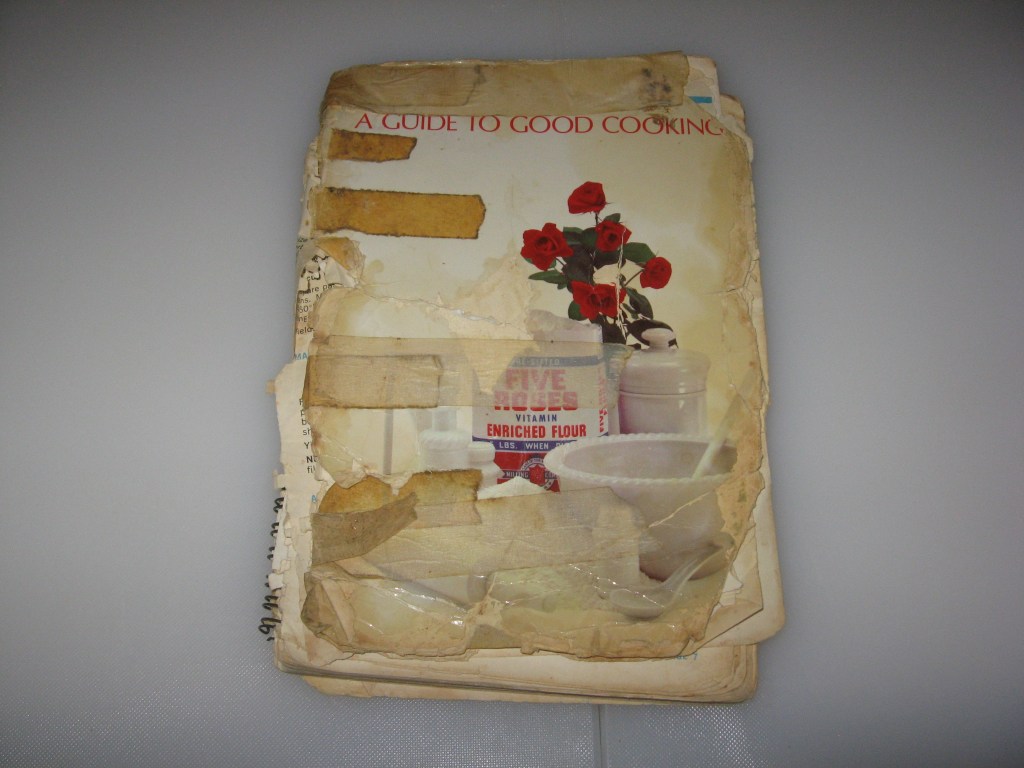
The 1967 version of the Five Roses Flour’s A guide to Good Cooking was one of Mum’s reference for baking, recipes for pastry’s, breads, cakes, etc. Yet not for the meal recipes it includes.
A well used copy of the 21st edition c. 1967.
Five Roses flour was produced by Ontario based Land of the Lakes Milling company beginning in 1888, they produced their first edition of this cookbook in 1914. The Five Roses brand is now owned by Smuckers Foods Canada, in 2011 they released their most recent version of the cookbook, and maintain an online recipe site today. Each version is edited and updated, reflecting the changes in ingredients and tastes of the period. The 21st version, c. 1967 is a more modern cookbook than earlier versions, more precise measurement of ingredients, temperature etc. This edition contains some of Mum’s favourite’s, containing a little more fat and sugar than those which trend today.
One of the recipes from the Five Roses cookbook is my personal go to is for Rhubarb pie. Generally, there are several major types of Rhubarb pie, those contain with other fruit, i.e. Strawberry Rhubarb; those filled with Rhubarb in an eggy custard; and a ‘true’ Rhubarb pie.
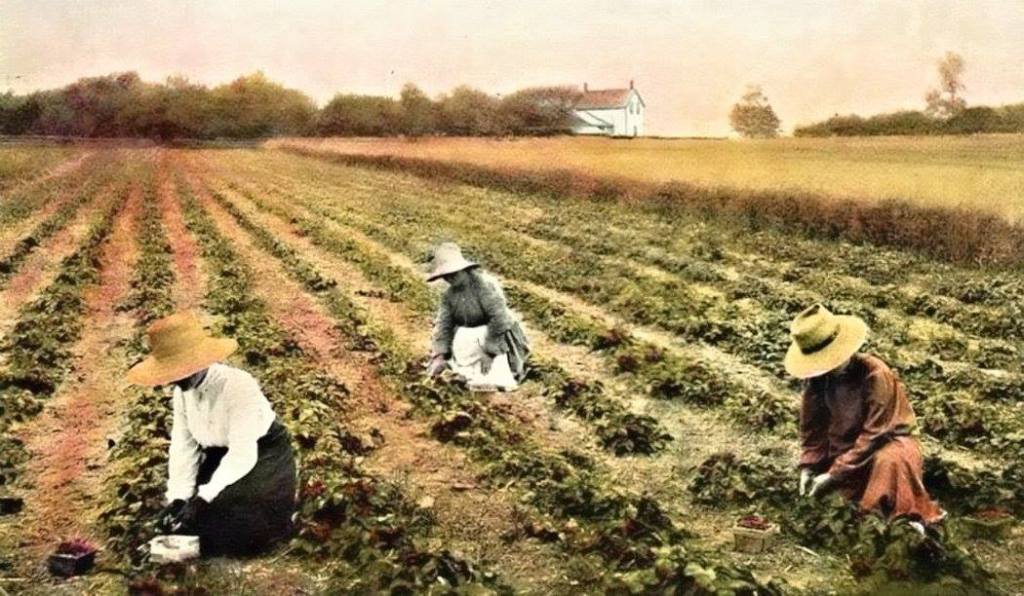
C. 198 Picking Strawberries Photo Courtesy of the Miramichi Heritage Family FB Site.
Rhubarb can be tricky, the balance of fruit and sugar is important and complicated by the variety of sweetness of Rhubarb. Filling texture is also important, the Five Roses version includes a ‘trick’ which assures a texture which is not too wet or gummy with too much flour.
My Mother’s Cookbook Classic…
Rhubarb Pie …From Five Roses: A Guide to Good Cooking
Ingredients 2 cups Rhubarb 1 cup Sugar 2 Tbsps Flour 1/2 tsp Salt 1 unbeaten egg Your favourite Pastry for double crust (or My Mother’s Cookbooks Pastry recipe follows) Method 1) Preheat oven to 450 degrees F 2) Prepare Pastry and line a 9 inch pie plate 3) Cut up rhubarb place in a bowl and set aside 4) Assemble the sugar, flour and salt together in a small bowl, add the unbeaten egg 5) Add the sugar, egg mixture to the rhubarb 6) Pour fruit mixture in to the pie plate and top with crust ( I use the lattice top, I find it produces a consistent filling) 7) Place in the oven for 15 minutes, reduce temperature to 375 degrees, for an additional 45-50 minutes or until done.
My Mother’s Cookbooks double crust(generous) pastry
Ingredients: 1 cup cold shortening 1/2 cup cold butter 3 cups flour 1/2 tsp salt 1/2 cup cold water Method: 1) Assemble dry ingredients and fat, using a pastry blender cut the fat into the flour mixture. 2) Add only sufficient water to bring the dough together. 3) Let rest in the refrigerator for at least 20 minutes before rolling out.
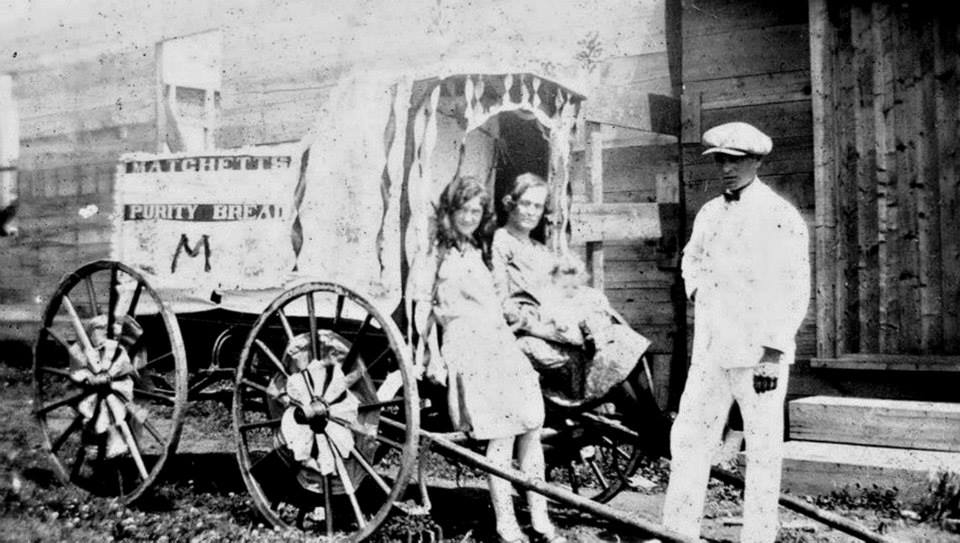
Matchett’s Purity Bread delivery wagon c. 1930’s Photo courtesy of the Our Miramichi Heritage Family FB site.
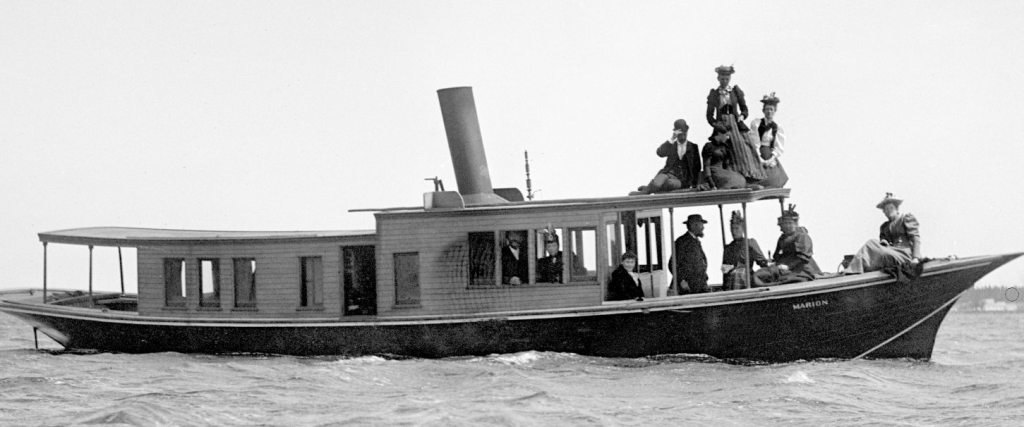
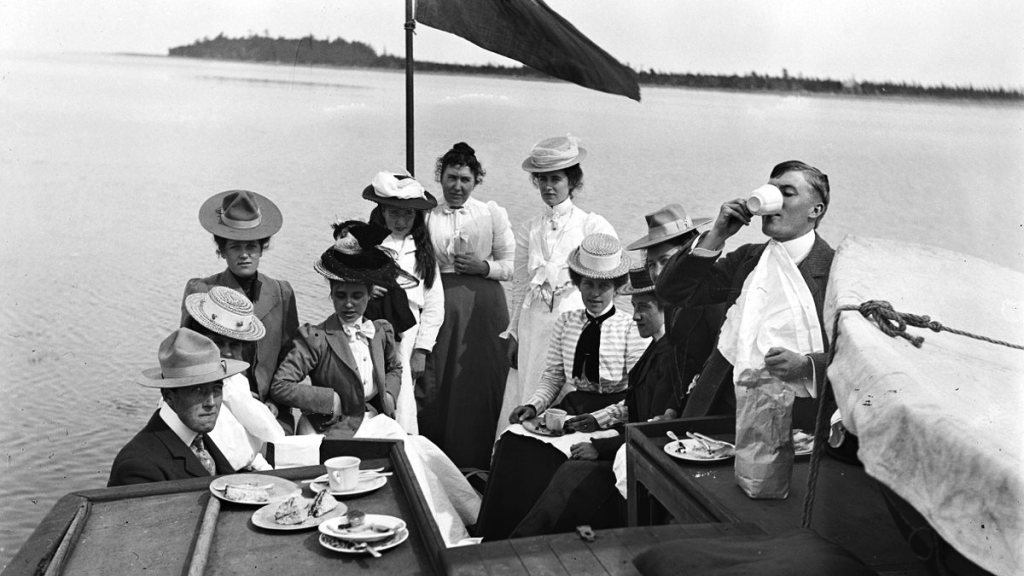
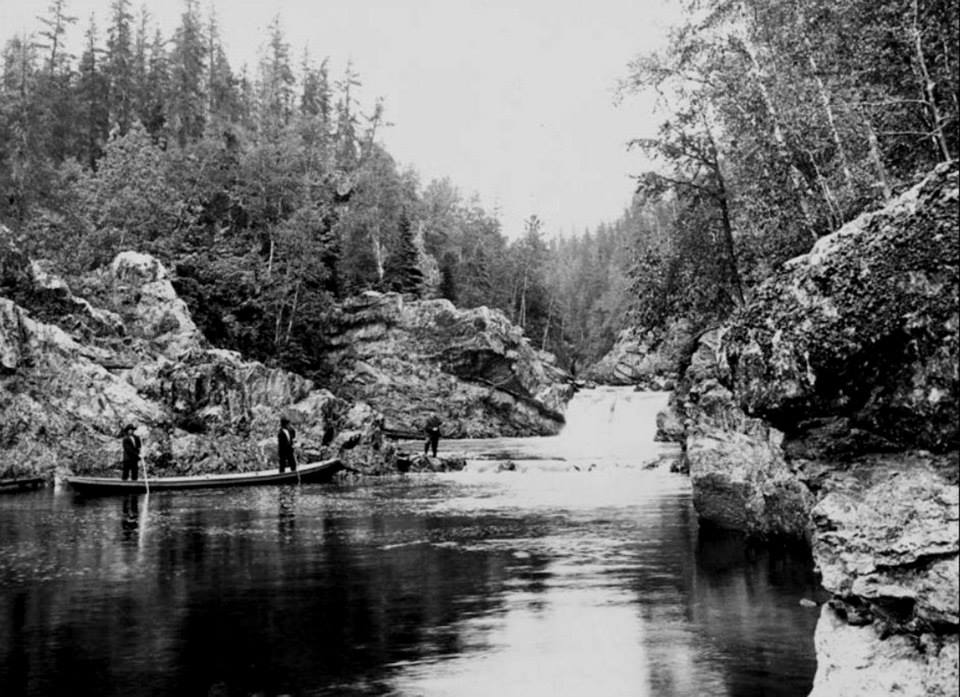
A group of well to do Miramichi residents enjoying a excursion on the Miramichi river and Bay. c. 1890 – Photo courtesy of the Our Miramichi Heritage Family FB site.
It would be wrong to think because the holiday is called ‘Victoria Day’, that only royalists participate. Although originally developed as a tribute to the long serving monarch, the day is well timed. As comedian Robin Williams observed “Spring is nature’s way of saying “Let’s party””. Of course William’s was not talking about Queen Victoria’s birthday, but it’s Spring timing and it’s long association with excursions and picnics, has done a lot for how and why the day (and the Former Queen) still gets celebrated in Canada.
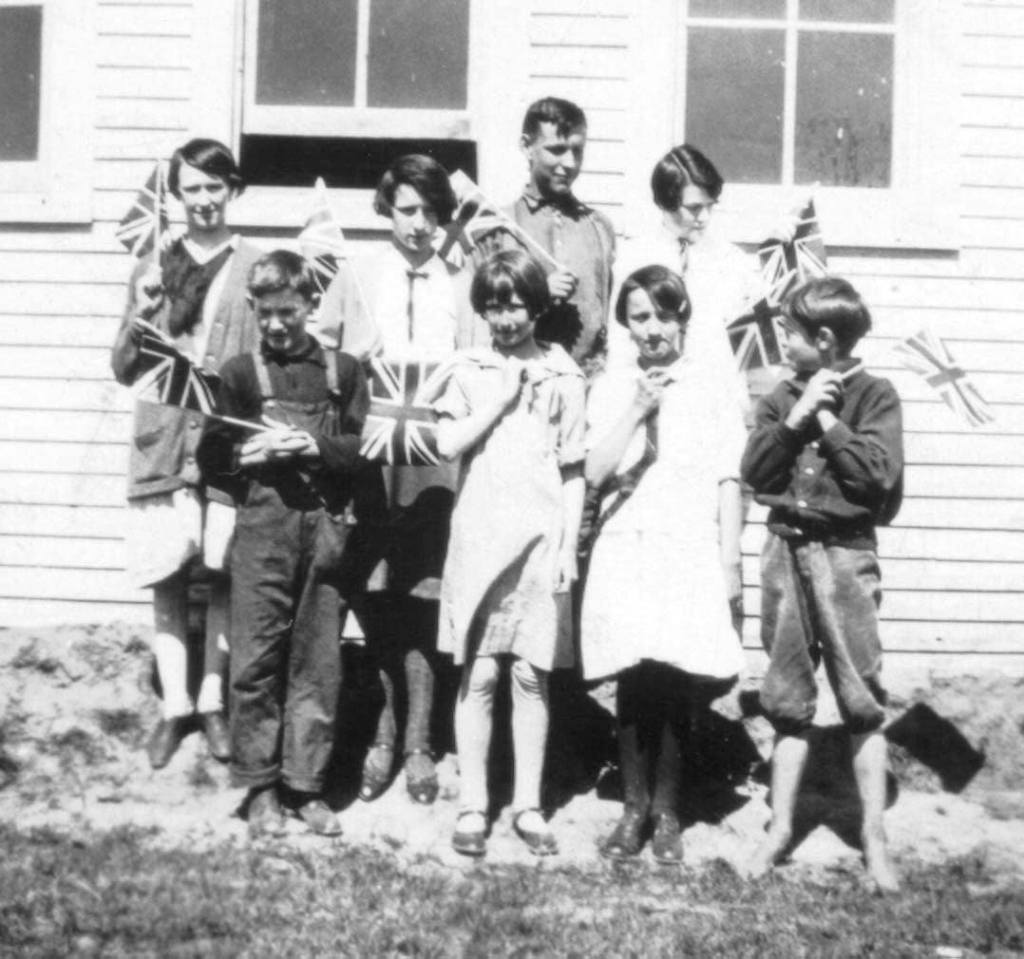
A group of school children waving the Union jack. c. 1939 Royal Tour. Photo courtesy of the Our Miramichi Heritage FB site.
Our Canadian winters are long and difficult, by the 3rd week of May, winter’s grip on the country has all but gone and we are in dire need of some fun in the warm spring sunshine. Although our celebrations have changed from picnics and excursions, to cottages and back yards, the need for a Spring break remains the same.
Originally celebrated on the 24 May, Victoria’s actual birthday, today the holiday falls on the Monday prior to the 25 May each year. So why the lingering relationship?…once again timing plays a part. Queen Victoria’s reign overlapped with the industrial revolution, and the resultant widespread modernization and change. During this period many Canadians moved from living in rural communities to urban life and work in the country’s factories.
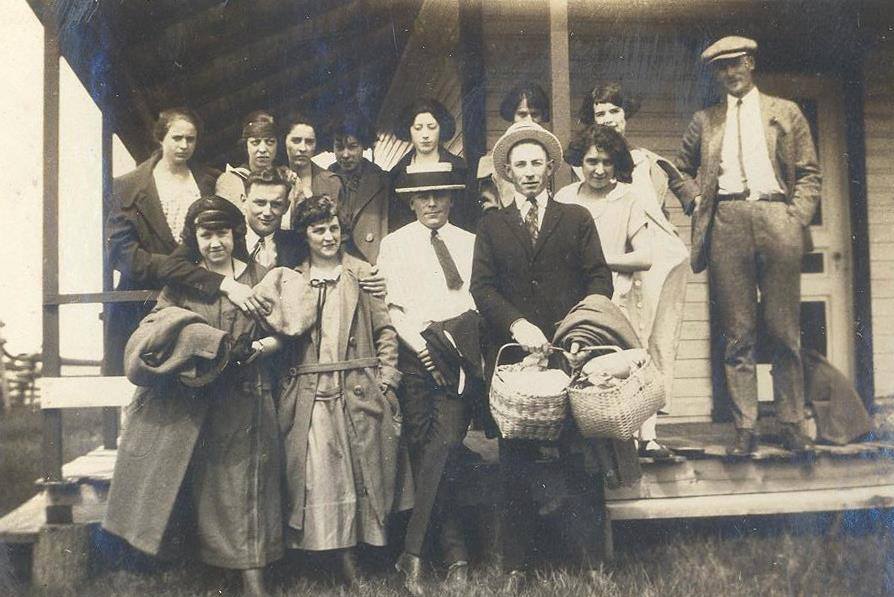
c. 1920 A group of family and friends prepared for a picnic excursion.
For ordinary Canadians the first few years of the official celebration of Victoria’s birthday went without notice, but by the 1880’s that had changed. As modern technologies became more widespread, a bit of time taken in pursuit of pleasure became the norm, including for the working class both rural and urban. The experience of Victoria day for Letitia Lyons born 1869 in Chatham, New Brunswick would probably have included a holiday excursion picnic on the river, but not on a private boat.
A private excursion and picnic on the Miramichi c. 1885 Photo courtesy of the Our Miramichi Heritage FB site.
Although picnics had been reserved for the wealthy, by the 1880s churches, and local clubs were organizing excursions for working class families. A single day in the fresh air with friends and family was possible even as a longer vacation remained beyond the grasp of most people.
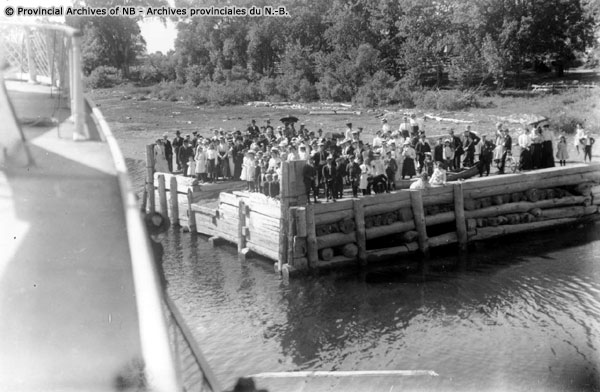
A group of families awaiting a boat to take them on their day’s excursion as part of their Church picnic. c. 1900 Photo courtesy of the Our Miramichi Heritage FB site.
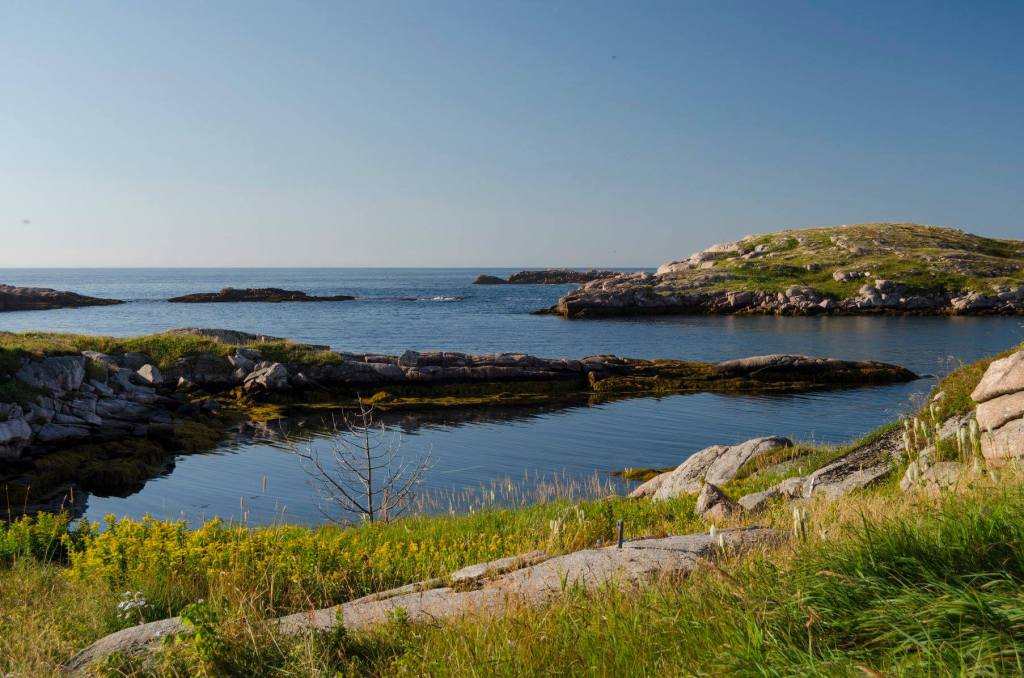
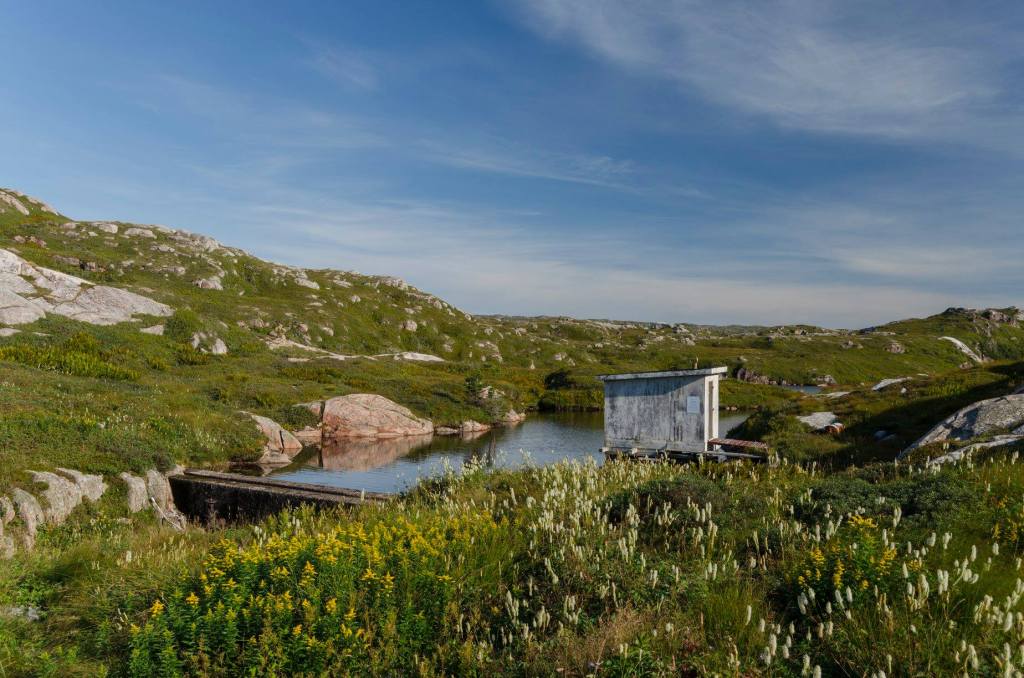
For Elizabeth Groves born to a working class family in 1848 in the small island out port community of Cinque Cerf, NL1, a celebration of Empire Day2 would certainly have involved a picnic and an excursion. The collection of fishing communities on the South coast, many although now isolated and abandoned were at the time center to fishing trade and supply. The many bays, island and inlets conveniently located near the bountiful Rose Blanche fishing banks, afforded the fishing fleet a base, to land their catch, seek shelter, and supplies. During summer months, the ports and communities of the South coast were as central as any other Atlantic Canadian port.
A group awaiting their excursion on the Saint John River at Sheffield, NB c.1890 Photo courtesy of the Provincial Archives of New Brunswick, image # P13-68.
Both the Miramichi region and Newfoundland’s south coast had been linked to Triangular trade3, with Europe and the West Indies during the 18th century. They would continue to be key to Empire’s supply of raw materials to factories elsewhere in the Empire . Cheap dried salted fish from Newfoundland’s fishing banks went to feed the workers on the sugar and cocoa plantations of the West Indies. Lumber, and eventually value added products from the Miramichi went to feed mills and markets in the UK.
Like most young women of their time, Elizabeth and Letitia would likely have followed news of the Empress Queen and her family. They would have heard about the trend of picnics, for working class families like their own, sweeping England. Of course Elizabeth and Letitia’s picnic would have far more humble than that of their wealthier neighbours.
A select few dined aboard their private boats, on neatly cornered sandwiches with crusts trimmed. Sandwiches filled with meat and cheese all served on fine bone china. For dessert a selection of hand held treats, including cakes, and pies.
Elizabeth and Letitia would have prepared a picnic of thick slices of whole grain bread, filled with roast meat, fish, chicken, possibly venison. Dessert might well have been more bread spread with jam or molasses. But it might just have included a cake, something hardy but just a bit ‘special’. Their picnic was wrapped in paper and snugged next to their bottle of fruit shrub in a basket.
The ‘special’ ingredients available to Letitia and Elizabeth would have included cocoa. Grown in the West Indies, cocoa from plantations in Trinidad and Tobago4 was making its way in to the markets and diets of the East coast by the late 19th century. First introduced in Europe more than a century before, chocolate had taken a while to become available to working class families. It is possible that this cake made with cocoa and oatmeal would have appeared in Elizabeth and Letitia’s picnic baskets. Dark, rich and delicious this Chocolate oatmeal cake from My Mother’s Cookbooks, is a wonderful blend of the ordinary and the special. Its moistness and flavour does not require frosting making it a logical choice for a picnic.
Chocolate Oatmeal Cake
Ingredients: 1/2 cup rolled oats 4 Tbsps of Cocoa 1 cup boiling water 2 eggs 1/2 cup oil or melted butter (other fat) 11/2 cups brown sugar 1 cup flour 1 tsp baking powder 1 tsp baking soda pinch of salt Method: 1. Preheat oven to 350 degrees F. 2. Mix oats, cocoa and water together and set aside 3. Cream, sugar, eggs and oil together in another bowl 4. Combine dry ingredients and add to egg mixture; 5. Add oats and stir to combine 6. Bake in a 8 inch x 8 inch greased pan for 30 minutes or until it springs back when tested.
Chatham, Northumberland County, New Brunswick
The former town of Chatham, NB now comprises a good part of the current city of Miramichi. NB. Located on the main Miramichi river, Chatham’s location a short boat ride to Miramichi Bay, made it a prime location for wharves and other port facilities to serve the regions lumber industry. The large old growth timber once prized for its use as ship masts had served to open the area up for settlement beginning in the late 18th century.
By 1900 Chatham and the region had developed and diversified, mills and manufacturing facilities were dotted along Chatham’s waterfront. Victoria Day would have seen the bustling town festooned with colourful flags and banners. Those enjoying the days festivities would have been entertained with music and other forms of entertainment, brass bands were particularly popular at the time.
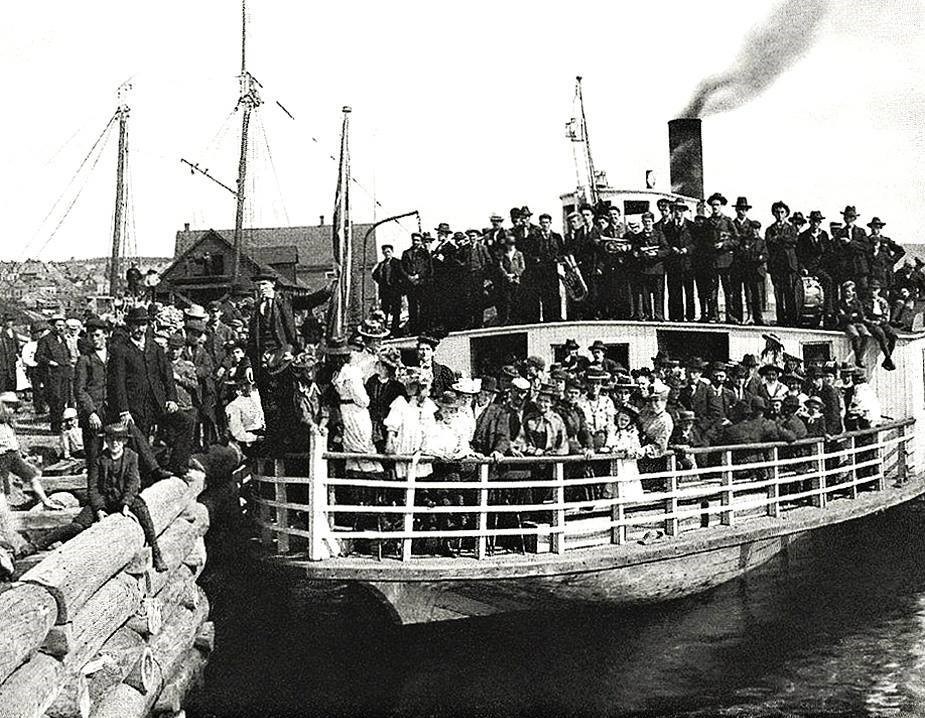
The Rustler loaded with holiday revelers, at dock in Newcastle, NB. Note the brass band on the top deck, ready to entertain. C. 1890. Photo courtesy of the Our Miramichi Heritage Family FB site
Explanations and Resources: 1. Cinque Cerf, Newfoundland is an island in Cinque Cerf bay on the South coast of the Island of Newfoundland. The fishing community which in 1870 boasted a population of 30 souls, was abandoned by 1911. Located a few miles west of the small but bustling ports of Rose Blanche and Petites, the island affords, inlets with beautiful sandy beaches, rolling hills and fresh spring fed ponds. It is entirely possible that local Victoria Day revelers would have made Cinque Cerf their holiday excursion. 2. Until Newfoundland joined the Canadian Confederation in 1949, the annual celebration was known as “Empire Day”. 3. Triangular trade is the pattern of trade established by the European empires, where raw materials from the colonies were transported to Europe for processing and manufacturing. The slave trade, where Africans from West Africa were transported to the West Indies to toil in the sugar plantations, was key to triangular trade. The end of slavery did not end the lucrative trade. 4. Trinidad and Tobago, a nation of two islands in the former British West Indies, was home to both sugar and cocoa plantations. Depending first on the labour of African slaves, by the mid 19th century, indentured servants from the Indian sub continent joined former slaves, toiling in the islands’ plantations.
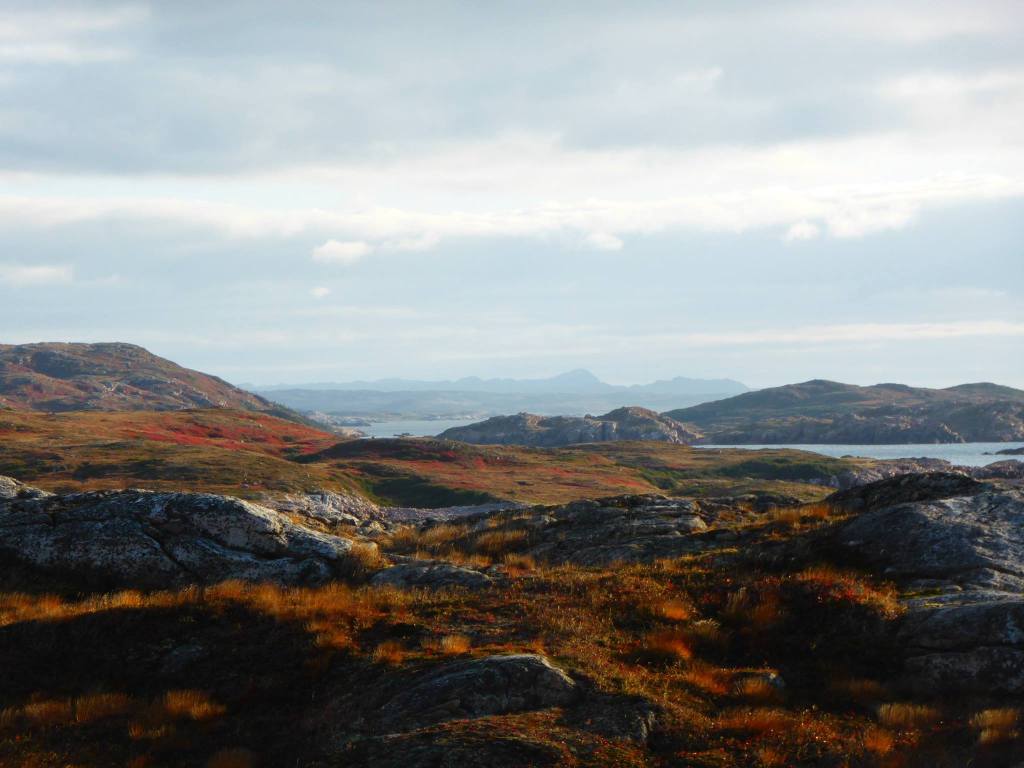
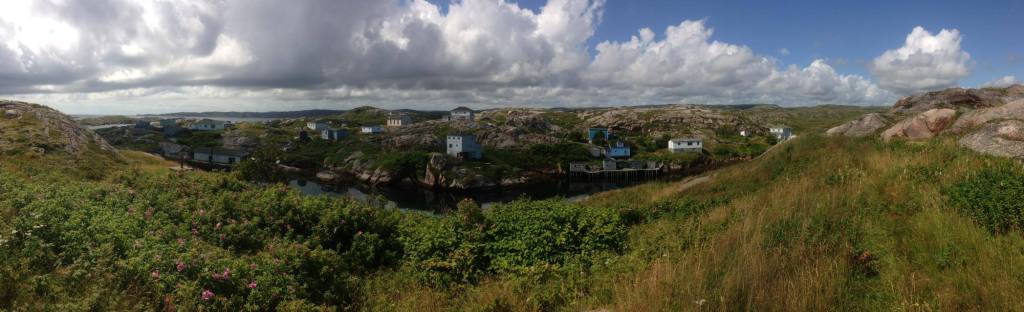
The southcoast of Newfoundland near Petites, NL, Photo courtesy of the Petites Church Restoration FB site.Spring fed ponds on the Southwest coast of Newfoundland. Photo courtesy of the Petites Church Restoration FB site. A ‘excursion and picnic’ location? The beauty of the Southwest coast of Newfoundland. Photo courtesy of the Petites Church Restoration FB site.
It is Spring and our winter weary souls are craving sunshine and fresh air! It’s everywhere, kids on their bikes, chomping at the bit of their parents limits. Young minds wandering from their school work at the call of the warm Spring days.
Spring hijinks in Doaktown, NB Photo courtesy of the Our Miramichi Heritage Facebook site.
There is no better way to celebrate the coming of summer, than a picnic in the sunshine. There are many kinds of picnics…but the very best are those of our childhood.
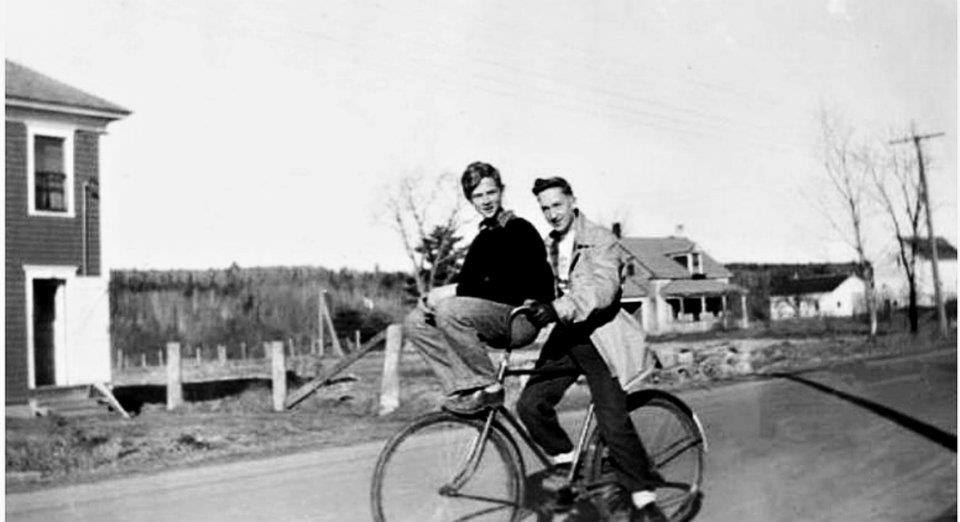
Two Miramichi lads and their borrowed bikes. Photo courtesy of the Our Miramichi Heritage site
Childhood picnics didn’t require much planning…begging a loaf of homemade bread, and some molasses for sandwiches or to accompany a freshly caught trout or mess of recently dug clams. A friend or two as company and the picnic is ready…provided of course the destination affords a source of water, fresh spring water!
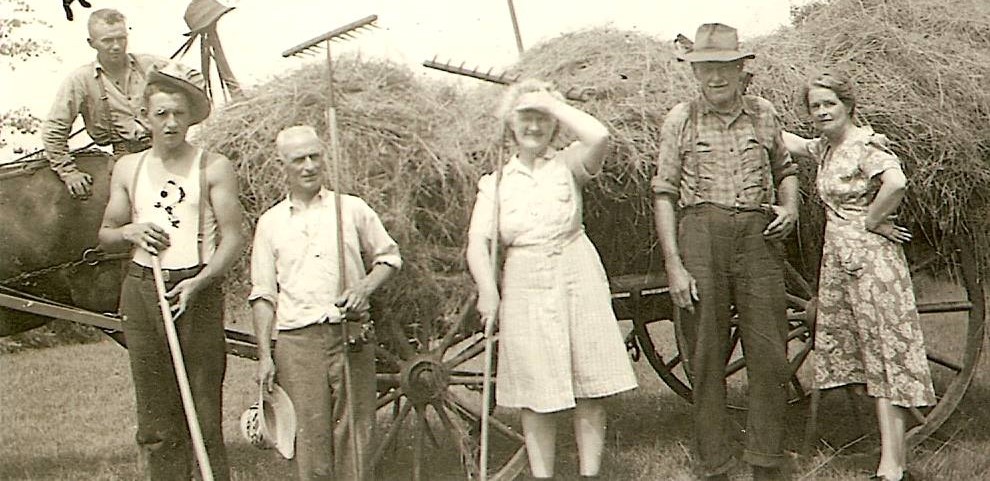
As summer progresses, informal picnics were replaced with a different kinds of days in the sunshine with friends… work parties, haying or barn raising. Everyone, men, women and children gathering to accomplish as task together. Voices and spirits raised by the sharing of work and of food.
c.1945 A family haying party, rakes, wagons and forks at the ready.
No fancy clothing…no parasols or top hats…just good people working and celebrating together. And food, lots and lots of food…and drink! The preparation of food began days in advance, the baking, the roasting, the cooking all done by women, the hostess and others, family, friends and neighbours.
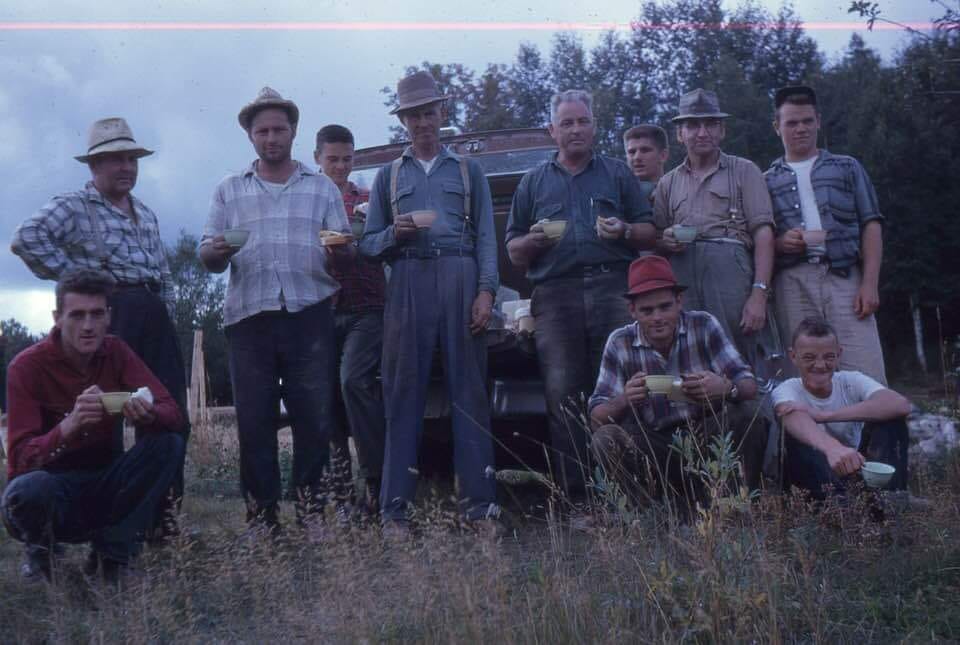
A group of Hayesville folks taking a break from haying and having their tea and sandwiches. Note the matching china tea cups! Photo courtesy of Family Connections of the Upper Southwest Miramichi site.
In past days a good hostess would have also assured workers had plenty of water… and drink to sustain them through their days effort. Some would provide hot tea, sweetened and with milked which required the effort of lugging china cups and mugs to the field. Still others would make the extra effort to prepare ‘drinking vinegars’.
While mead, beer and wine were necessary replacements for clean potable water in middle age Europe, the availability of fresh Spring fed streams, and ponds in North America provided a source of pure Adam’s Ale.
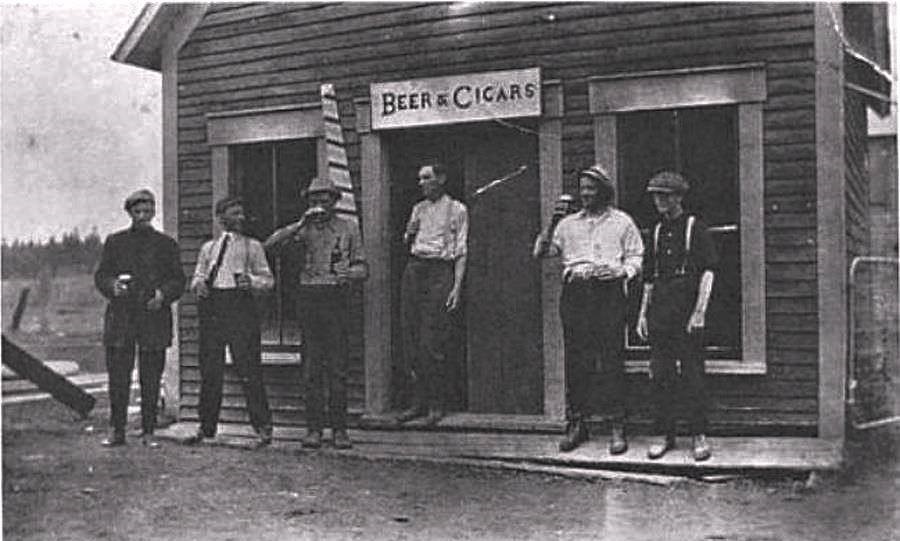
c 1921 Boiestown Beer Parlour – Even during prohibition some folks were not satisfied with Adams Ale preferring the stronger stuff instead. Photo Courtesy of the Our Miramichi Heritage site.
Childhood picnics usually included a destination with a Spring… cold clean water to scoop up with the ‘dipper’ which hung near by for all to use. Cold Spring water to mix with a pack of Kool Aid™ or to enjoy on its own.
Of course no ‘good’ hostess would ever serve Kool Aid™ to farm workers… but drinking vinegars are another matter.
So what is a drinking vinegar? It is a fruit drink fortified with vinegar, usually apple cider vinegar. Thirst quenching and fortified, drinking vinegars are a better supply of electrolytes and micro-nutrients than commercial sugary drinks… and far tastier! Here is a spring version using Rhubarb from My Mother’s Cookbooks.
Rhubarb Vinegar
Ingredients: 4 cups washed and finely chopped Rhubarb 1 cup white sugar 11/2 cups Wine vinegar or Apple Cider vinegar (divided) Method: 1. Place fruit and half of the vinegar in a non reactive saucepan 2. Bring to a boil and cook for 10 minutes 3. Skim the foam which forms, and then strain through a cheese cloth into a mason jar, add reserved vinegar and let cool. 4. Refrigerate, until ready to use. Dilute with water (or soda water)
This vinegar is wonderful on salads and in other recipes where vinegar is used.
Stay tuned for My Mother’s Cookbooks full blog released Saturday, this week we’ll explore Victoria Day picnics and two Victorian era women.
My Mother’s Cookbooks contains several recipes featuring Rhubarb, pies, crumbles, cakes, buns, chutney and cordials. The first Rhubarb in our house each spring, was stewed and served with fresh Buttermilk biscuits. Sometimes, simple is best.
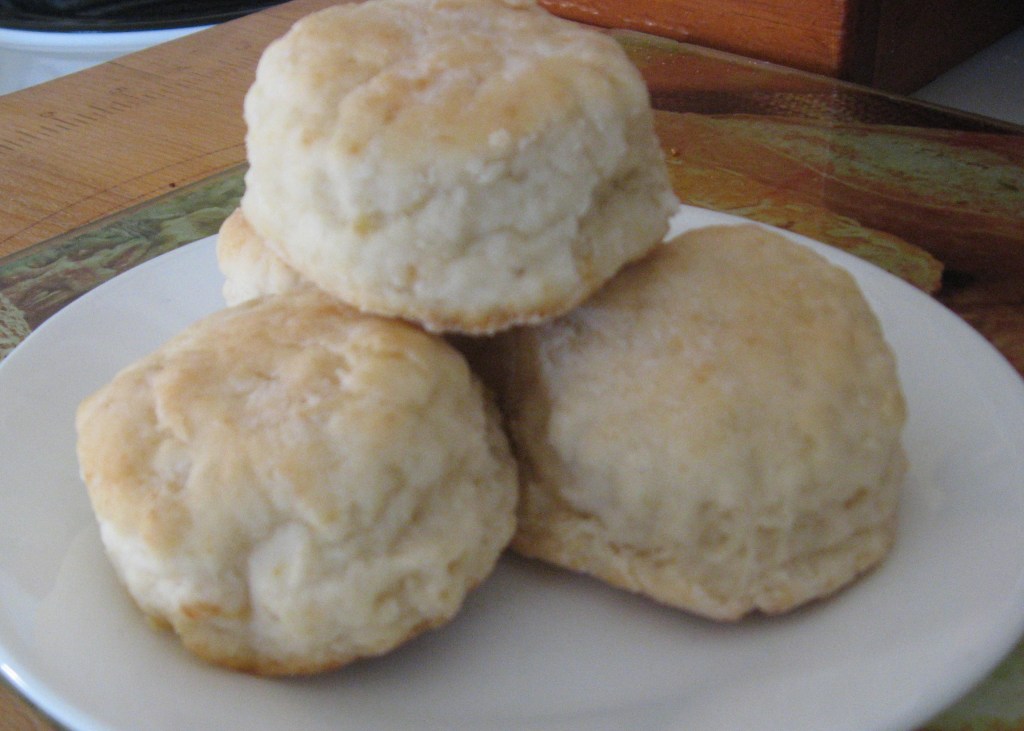
A patch of rhubarb growing in the back garden, and a best family ‘Biscuit’ recipe is all anyone needs to celebrate this spring harvest. Despite several versions of biscuits, the My Mother’s Cookbooks ‘best biscuit recipe’, the one Mum used most, especially over the last 30 years of her life, was supplied by her daughter in law, Darlene Horncastle Lyons.
Rhubarb although treated and viewed as a fruit, it is actually a veggie. Used for thousands of years as medicine, eventually becoming known and used for its tasty, all be it sour, stalks. Rhubarb’s early harvest and that it grows without much cultivation makes it a favourite of home gardeners today.
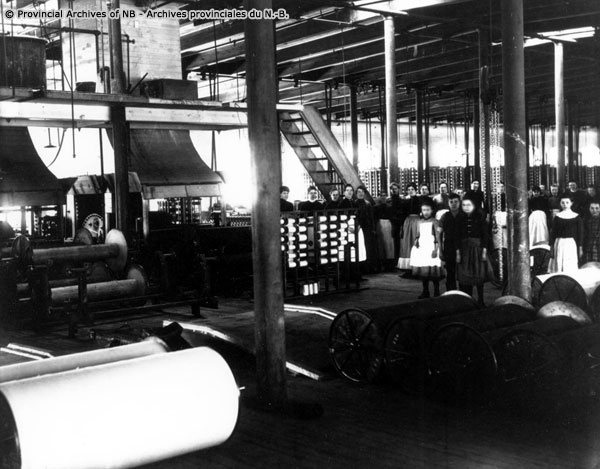
c. 1885 Workers including children posing by equipment in the Marysville, cotton mill, Marysville, NB Photo courtesy of the Provincial Archives of New Brunswick image # P5-416.
Darlene’s recipe, originated with her Mother Eleanor Jackson’s family. Eleanor born 1929, in Springhill, New Brunswick grew up with a keen appreciation of her Scottish roots. Her Jackson family was one of 6 families who settled Scotch Lake, New Brunswick beginning in 1820, when they arrived in the colony from Roxbourghshire and Dumfrieshire Scotland.
H. O’Neill Cake and Pastry delivery wagon Fredericton, NB. c. 1908- Photo courtesy of the Provincial Archives of New Brunswick Image # P119-431
What we in North America call biscuits are really a 19th century ‘convenience’ food. The bread like savory treats, are not to be confused with ‘biscuits’ found today in the United Kingdom, which are sweet treats (cookies to us). Quick breads of this type, usually made with baking powder, and/ or soda, flour, shortening and milk, are referred to as tea biscuits, baking powder biscuits or as just plain biscuits. Those containing ‘Buttermilk’ have the additional boast of leavening and flavour tempered by the additional acid provided by the buttermilk.
So, was it Scottish and Channel Island (where they had been traditionally a favourite) immigration which served to ingrain ‘Biscuits’ in our tradition? I suspect a combination of factors, tradition certainly but in addition to their convenience (not having to wait for bread to rise), their lower cost (yeast was more expensive), the need for high energy foods, and that they appeared regularly in the logging camps of the region, all contributed to their ongoing popularity.
Eleanor probably chose them for their ease and speed of preparation as well as tradition. Like many other women of her generation, Eleanor worked outside of the home. She began her working career prior to her marriage in 1948. By 19 years of age, Eleanor was already a skilled factory worker, a leather (shoe) Skivor1. The choice to continue working after marriage was one unavailable to previous generations of women, but open to Eleanor. Eleanor worked at the same factory during the majority of her adult life, while she was raising her 3 children and until her retirement in the 1980s. The Hartt Shoe factory closed in the late 1990’s.
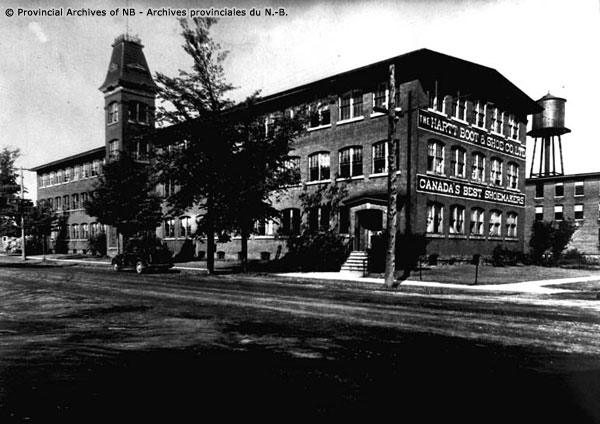
Hartt Boot and Shoe Company factory c. 1940, Photo courtesy of the Provincial Archives of New Brunswick Image Number P194-466
Florence McKinley born ~1905 in Chelmsford, New Brunswick probably began her factory work at 15 years of age, after her father’s death in 1920. Two of Florence’s older half sisters Emily and Melanie worked at the Gibson Cotton mill in Marysville as early as 1898, both Melanie and Emily would marry and return to the Miramichi to raise their families. Florence and her widowed mother Elizabeth would remain in Marysville, NB.
By 1951 when Florence, then a 44 year old cloth inspector, married Sidney Nash, Florence had enough working in a factory. 29 years, in the dusty, hot, noisy and dangerous environment of a textile mill had taken its toll, and for the first time she had a choice.
Florence’s Scottish heritage through her father’s family and the close proximity to other Scots during her childhood pretty much assured biscuits appeared on the family table. Elizabeth, Florence’s Mother might well have had a rhubarb patch in the back garden of her rented tenant company home in Marysville, NB.
Here is the My Mother’s Cookbooks ‘Best Biscuit’ recipe and one for Stewed Rhubarb too!
Buttermilk Biscuits
My Mother’s Cookbooks – Darlene’s Buttermilk Biscuits
Ingredients 2 cups of All purpose flour 1/4 cup of sugar (optional) 4 tsp baking powder 1/2 cup vegetable shortening 1 tsp salt 1/4 tsp soda 1 cup Buttermilk or soured milk
Method: 1) Preheat oven to 425 degrees F.; 2) Sift flour and other dry ingredients together in a mixing bowl; 3) Cut shortening in to the dry ingredients using a pastry blender, until mix reaches a med crumb. 4) Add buttermilk and mix gently. Place on a lightly floured surface, and shape into a 9 in x 9 in square of dough. 5) Cut in to pieces, and place on a cookie sheet; 6) Bake 20 minutes until slightly golden brown on top.
My Mother’s Cookbooks Stewed Rhubarb:
Ingredients: 1 pound of rhubarb 1/4 to 1/2 cup sugar (to taste) 1/4 cup water *** Method: 1) In a saucepan bring water and sugar to a boil to dissolve; 2) Add Rhubarb and return to a boil, 3) Reduce heat and allow to simmer, stirring often, until the Rhubarb is soft. 4) Cool, refrigerate in a covered container.
*** I recommend adding a 1/2 tsp of ground dried ginger or 1 Tbsp of fresh ginger chopped.
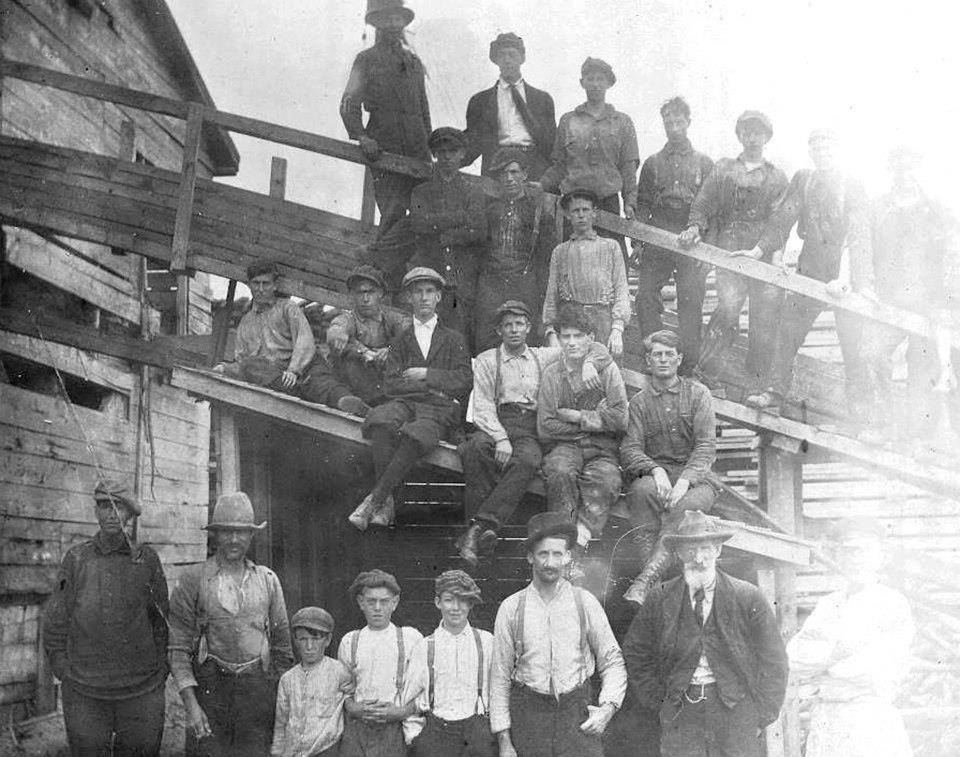
Young boys among a group of workers at the A.R. Loggie Mill c. 1900 Photo courtesy of the Miramichi Heritage Family site.
Women and children Factory workers:
From the first investment plan Odbur Hartt proposed, women and children were included in his factory’s proposed work force. His plan of a workforce comprised of 2/3 young men and 1/3 young women was both an operational and financial opportunity. Women and Children were essential to the success of factories like Hartt Boot and Shoe Company. Women and girls were needed for their fine motor skills, young boys and girls could get to places between moving machinery no adult could fit. It of course was also helpful that women were paid less than 50% of the wage of men, children less still.
The Gibson cotton mill in Marysville, NB had a similar work force from its beginning in 1885, but Gibson’s ‘model town’ meant workers could rent a house, (including a small garden), purchase clothing and food at the company store. From the wake up whistle to the shift end and beyond, the lives of factory workers of the Marysville Cotton mill revolved around the factory. 60 hour work weeks were usual for all workers, women and children included, 6 days per week, with a 1/2 day on Saturday and Sunday off.
Miramichi Mill workers including young boys c. 1900 Photo courtesy of Our Miramichi Heritage family site
Children workers were not new or limited to textile and shoe factories, young boys had been employed in saw mills and value added mills across the province since early days. The development of high technology industries, such as cloth and shoe making, changed the physical demand and permitted the addition of women and girls in to the workforce.
By 1900, social reformers, and churches had begun to complain of the working conditions, the injury, and loss of life particularly of children in factories. In 1904, after a task force to recommend changes, children under 14 years of age were not to be employed in New Brunswick factories, except under unusual circumstances. Things did not change quickly in that regard. The 1921 census reveals widow Elizabeth Ashton McKinley living in a rented brick row house in Marysville with 4 of her children, Elmer, Florence, Eldon and Burton. 13 year old Eldon, his older sister Florence and brother Elmer are all labourers in the cotton factory.
Better working conditions, air quality, washrooms, lunchrooms all eventually came to the factories but only after hard won battles, many deaths and injury of workers. Factories or as we call them ‘manufacturing and processing plants’ remained a heath and safety battle ground well into the 1960’s.
The crowded working conditions, poor sanitation, and poor ventilation in the factories of the 19th century made them public health battle grounds during the Influenza pandemic of 1918. In 2021, the issues in factories continue as Covid 19 threatens those who toil at repetitive and under valued work.
Explanations and Resources:
Leather ‘Skivor’ is a worker who thins, tapers and shapes leather as part of the shoe making process.
‘New Brunswick workers in the early 20th century’ Silhouettes – Associates of the Provincial Archives 2013.
This blog is one of two featuring the service of Marion Leane Smith Walls, don’t miss the new release which explores Marion’s WW2 service which lead to her being awarded the Distinguished War Service Medal… Molasses Cookies and Knitted Bandages.
There are no less than three versions of Warcake in My Mother’s Cookbooks, which is not surprising since a large number of the recipes originate with women of a certain generation. Women like Myrtle Walls Leban’s and Marion Smith Walls’ who were born at the beginning of the last decade of the 19th century. Women whose lives were marked by two world wars.
Female clerks with customers in front of Blackville, NB store, c. 1900 Photo courtesy of Our MIramichi Heritage Facebook site
By 1900 the constraints on young women were loosening, with employment and educational opportunities opening up for ‘respectable’ young women. For many this afforded employment locally in shops and offices, before eventually marrying, and having a family. For others employment or advanced education meant leaving for larger centers, often to areas where other family had already settled.
In eastern Canada, the larger center often meant “the Boston states”. Marion Leane Smith, sought opportunity and education in Massachusetts. Marion studied nursing at the New England Hospital for Women and Children in Boston, then took a job in Montreal with the Victorian Order of Nurses in 1913.
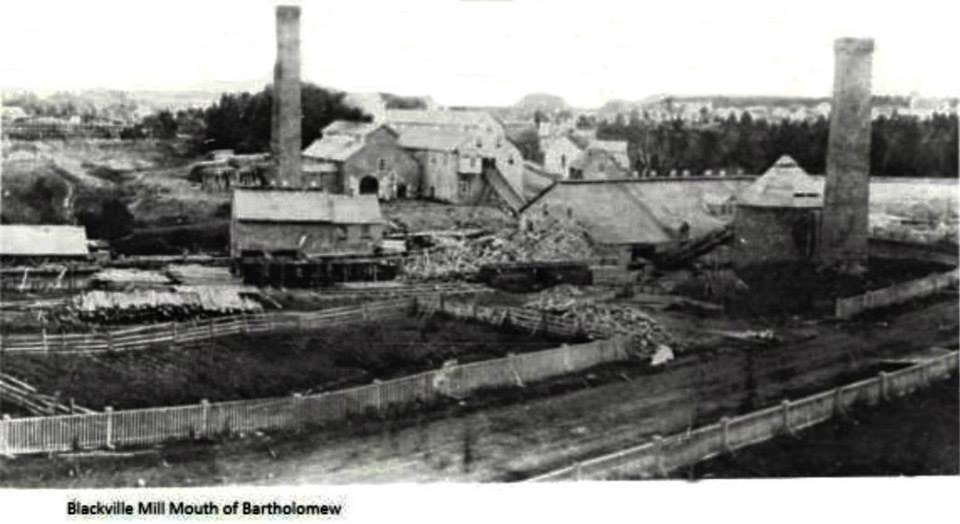
By 1914, Aunt Myrt had married John Lebans, was mother of two and was living in Blackville, NB. John was a millworker, during the following 10 years, Aunt Myrt and the family would live in several Miramichi communities as John sought employment in mills across the region. Myrtle’s experience of the war was similar to most other rural Canadian women and vastly different than Marion’s.
Mill at Mouth of the Bartholomew river, a tributary of the Southwest Miramichi c. 1915 Photo courtesy of the Our Miramichi Heritage site.
When the war began support for it was high, and remained so, despite sacrifice, change and loss. On the home front, Aunt Myrt dealing with restrictions, shortages and limits saw it as doing her part for the war. She probably experienced concern about the social change her country was experiencing. Change such as young women, and others previously denied access to the jobs in factories and other workplaces filling the labour shortage. Labour unrest, women’s suffrage, prohibition, and taxation were altering the lives of Canadians, even as strict moral standards remained largely unchanged.
On a personal level both Aunt Myrt and Marion experienced fear, worry and grief, as their brothers, uncles, cousins and friends went off to war, some never to return. Working as nurse in the urban center of Montreal, Marion would also have had direct involvement with those devastated by the war, those marginalized and blamed for the social ills plaguing the country, the poor, those with venereal diseases, unwanted pregnancy, etc.
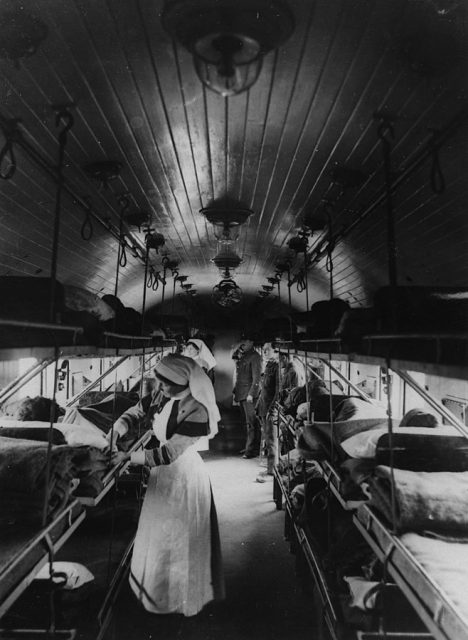
In 1917, Marion enlisted1 with the Queen Alexandra Imperial Nursing Service and saw service with the 41st Field Ambulance train2 in France. Ambulance trains were difficult and dangerous workplaces, despite their white cross designation, they were not immune to attack by enemy forces.
Nursing Sister assists a wounded soldier aboard an British Ambulance Train in France c. 1916
After completing her contract with the train ambulance service, Marion served in Italy with the Italian Expeditionary force and at the University War Hospital in Southampton UK. At some point during her work with the British forces, Marion met a young medic from back home in New Brunswick. Victor Walls, Myrtle’s brother, left his studies at Dalhousie University, putting his plans to become a Presbyterian minister on hold temporarily, to serve his country. At the end of the war, Victor returned to his studies at Dalhousie and Divinity School. Uncle Victor and Aunt Marion married in 1924.
Marion and Victor Walls c. 1924
Now about the Warcake… When things get restricted, limited and difficult, we all rely on tradition to aid and comfort us. So of course women in this region, including Aunt Myrt, used molasses when sugar was expensive, scarce or rationed (as it was during WW2). Warcakes were made throughout both wars, and appeared on tables regularly for many years after.
The ties which bind Atlantic Canada and the West Indies did not end with the disappearance of wooden sailing vessels and slavery. The connections established more than 100 years of trade were not just commercial, they were personal as well.
In the following weeks we will look again to Marion, this time to her World War 2 service which would bring her the Distinguished War Service Metal for her work in the West Indies, Trinidad and Tobago.
So here is the recipe from My Mother’s Cookbooks which Mum used most often…. And yes it does contain some sugar.
Warcake – aka Molasses cake
Ingredients: 1 egg at room 1/2 cup white sugar 1/2 cup of lard or shortening 1 cup molasses 2 1/2 cups all purpose flour 1 tsp soda pinch of salt pinch of spices 1 cup boiling water 1 cup raisins (optional) Method: 1. Preheat oven to 350 degrees F. 2. Grease and flour a 9 inch x 13inch pan; 3. Cream shortening and sugar together add egg; 4. Add molasses; 5. In a separate bowl mix dry ingredients, Add raisins if using; 6. Add flour to shortening sugar mix, combine thoroughly; 7. Add boiling water, beat well; 8. Pour into pan and bake until cake tester comes out clean. About 45 to 50 minutes.
Marion Elizabeth Smith
Marion Elizabeth Smith was born in Liverpool, New South Wales, Australia on 12 Mar 1892. Her parents George Smith and Elizabeth Leane Smith welcomed Marion to their family of two. When Marion was two years old her parents took their growing family first to England then to Canada, finally settling in Fredericton Junction, New Brunswick.
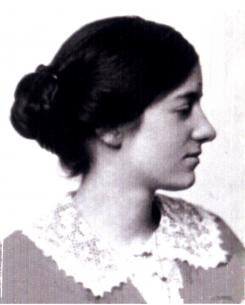
Marion Elizabeth C.1913
George Smith was a native of Hambledon, Hampshire, England and Elizabeth Leane Smith was born in Liverpool, Australia to William Leane and Lucy Walker Leane. It is with out doubt Elizabeth’s parentage through her Mother Lucy, was a major part of the family’s decision to leave Australia.
Elizabeth Leane Smith and George W. Smith c.1910
The Dharug peoples traditional lands are in what is now known as New South Wales, in the immediate area of Sydney, Australia. All Aboriginal nations in Australia have been negatively impacted by European settlement, but none more than those of the south including the Dharug clan.
The traditional way of life of the Dharug was hunting and gathering, lacking the necessary ‘farming’ relationship to the land to be viewed by European settlers as owners. Disease, violence, displacement and famine during and after colonization decimated first nations clans, including the Dharug. The social and political environment for a couple of mixed race was characterized by discrimination and violence. These conditions experienced first hand by Marion’s mother Elizabeth would have impacted the family’s decision to relocate.
William Leane and Lucy Walker Leane – Marion’s Grandparents. c. 1890
Mixed race children like Elizabeth were caught between two worlds, never really being fully a part of either. The decision to leave Britain after several years and the arrival of several more children was also very likely driven by opportunity for their family. The legacy of Elizabeth’s Mother Lucy’s Dharug heritage would follow the family, particularly Marion, as she and Victor set out on their lives together as Presbyterian missionaries in the West Indies.
There is little doubt had the Smith family remained in Australia, Marion would never have been able to complete school and train as a nurse. Australia’s only known Aboriginal woman to serve during the first world war, Marion Elizabeth Smith would not have been.
Explanations: 1. In 1917, George H. Smith, Marion’s younger brother was killed in France while serving with the Canadian Expeditionary force. 2. Ambulance Trains – or mobile hospitals, saw service in conflicts before 1900, and would continue service through both World Wars. The trains were staffed by 3 medical officers, 3 nursing sisters and a large number of orderlies. Ambulance trains could transport as many as 500 wounded. The trains contained not only stretcher wards but operating theaters.
One of the recipes in the My Mother’s Cookbook collection is named “Elsie’s Washday Pudding”. That her sister Elsie had a favourite recipe for wash days while Mum did not, is entirely understandable.
Until the Victorian period (1837-1901) the washing of clothing (and bodies) was infrequent and a luxury limited to those who could afford own more than one set of clothing. The industrial revolution saw fabric and textiles produced in factories, making clothing cheaper and more available.
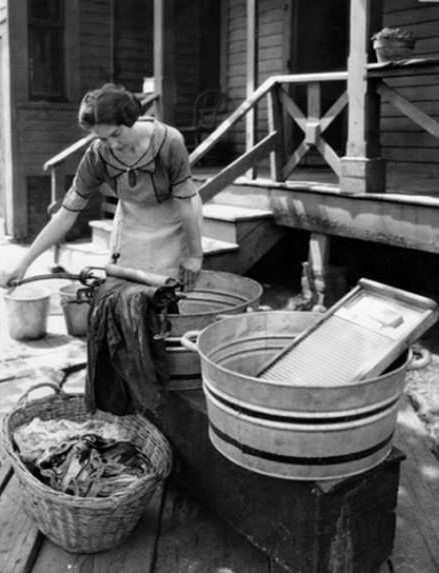
c. 1900 Washing equipment Photo courtesy of the Our Miramichi Heritage Family site
For women like Elizabeth Travis Lyons, laundry represented a significant part of her weekly work. Even as technology was altering some aspects of the work, it was also transforming attitudes and expectations. It is likely Elizabeth, who was also a weaver, would have taken great effort to assure her family’s clothing was clean and bright. One might be able to hide failures in cooking but failures in washing could not be hidden.
c. 1890’s Spinning wheel, and loom. Photo courtesy of the Provincial Archives of New Brunswick Ref #P5-651
In the 1860’s when Elizabeth was raising her family, despite the advent of commercial soaps it is probable she would have collected bones and fats and processed it into soap for her own needs. In addition to the variety of wooden tubs, kettles, and paddles Elizabeth would have used, there is a good chance she would have had a washboard too.
Invented in the 1840’s the washboard, some made entirely of wood, others of galvanized metal, was a major technological advancement. Although good soaps and basic equipment were helping to reduce the workload, the process of washing would still take hours of back breaking effort.
The physical effort required to collect water, heat it, scrub and process the clothing through both the washing and rinsing phases required a strong back and arms. The wringing of wet clothing in particular presented a challenge, excess moisture increased drying time and risked mildewing or freezing solid.
Interestingly, it was a fellow New Brunswicker who would provide a solution to the problem, in 1843 John Turnbull of Saint John, New Brunswick invented a spring loaded wringer for removing water from cloth. Turnbull’s technology would remain an integral part of laundry equipment until well in to the 1960s.
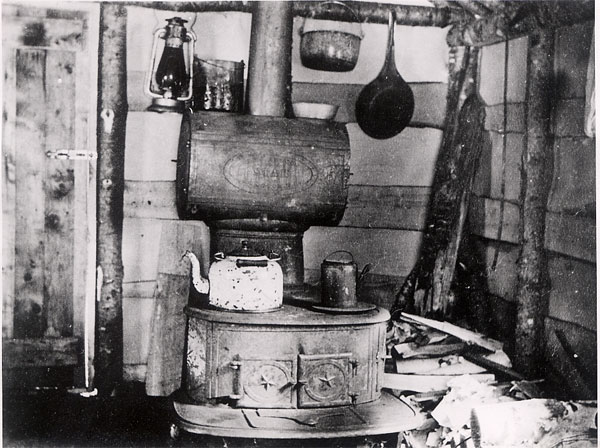
c. 1900 Wood burning stove Photo courtesy of the Provincial Archives of New Brunswick Ref #P27-38
Even as technology was changing the task of laundry, expectations for woman around wash day became even more ritualized. Soon a woman’s value as a wife and mother could be measured not just by the bright clean clothing her family wore but also by the washing equipment in her arsenal.
By the 1880s, Monday was wash day. The practice in most homes of a Saturday bath and donning fresh clean clothing prior to Church on Sunday, made Monday a logical choice.
So Monday’s became dedicated to laundry… the joint of meat which was Sunday dinner could be stretched into a Monday evening meal, allowing the time to be dedicated to the laundry effort. In the early days desserts were far from the norm, there is a good chance Elizabeth would not have bothered with desserts on any day let alone on wash day.
By 1937 when Elsie was entering life as a wife and mother, expectations and rituals surrounding wash day had continued to evolve. The time on Monday she managed to get her wash on the line, even the way she hung her clothing to dry was under scrutiny.
Elsie enjoyed many benefits of improvements in household technology as compared to her Great Grandmother Elizabeth. Galvanized tubs (rather than wooden), commercial soaps and lighter fabrics helped with the task as did the advent of warm water tanks on wood ranges. The work was still difficult and time consuming and Elsie needed a quick pudding recipe to fall back on for wash day.
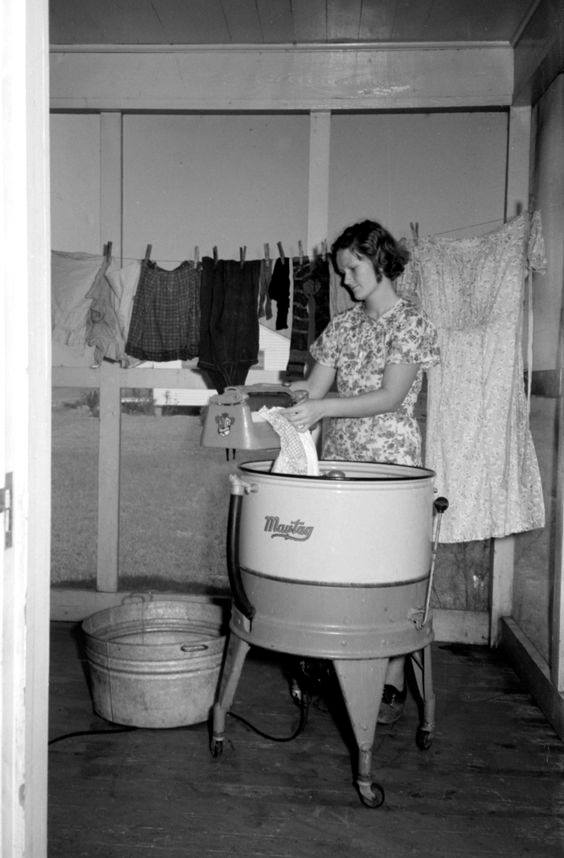
c. 1940 An early electric washing machine Photo courtesy of Photos anciennes d’autrefois, des photographies d’époque en noir et blanc.
A dozen or so years later when Mum entered married life, the most significant technological change in washing had taken place, electricity had arrived. All of the bits of pieces of equipment and tools used by generations of women had been replaced with the electric washing machine. Mum’s washday was less hectic and far less physically demanding, leaving her time for other things on Monday. Mum enjoyed the freedom of choice and flexibility foreign even to her older sister because wash day had changed… the pudding hasn’t, you can give it go any day of the week, even washday.
Elsie’s Washday Pudding**
Ingredients 1 cup all purpose flour 1 cup white sugar 1 tsp soda 2 tsp cream of tartar 1/4 tsp salt 1/2 cup milk 1/2 tsp vanilla 1/2 cup raisins (optional) Sauce: 1/2 c brown sugar A piece of butter the size of a walnut, about 1 Tbsp butter 2 cups boiling water Method: 1) Preheat the oven to 325 degrees F 2) Place a 8 in x 8 in square pan on a quarter sheet pan 2) Combine dry ingredients in a bowl 3) Combine milk and vanilla 4) Place butter and brown sugar in a heat resistant bowl 5) Add milk to dry ingredients, stir until incorporated, then place in the 8 x 8 pan 6) Add boiling water to the brown sugar and butter 7) Pour over batter and place both pans in to the oven 8) Bake 30 minutes, until nicely brown on top
** This pudding, which is known by many names, i.e. Caramel cake pudding; Radio Pudding, is an older recipe, evidenced by the use of soda and cream of tartar. I have tried replacing the soda and cream of tartar with the more modern, baking powder and it works adequately. I prefer to use the original ingredients, the quick acting cream of tartar gives the cake a boost early enough in the bake to assure the best texture and sauce.
Elizabeth Travis Lyons
Elizabeth Travis was born about 1834 in Northesk, Nortumberland county, New Brunswick. Her father Peter Travis and her mother Elizabeth Kearney Travis settled near Peter’s parents and grandparents at Whitney, NB. Ebenezer and Huldah (Mooers) Whitney were New England Planters who relocated along their eventual son in law, Jeremiah Travis to the Northwest Miramichi river valley about 1780.
Elizabeth grew up near her close knit extended family in Whitney, NB. One of a13 children, Elizabeth married Charles Benjamin Lyons in 1851, she was 17 years old, Benjamin was 29 years old, a lumberman and landowner.
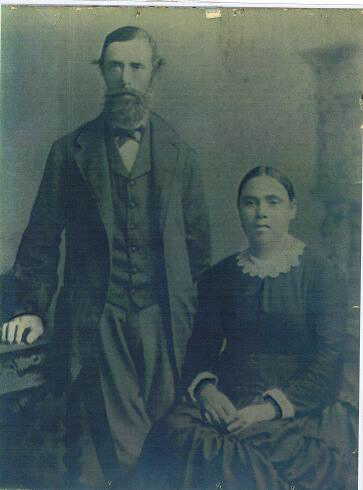
Charles Benjamin Lyons and Elizabeth Travis Lyons c. 1880
In 1852 Elizabeth’s sister Huldah married Daniel Allan Lyons, Benjamin’s brother. The Lyons men purchased land adjoining their parents homestead, and settled down with their families in Carrolls Crossing, NB.
Life was characterized by hard work and no doubt a good deal of worry and stress for both Elizabeth and Huldah. Benjamin and Daniel operated a lumber contracting company, hiring local lumberman to harvest timber during winter months. Speculating on their ability to successfully deliver the wood to market, and that when they did that the price they received would cover the expenditures. The cards were stacked against success and eventually their luck ran out.
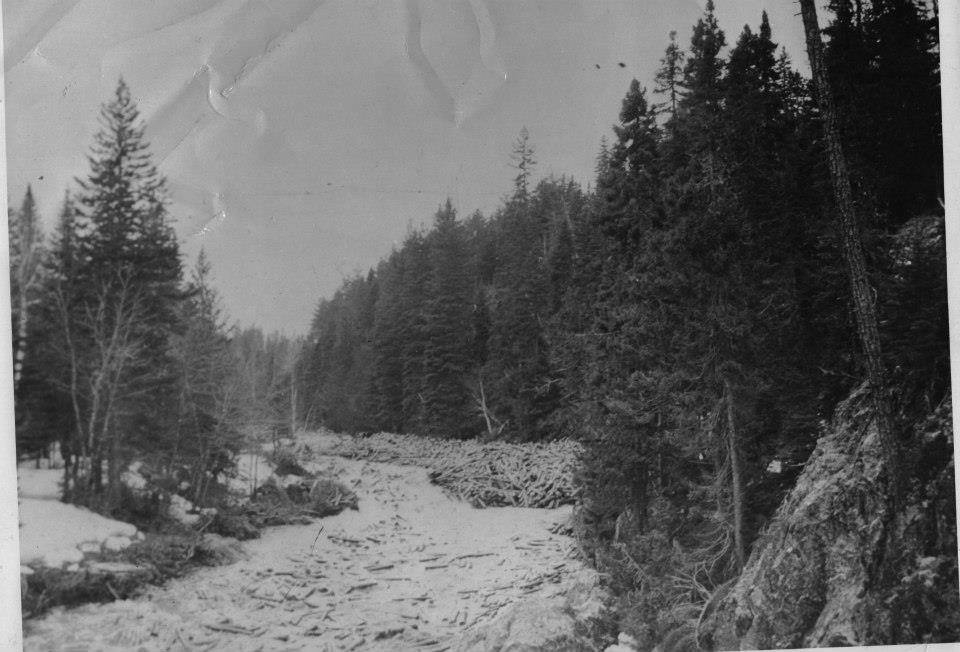
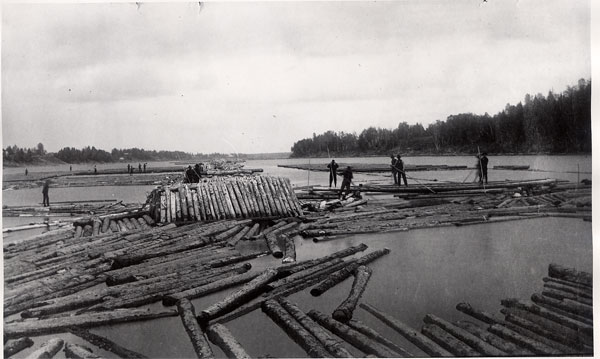
Log drive on the Southwest Miramici River c. 1890 Photo courtesy of the Our Miramichi Heritage Family site
Lumber contractors who had paid the harvesters, and successfully driven their wood to the booms, which were controlled by the powerful and wealthy mill owners, were not paid until the mill used the wood. In the season of 1860, after months of toil and effort, worry and stress a storm brought financial disaster for the two families. The storm destroyed the boom which secured the wood, scatterings the logs and wiped out their investment
Log drivers sorting logs on the Southwest Miramichi River c.1890 Photo courtesy of the Our Miramichi Heritage Family site
Like many others Benjamin and Daniel would loose their homes and land, forcing change on the young families. It appears the loss of the property and business resulted in the two families residing for a period with Daniel and Sarah Lyons, Benjamin and Daniel’s parents.
The loss was devastating, but fortunately unlike many other families they were able to pay their debts. Unpaid debts meant prison, or seeking shelter from prosecution. Many families were forced leave to avoid prison, many Loyalist and Preloyalist settlers returned to the US or sought shelter in other parts of the colony.
By 1871, Benjamin had recovered sufficiently to be appointed Justice of the Peace. Eventually Benjamin and Elizabeth and family would move to Chatham where Benjamin worked as a clerk in a law firm.
Sometime around 1890, Elizabeth and Benjamin moved to Blackville, where their daughter Letitia and her family were living. It is possible that Benjamin and Eliza had planned to settle the land grant in Bradlebane, which was granted to Charles Benjamin after Eliza’s death. Elizabeth died in 1891 at the home of Letitia and Benjamin Walls.
Benjamin would live until his death in 1897 on the property in Bradlebane. The land is now owned by Elizabeth and Benjamin’s Great Great Grandson, and Elsie’s nephew Bruce.
Huldah and Daniel remained in Carrolls Crossing area until about 1900 then moving to Maine with their son Peter Lyons. Huldah and Daniel died and are buried in Penobscot county, Maine.
Some recipes did not make it into My Mother’s Cookbooks… Some foods just did not require written recipes, it is almost as if Mum had them in her DNA. Seasonal specialties are a case in point… is there a recipe for Thanksgiving turkey stuffing? No, and not one for Easter Ham and Scalloped potatoes either.
So it is not surprising that our traditional Spring feast is also missing from the recipes…
The Miramichi river1 figures large in the lives, traditions and foods associated with the region. From early days families relied upon the river and its tributaries’ natural bounty, the plants, fish, migratory birds and wild life which made the rivers and valleys home. The river also figured large in transportation, domestic and industrial. It is entirely understandable that people’s lives assumed a rhythm based upon the river and it’s seasons.
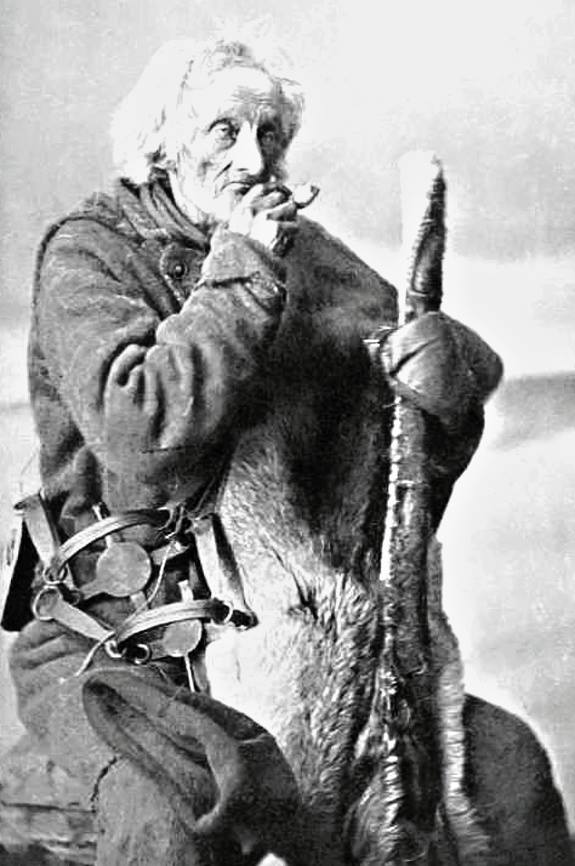
A trapper of the Miramichi c. 1870, Photo courtesy of the Our Miramichi Heritage Family website
Winter in central New Brunswick 150 years ago was a period of intense industry in the lumber woods. Characterized by the protracted absence of men, who spent weeks and months in lumber camps, cutting timber. Cut timber would await ‘the break up’, and ‘the freshet’2. Rising water levels from the Spring melt were used to ‘drive’ the timber to market. The break up ended months of hard work in isolation, it reunited families, and signaled return of the river’s bounty.
Spring melt represented opportunity and anticipation. The movement of ice, and rising water levels generates energy, excitement and social engagement as people assemble on riverbanks and bridges to watch even today. One might assume the activity and assembled community watching the break up of ice, is an expression of stress or concern about flooding and its damaging effects but no… it is a traditional celebration of sorts, laughter filling the air as hopes and plans for the season are discussed and shared. Soon the rising water will drop, the river retreating to its summer course, leaving behind river interval land3 refreshed and burgeoning with life.
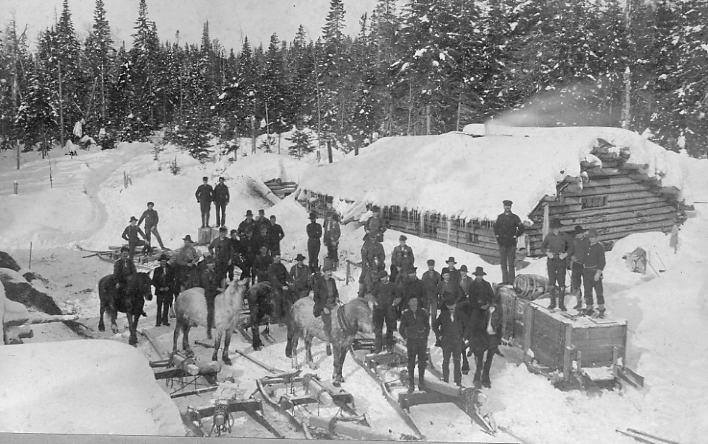
Camp and Lumber men c.1890 Photo courtesy of Our Miramichi Heritage Family website
For women like Sarah Ann Munro Walls (1803-~1871) providing nutritious and tasty food for her family would include using the bounty of the river to best advantage. After a long and difficult winter, where her offerings depended heavily on dried beans, peas, salted, dried, smoked fish and meat, she would have welcomed the promise offered by the river’s freshet.
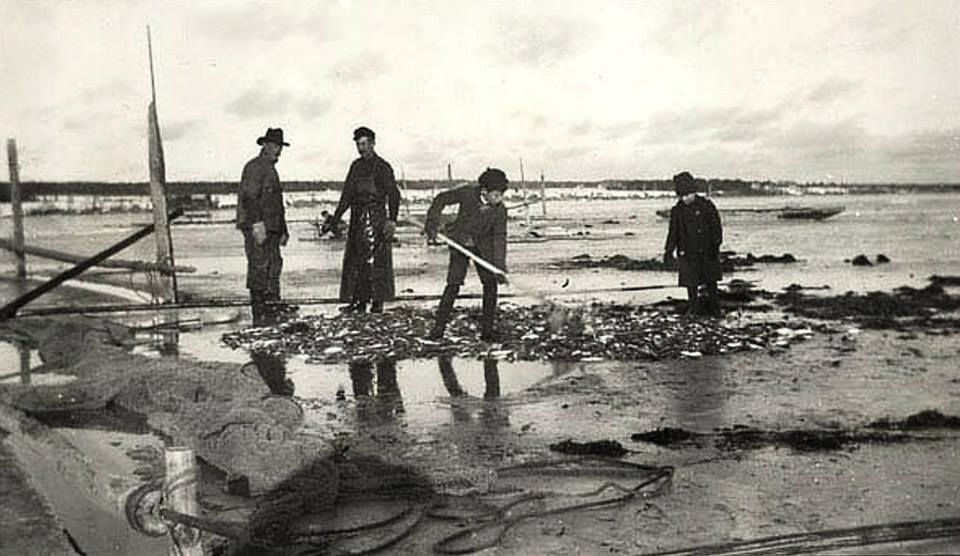
Spring smelt fishing on the Miramichi river c1890, Photo courtesy of Our Miramichi Heritage Photos
For Sarah and her family the river’s Spring harvest probably began with Fiddlehead4 greens, nutritious and delicious the little green is available only during a short period, which is dictated by the river. Fiddleheads, immature and unfurled fern fronds have provided a source of essential vitamins and nutrients to people of the region for thousands of years. European settlers learned quickly to copy First Nation peoples habit of harvesting the green and incorporating it in to their Spring diet.
Families would gather on the banks of the river, bogans5, and islands by boat and on foot as they made their way to ‘best’ picking areas, where the young plants lay hidden in the previous summer’s dead vegetation. A quick snap, the Fiddlehead lifted free, leaving plant roots undisturbed.
Once baskets were filled they were taken to the river’s edge for washing and cleaning. Cleaning Fiddleheads, which has an inedible rust coloured skin, is an art in its self. Dipping the basket, swirling and agitating to remove the skin. Carefully using the river’s current to take away the skins, without loosing the greens, is a skill acquired through long practice.
So, Fiddleheads feature large in our family’s Spring Feast… but the river’s contribution to the feast doesn’t end there…fish, Spring fish are featured too. Schools of migrating fish arrive, Smelt, Gaspereau, American Shad and Spring Salmon arrive just in time for the Spring feast.
The exact content of a Spring feast is dependent on tradition, personal choice and availability, but it features Fiddleheads and fish, usually accompanied by potatoes and other leftover root vegetables. Here is My Mother’s Cookbooks version…
A Miramichi Spring Feast recipe
Ingredients Recommended Ingredients Fresh 3-4 lb American Shad Halibut steak about 2 lbs Stuffing: 2 cups of fresh bread crumbs 1 medium onion diced 1/2 c diced celery 1/2 finely diced carrot 2 Tbsp butter 1 tsp salt 1/8 tsp black pepper 1 1/2 tsp dried summer savory 1 tsp dried tarragon Fiddleheads***: 3-4 pounds to serve four
Method: 1. Preheat oven to 375 degree F 2. Clean and wash the fish, removing scales and head 2. Saute veggies in butter add herbs and bread, let cool before stuffing the fish. 3. Wrap fish in two layers of foil wrap and place on baking sheet, Bake 45 minutes or until the flesh flakes easily from the bones. 4. Wash and trim cleaned Fiddleheads thoroughly with potable water. *** use only greens harvested by experienced Fiddlehead harvesters, non edible ferns present a serious health risk if consumed. 5. Steam until tender, serve with vinegar or lemon, butter, salt and pepper.
Sarah Ann Munro Walls
Sarah Ann Munro Walls was born Sept 1803, forth in a family of eleven born to Nancy Mitchell Munro and John Munro in Blissfield, New Brunswick. Sarah’s grandparents were New England planters who settled in the colony prior to the Revolutionary War. Sarah and her sister Suzannah(Susan) were married on the same day 2 July 1818, Sarah Ann married James John Walls (Wells) son of James Walls and Charlotte Brown. Susan married John Thomas Bamford, a native of Maine who had arrived in Northumberland county seeking business opportunities in the timber industry.
Sarah and James settled down river at what became Blackville on the south side of the Southwest Branch of the Miramichi River, possibly on one of James’ father’s properties. James and Sarah welcomed their first son John, a few months after their marriage in 1818.
By October of 1825, Sarah just 21 years old was mother of 3 children under 6 years of age. The summer and fall had been extremely dry and hot, at first people thought the black clouds were a harbinger of welcomed rain on the late October afternoon. It wasn’t, it was fire, great rushing walls of flame and heat driving everything from its path. It appears James and Sarah’s property did not experience a direct hit, but her sister Susan Munro Bamford’s family were not so lucky.
At a location on the south side the the Southwest branch of the Miramichi near Doaktown about 25 feet from shore is a rock know locally as Bamford Rock. It is said the Bamford family sought its safety during a night of fire horror, no doubt sharing it with human and beast alike.
The Great Miramichi fire destroyed everything in its path, although the official fatality count was 160 souls the fire’s true toll could well number in to the thousands since many woodsmen were simply undocumented and unknown. The fire destroyed a large swath of the province consuming more than 16,000 sq kilometers, houses and farms leaving the survivors vulnerable to falling temperatures and winter suddenly fast approaching. One can imagine that those fortunate enough not loose life and property would not have been untouched. Food and shelter shared as the entire community struggled to survive, rebuild and thrive.
James success as a farmer appears to have included land dealings, it is likely he also worked in the local mills, possibly in one of those owned by his wife’s brothers in law, Bamford and Mersereau.
In April of 1850 James died, the 1851 census sees Sarah 48 years old heading a household containing 9 of her children and two grandchildren. This pattern continued until Sarah’s death sometime after 1871. Sarah and James raised a large family many of whom continued to live in the Miramichi. My Mother Evelyn Walls Lyons descended from two of Sarah and James’ sons, John and Charles.
Footnotes: 1. The Miramichi River referred to in this piece relates to the Miramichi River system, including its head waters, tributaries and estuary. 2. Freshet: the flood of a river from heavy rain or melted snow. 3. Interval land refers to low lying land surrounding the river, the floodplain. Interval land although unreliable for homes and buildings, contains rich soil deposited by the annual run off, becoming valuable pasture and crop land. 4. Fiddleheads: young edible cinnamon and or ostrich ferns. 5. Bogan a body of still water related to the river, which is not part of the river channel. Bogans are filled with water at periods during the year such as during Spring freshet but may dry completely or remain bog like during dry periods.
Resources:
MacEachern, Allan. “The Miramichi Fire”. 2020 McGill-Queens University Press, Montreal PQ
It is just over a month since I launched ” My Mother’s Cookbook” and I am thrilled to say it is a success. Over 6000 visit and over 9000 views. It is all due to you, the folks who have read, liked, commented and re-shared my posts who deserve credit, and I thank you.
Over the course of the last month, I have been reminded of the strong relationship between food and memory, Cooks and memory. The links between food and the person who lovingly prepared it for us, are strong and evocative. Eating food particularly associated with a beloved person can help access long forgotten memories of that person, events and feelings.
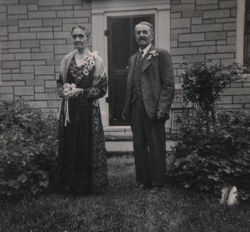
Evelyn Walls Lyons and Dorothy Walls Morehouse c. 1950
Biting in to a homemade sugar cookie immediately takes me back to my Aunt Dot’s kitchen, the smell of baking tinged with the clean natural smell of a farm kitchen. I can see her kind face smiling at Uncle Charlie as he teased her. It all comes back, the emotion, the taste, the love. Food helps trigger memory because food engages all of our senses, smell, taste, touch, sight, and hearing (Yep, food makes noise, trying telling a cat the can opener is not dinner).
So with Mother’s day coming up and by way of thank you, I thought others might enjoy sharing their memories and seeing their loved Mother/Grandmother or Motherly other, featured in My Mother’s Cookbooks!
The winner of this contest will have their Mother/ Cook memory featured in a blog post on My Mother’s Cookbooks website for Mother’s Day 9 May 2021.
How to enter:
Share your Cook/food memory (privacy considerations limit the blog to deceased persons) in the comments section of this post, including your desire to have it prepared into a blog post and willingness to supply supporting information, i.e. photos. Recipes are NOT required.
Follow this blog by clicking on the follow tab, and leave your email address.
Share this post on your social media feed.
Contest opens immediately and will run until midnight 1 May 2021. Contest winner announced Monday May 3rd. 2021.
Contest conditions:
This contest has no cash value.
Ownership and copyright to Blog posts and materials are solely that of My Mother’s Cookbooks.
Blog post will be published on Saturday 8 May 2021, and will remain active for at least 7 days.
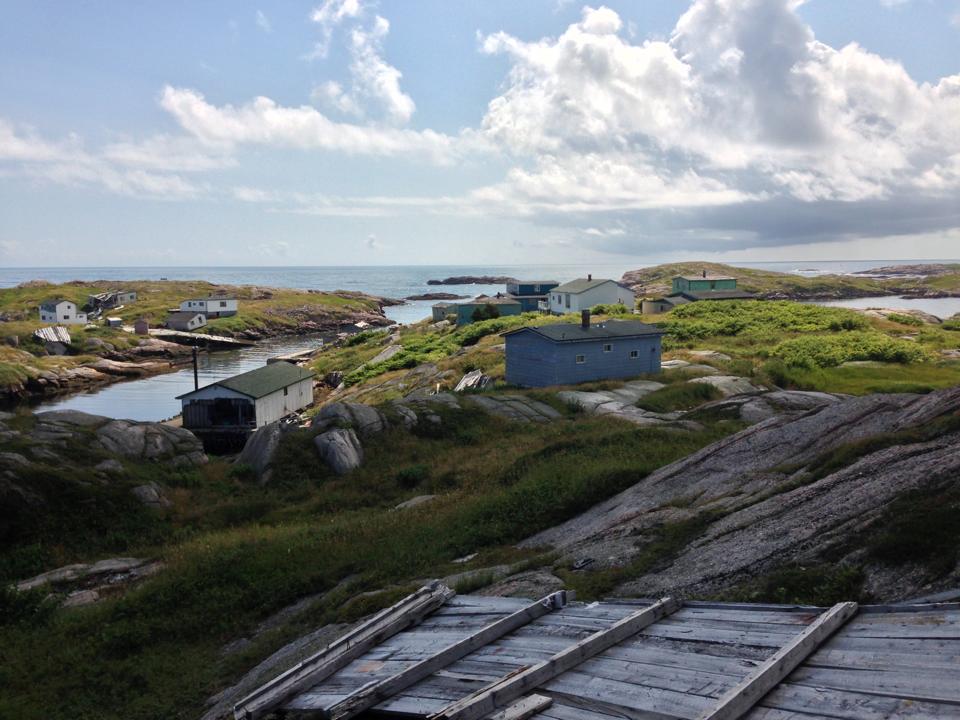
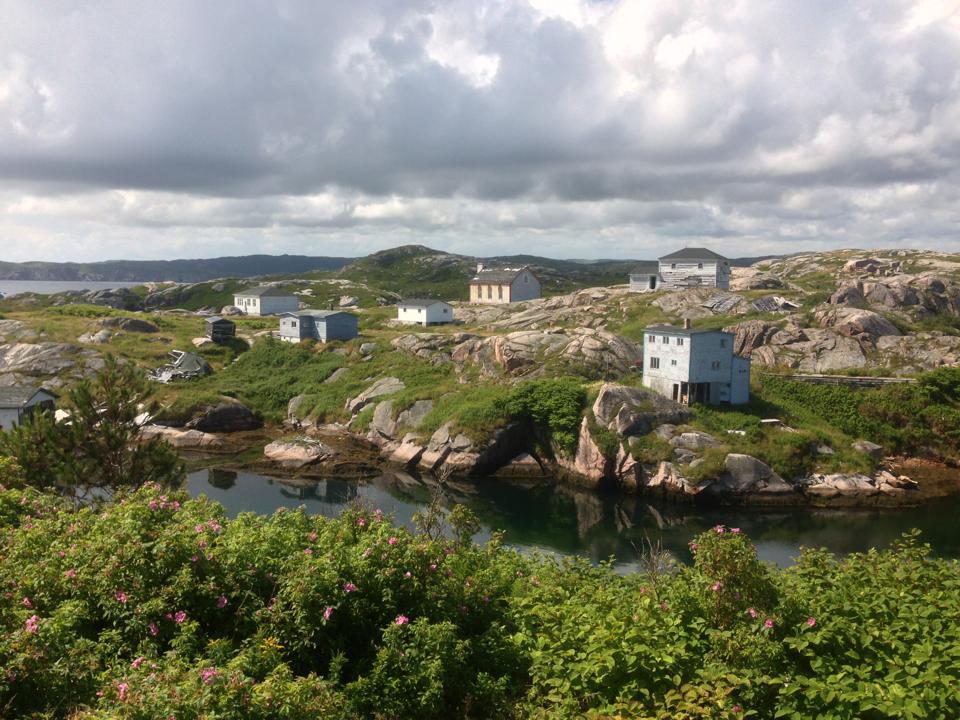
The resettled community of Petites, NL. Photo courtesy of Paul Graham 2013/
Blueberries feature large in My Mother’s Cookbooks, muffins, pies, cakes, even vinegar. Some recipes have unusual names like Blueberry Grunt, Blueberry Bang Belly and Blueberry Buckle, a legacy of this delicious little berry’s reputation with those who came to live in Atlantic Canada.
Today’s commercial harvest of wild blueberries takes advantage of the natural Blueberry barrens of largely coastal areas of the region. But blueberries grow in other areas too, near timber cuts, at the edges of farm fields, along rail lines and in village green spaces. I am told the some of the best blueberries grow near grave yards…
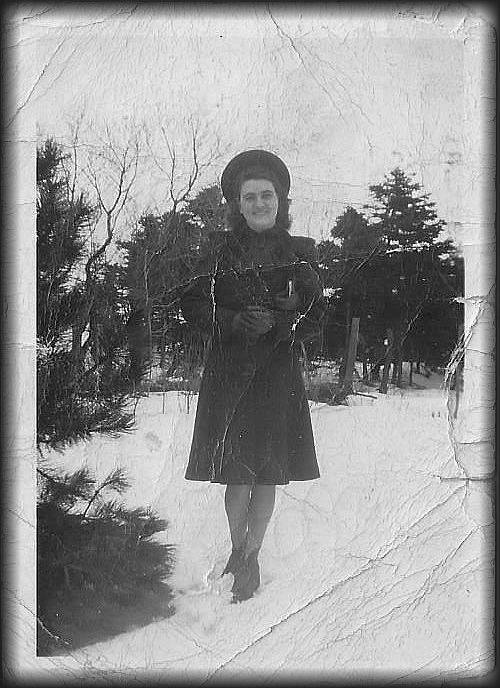
Evelyn Mauger c. 1942
Evelyn Louise Mauger Morrison, born in the small out port community of Petites, Newfoundland grew up picking the blueberries which grew on the scarce acidic soil of her home. It was only logical that she would teach her children to appreciate the bounty of this sweet fruit which grew near their home town of Glace Bay, Cape Breton.
Petites, located on the Southwest coast of the island of Newfoundland, existed because of fish. The long history of migrant Basque, Portuguese, French, English, and the Channel Islands fishers eventually lead to permanent settlement of coastal areas of the island of Newfoundland. Evelyn’s Mauger family arrived from the Channel Islands, prior to 1790 to engage in the fishery.
Growing up in Petites in the 1920’s the rhythm of Evelyn’s early life was set around the arrival of the fishing fleet to it’s small sheltered and well equipped harbour. Transportation in the region was by boat, no roads existed. The arrival of the summer fleet brought a temporary end to the community’s isolation. Boats arriving to off load their catch for processing by locals and to resupply before heading back to the fishing grounds. While others loaded the fish heading for Canadian and International markets. During summer, Petites was a bustling industrial community, but winters were remote and isolated. It is easy to imagine that the late summer blueberries which grew locally, would be a welcomed treat, but also a harbinger of the coming winter and its isolation.
Blueberry fields surrounding the resettled community of Petites, NL – Photo courtesy of Paul Graham. c 2013
That Evelyn would transform this traditional late summer activity of her home community to her family’s experience in the shadows of Cape Breton coal mines is not surprising. As long summer days began to shorten, and blueberries appeared Evelyn would gather together the children and the assortment of cans and containers which they would use to collect the precious fruit. The little band of children, some her own, others neighbour children, would wind their way through the pit yards, along the rail way spurs and on the side hills near the community’s grave yards in search of blueberries.
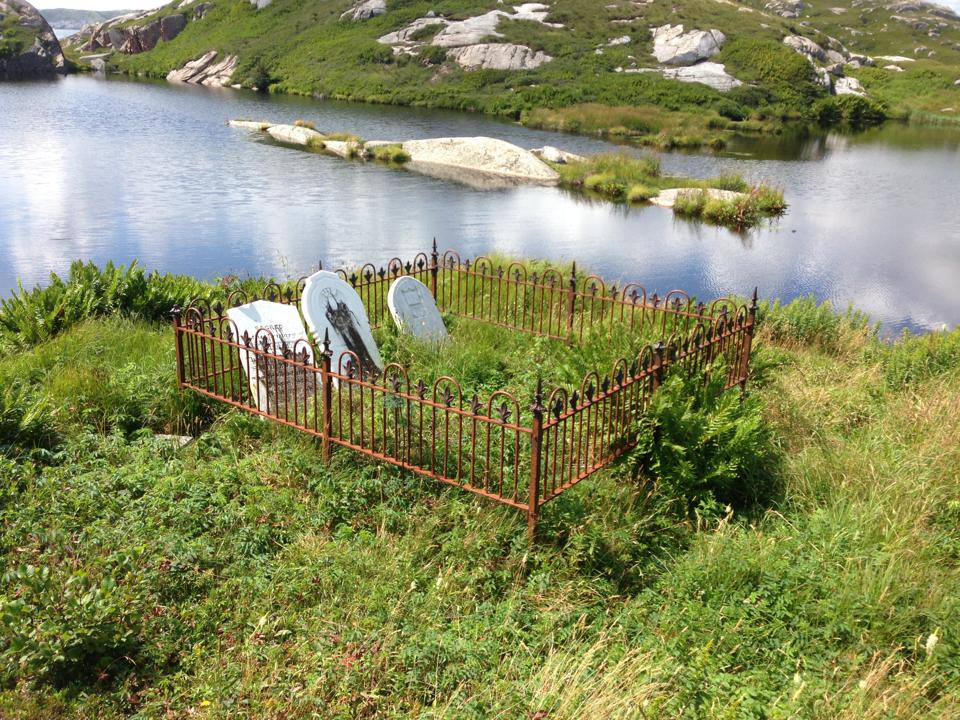
One of several small grave plots of Petites, surrounded by blueberries – Photo courtesy of Paul Graham
Once the fruit necessary for family consumption in treats like her blueberry buckle, was gathered, her children would sell their surplus fruit to neighbours, mostly seniors with no young children to do their berry picking.
Picking blueberries is no easy task… in addition to constant stooping, it takes a good deal of patience to stick with picking such small easily compressed fruit, it can seem to take for ever to cover the bottom of a container. Young enterprising boys learned quickly to gently invert the container of settling fruit just prior to offering it for sale. But the experienced older women, who were their customers were wise and on to the trick… taking the container out of the lads hands, “how much?” was the question. Hearing the price of 35 cents, the customer would tap the container, and reply, “how about 25”.
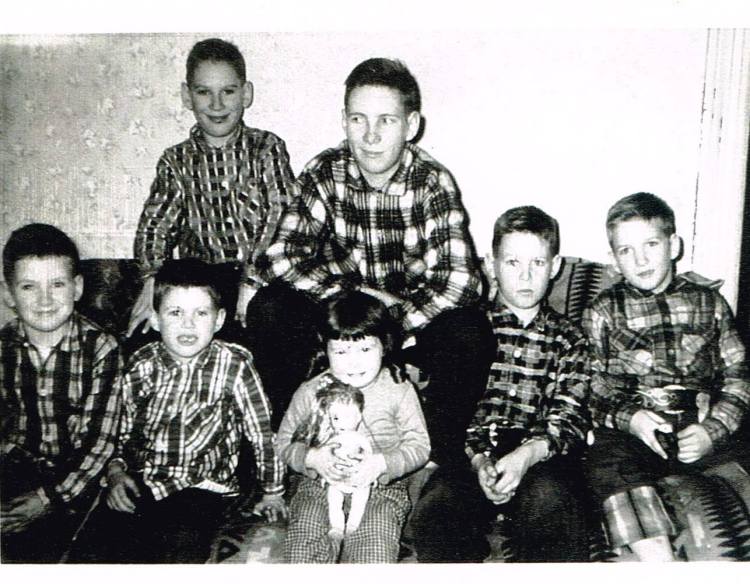
Evelyn’s berry picking crew
The annual task of berry picking served to raise additional monies for the upcoming school year, it also afforded Evelyn’s children an opportunity to share a little of her early life in Petites. She taught her children an appreciation of the natural world, the right places to look, the best picking styles, the patience necessary and the right recipe to use as reward for their hard work… a blueberry buckle.
Evelyn’s Newfoundland Blueberry Buckle
Ingredients: 1/4 cup Butter 1/2 cup Sugar 1 Egg at room temperature 1 cup All purpose flour 11/2 tsp Baking powder 1/4 tsp Salt 1/3 cup Milk 3 cups Fresh Blueberries Crumb mixture: 1/3 cup Sugar 1/3 cup All purpose flour 1/4 cup Butter
Method: 1. Preheat oven to 350 degrees F. 2. Grease and flour an 8 inch x 8 inch square baking dish 3. Cream butter and sugar, add slightly beaten egg 4. Assemble dry ingredients in a separate bowl 5. Alternate adding milk and dry ingredients to the sugar / butter mix 6. Stir until incorporated, spread batter on to prepared baking pan 7. Layer blueberries on top of batter 8. Combine crumb mixture and layer on top of the berries 7. Bake about 40 minutes or until a cake is done.
Petites, Newfoundland:
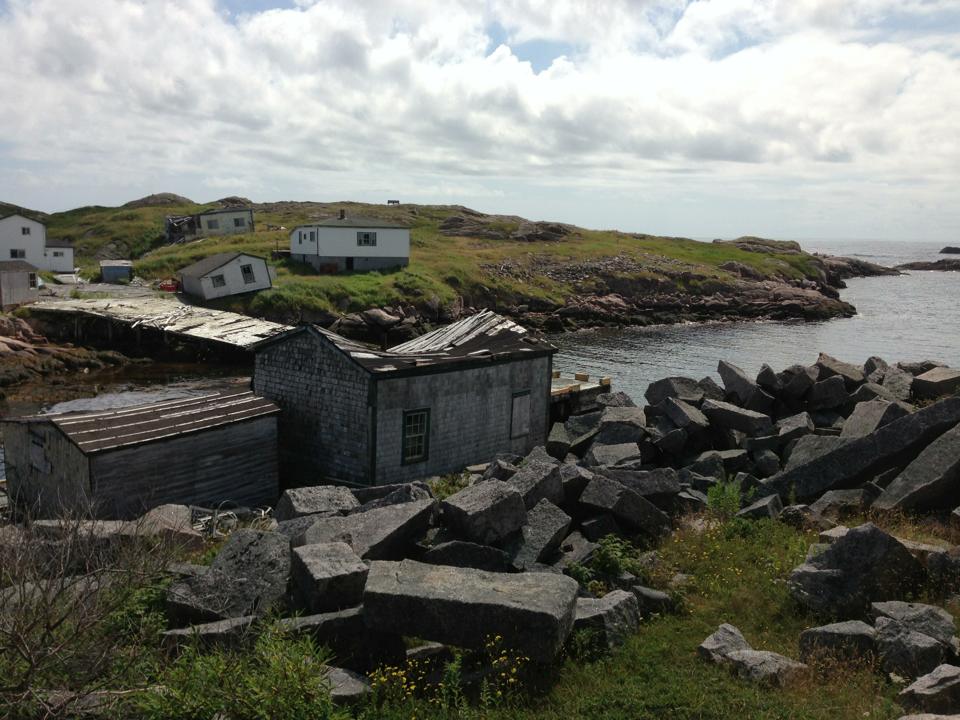
Petites, Newfoundland is located on the southwest coast of the Island, about 50 km from Channel Port Aux Basques. The community which was resettled 2003, is accessible only by water, a short boat ride from its neighbouring community with road access, Rose Blanche.
Petites c. 2013 – Photo courtesy of Paul Graham
Exactly when Petites was founded by Europeans is unknown, the rich fishing area of Rose Blanche banks was the location of the French migrant fishery from the early 1700s forward, with official year round settlements beginning in the early 19th century. The records are scarce but in the 1845 census, Petites boasted 10 permanent families with a total of 61 souls, 30 of whom were under 14 years of age. By 1921 the population had grown to 210 souls in 43 households. The census of this period lists the oldest Petites born resident Elias Mauger1 born 1845.
Petites was conveniently placed to provide for the fishing fleet, in addition to having a sheltered harbour, in close proximity to rich fishing grounds, the community is graced with pools fed by spring water. Additionally, the large granite deposit which dominates the landscape was desirable enough to support a quarry, some of the cut stone making its way into the courthouse in St John’s.
Some of the cut granite leftover from Petites’ stone industry – photo courtesy of Paul Graham 2013
A community of fewer than 250 residents, Petites boasted no less than 12 stores catering to almost any need. The economy of Petites was the fishing industry, but also its related industry of local trade and supply by boat. By 1900, that was beginning to change, the interior regions were opening up as timber companies drove roads, and built mills, drawing young people to the timber towns which seemed to appear over night.
By the last half of the 1930’s, the community of Petites was long familiar with the exodus of young people leaving to seek work and life outside of the community. A position as a domestic in the home of a Glace Bay physician would lead Evelyn to meet and marry Stephan Morrison.
Although strongly associated with the coal industry, Glace Bay, NS has strong association with the fishing industry as well, the links between the two communities are many. The family ties which developed over more than a hundred years of trade, shared fishing grounds, challenge, and tragedy provide an enduring link between the two communities.
Footnote:
The Mauger/Major Family in Newfoundland appears to have been founded by one Elias Mauger born about 1725 in Guernsey, Channel Islands, who settled in Fortune Bay, NL. The Mauger family of Petites were of three brothers, Phillip, James and Elias all born in Fortune, and all probable descendants of the original settler Elias Mauger.
Resources:
“Growth and Development of the Wild Blueberry” Wild Blueberry Fact Sheet 2010. Department of Agriculture, Aquaculture and Fisheries, Province of New Brunswick. (2021)
The contemporary photos were generously shared by Paul Graham, a Petites descendant who shares ancestry to Evelyn’s Grandmother Elizabeth Groves Mauger.
Most families with roots in Atlantic Canada, have a favourite molasses cookie recipe…the one in the My Mother’s Cookbook collection is for “Molasses Drop Cookies” and is labelled simply “Mum”.
My Grandmother Edith Elizabeth Walls, was a loving mother and a talented cook who fostered a love of good food in her family, her children and grandchildren. And yet she did not teach my Mum to cook. When asked, Mum’s explanation was “by the time I came along, she just did not have the patience to teach me.”
Dorothy Elizabeth Walls and Ruby Louise Walls c.1915
After looking closely at Grandmother’s life I believe this is not only the truth but entirely understandable. That the recipe my Mum chose to add to her collection, is a Molasses drop cookie is just as reasonable and reflective of Grandmother Edie’s life.
Grandmother Edie was born in 1889, her mother Letitia Lyons Walls contracted Tuberculosis in 1897 and died in 1899. Edie’s role as nurturer and supporter began early. Edie’s father Benjamin although sometimes described as a farmer, worked in the lumber industry and the finishing mills in the region, leaving his family home for extended periods. As the oldest, Grandmother Edie played a role in supporting her younger siblings, Victor, Myrtle, Chester and Clara, especially given their Mother’s illness. It is a skill she would draw on extensively through out her life, which encompassed two world wars, an influenza pandemic and the Great Depression.
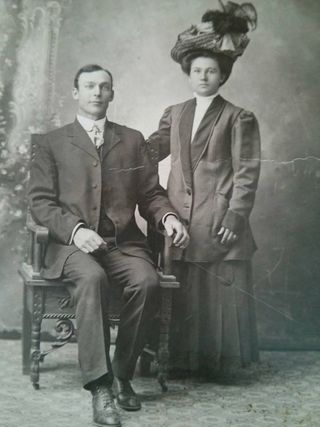
Edith Elizabeth Walls and William James Walls c.1910
Grandmother Edie’s Walls family came to New Brunswick from Scotland in the 1770’s with a group known as the Davidson’s settlers. William Davidson was granted significant lands in exchange for bringing Protestant Scots to settle the rich timber lands of the north eastern region of New Brunswick, (then Nova Scotia) including the Miramichi river valley.
Davidson’s, his backers and the Crown were more interested in harvesting the vast stands of timber (required by the European ship building industry) than settling the land. Settlers were generally not farmers but trades man and those with experience in the timber industry. So farming became part of the tradesman/settler life, although most also worked in the timber or related industries. Ever enterprising and adaptable soon the people of the region began using the timber to build their own ships and entered in to the lucrative Triangular Trade route1. Ships carrying sugar, and cotton from the West Indies destined for England carried rum and molasses to New Brunswick.
The molasses, a by product of sugar refining, had little or no value in England. It quickly became a cheap and energy rich food for the hundreds of woodmen and their settler families. Molasses was staple in lumber camps and kitchens across the region, particularly New Brunswick. It was fundamental to the New Brunswick diet, eaten with buckwheat pancakes, on bread, in baked beans and brown bread, and in countless other desserts and treats.
Of course Grandmother Edie used molasses in her cookies, it was a familiar and logical choice. Grandmother Edie and Grandfather Billy married in 1910, their 10 surviving children and two, who died as infants, arrived consistently during the first 23 years of their marriage. I have little doubt raising her family during those turbulent years, the first war, depression and finally the second war with it’s rations of food stuffs, Edie depended heavily on Molasses to feed and sustain her family.
Grandmother Edie’s first three daughters were the oldest children, followed by five boys then my Mum and finally the youngest George. Each of my mother’s sisters had been taught to cook by Grandmother Edie, when her youth and energy made it possible. By 1929 and after 10 other pregnancies, Grandmother was tired and beyond having either the time or energy necessary to teach her youngest daughter to cook. Despite this lapse, Grandmother’s influences on my Mum’s love of good food and cooking were real, enduring and reflected in the foods I enjoy and make for my family.
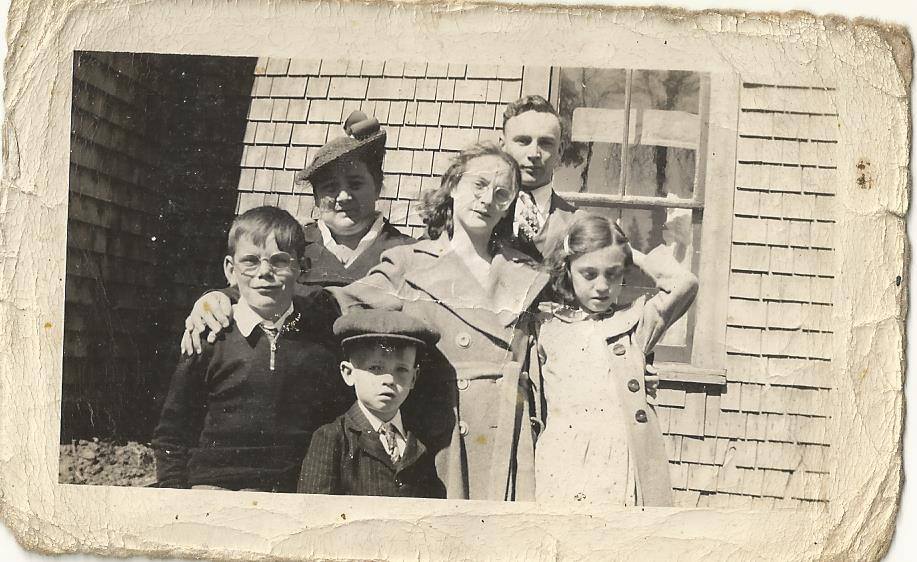
Grandmother Edie, her son Royce (rear right), Royce’s wife Lottie, her son George(with glasses) and her Grandchildren Marion and George Morehouse. 1943
So what about the cookies…most molasses cookies, aka molasses biscuits or lassy buns are rolled out cookies… requiring the time and effort to roll the batter, and cut the cookies prior to cooking. Drop cookie batter permits it to be dropped from a spoon on to a sheet and baked. Grandmother Edie was an efficient and effective cook who knew the best time saving techniques, she had to…
Molasses Drop Cookies
Ingredients 1 cup sugar 1 cup vegetable shortening 1 cup molasses 1 egg 1 cup boiling water with 3 tsp baking soda 1/2 tsp salt 1 tsp vanilla 4 1/2 cups all purpose flour 1 tsp cream of tarter Method: 1) Preheat oven to 350 degrees F 2) Cream sugar and shortening 3) Add slightly beaten egg, molasses and vanilla 4) Assemble the dry ingredients in a separate bowl 5) Add water and dry ingredients alternately to the sugar / shortening mixture, mixing gently. 6) Drop spoonfuls of batter on to a baking sheet and bake 10 -12 minutes.
Molasses Hill, Northumberland county, New Brunswick
A short distance from the community of Blackville, just on the Blissfield side of the parish line, lies a place known as “Molasses hill”. The hill, only about 19 meters high, figures large in the story of how the area came to get its name…the details of the incident are murky… was the puncheon of molasses destined for a community store or for a lumber camp? Was it being transported by horse drawn wagon or sled? Regardless the details…the spill of molasses, and the mess (some say the molasses stiffened by the cold became a obstruction to others traveling the area) became ingrained in the memory of the community.
New Brunswick lumber camp dining hall c. 1920
The local tradition of oral history is deep, story telling was a valuable tool of entertainment during the long winter nights in logging camps, they told stories, sang songs about the things important in their lives and used humour and drama with good effect. Of course an incident involving molasses would become the source of entertainment and amusement, molasses was staple, familiar and well known. So familiar that in 1860 New Brunswick imported and consumed 880,000 gallons of molasses. Most of the molasses was shipped in wooden barrels, a puncheon of molasses was size of container most used in this region. And where did the wood for the barrels come from…from the toil and effort of men and women like themselves. Of course some of those barrels would have also contained rum… some of the molasses might have found its way in to the stills of the region, but the recipe for rum did not end up in My Mother’s cookbooks.
1. Triangular Trade route refers to the shipping of raw materials from the colonies to Europe for processing which developed to include timber from the Atlantic region to Europe, on ships which would load textiles and manufactured goods bound for Africa, where their cargo holds would be emptied of the materials and loaded with African slaves on route to the British West Indies. The slaves would be replaced with sugar, molasses and rum which would head back to the north east to drop off molasses and rum, load timber and head back to Europe.