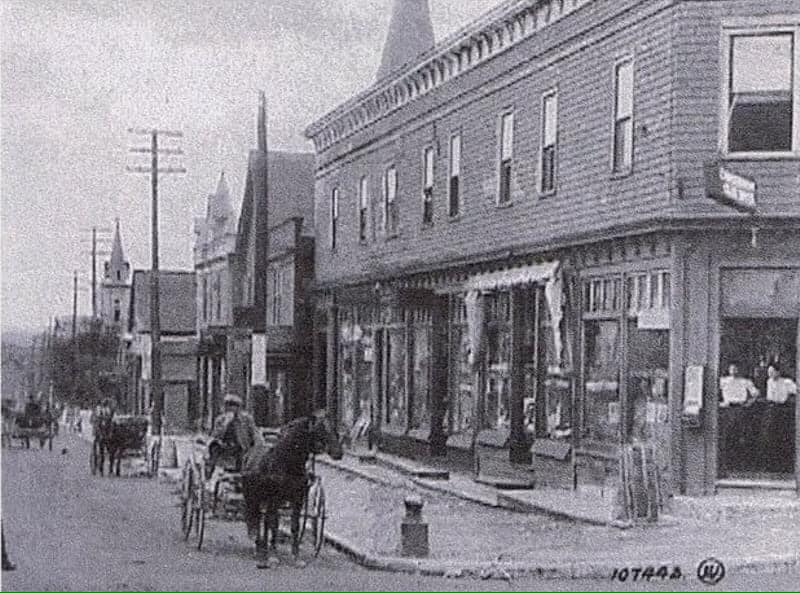
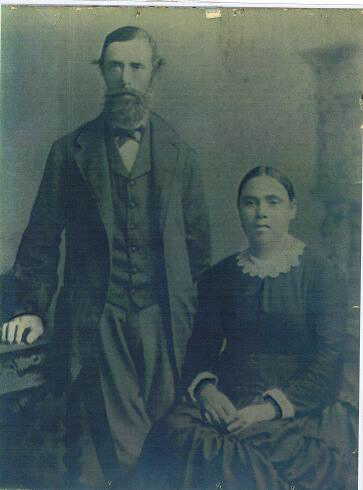
One potato, two potato…salad?

This time of year our thoughts turn to ‘hot day’ meals, My Mother’s Cookbooks provides plenty of options for summer meals but traditionally in this region it means potato salad…
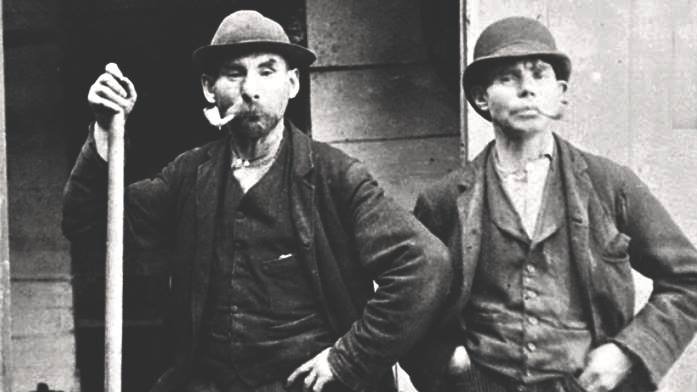
Clon and Tom Murphy – brother immigrants from Ireland who settle in Miramichi NB – Photo courtesy of the Our Miramichi Family Heritage FB site.

The potato famine1 served to assure potatoes are associated with the Irish. Irish immigration to Canada began before the potato famine but the influence of the famine on immigration to North America, can’t be overstated.

Potatoes are by no means only eaten by the Irish. By 1840 England, Scotland, and France depended heavily on potatoes as a staple in their diet, but the situation in Ireland was different. Prior to 1845, Ireland experienced growth in population beyond the capacity of the country to produce sufficient food. Potatoes became the primary source of food for a large portion of the population, when the potato crop in Europe failed, the situation became dire.
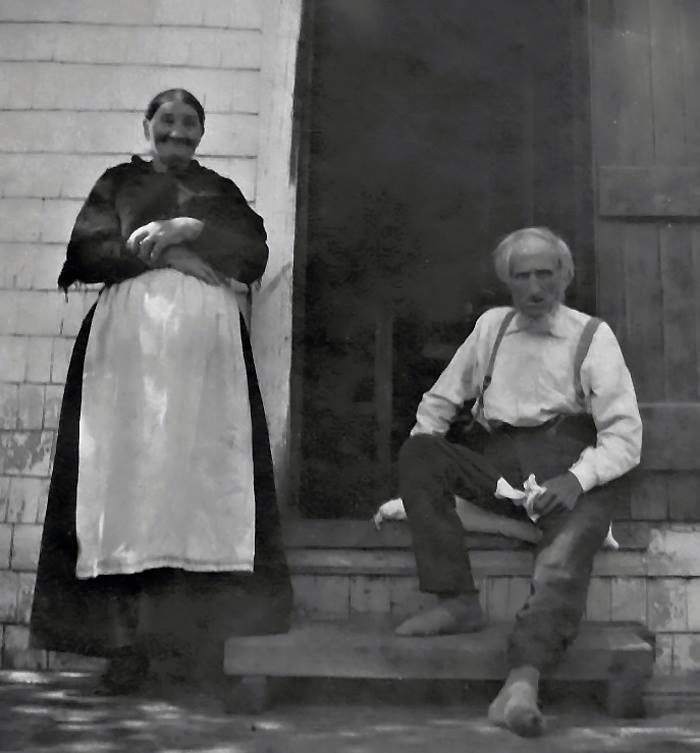
Patrick Connors b. 1826 New Ross, County Wexford, Ireland and Theresa Kane Connors, b NB. C. 1906, Photo courtesy of the Our Miramichi Family Heritage FB site.

Atlantic Canada saw the first immigration of Irish beginning in the late 1700’s, by the 1830’s the booming timber industry attracted high numbers of Irish. There are many tales of young Irish lads being press ganged into service with the British navy, jumping ship in the first port of call. Reality is limited opportunities and food in Ireland, the promise of the booming timber industry, free or cheap passage in the empty holds of timber ships lured many a Irish lad, even whole families to immigrate. As a result of the early influx of Irish, the famine naturally brought others, by 1851 those of Irish heritage made up more than 30% of New Brunswick’s population.

Mary Catherine McNamee, born about 1825 in County Derry Ireland arrived in 1837, with family, a brother Francis and possibly others. In the 1851 census, Francis 34 years old, husband and father living in Carrolls Crossing, NB. He and Catherine 26 years old entered the country at the same time in 1837, land grant records show a William McNamee being granted land in Northumberland county in 1838. Later in 1852 Catherine would marry Maurice O’Donnell.
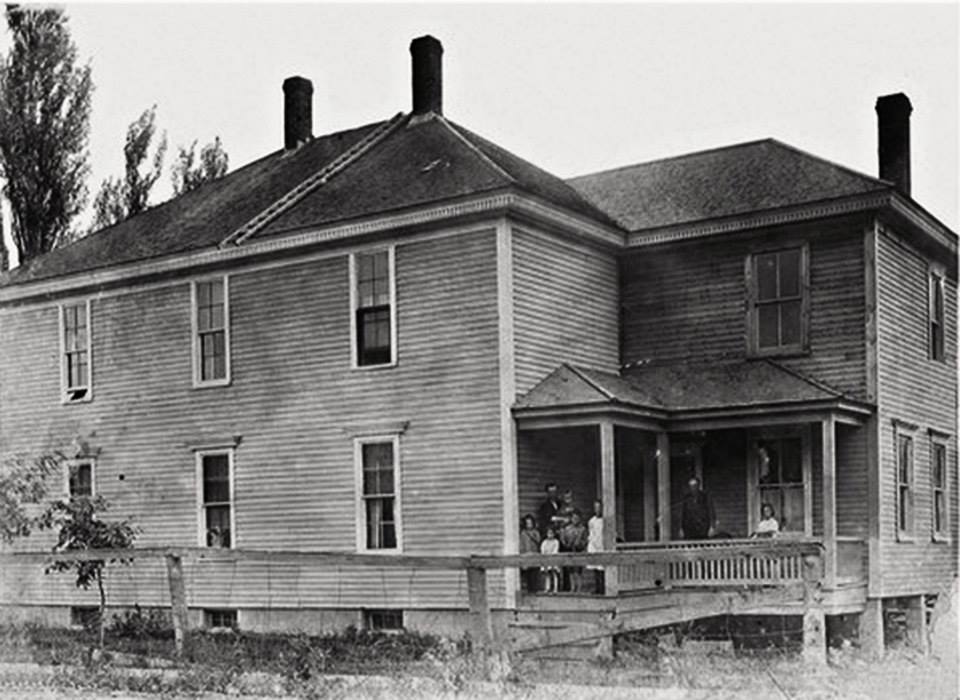
Home of Martin English and family. C1900 Photo courtesy of the Our Miramichi Family Heritage FB site.

Like many other Irish Catholic immigrants the McNamee’s settled where other Irish were already settled. Patrick O’Donnell would have favoured his son Maurice marrying a nice Irish Catholic girl. Patrick arrived in New Brunswick in 1820, married a protestant and lived in a largely protestant area but maintained his Roman Catholic tradition.

The Irish were generally not welcomed by the largely pre-loyalist, Loyalists and Scottish protestants settlers. Differences in religious affiliation, culture and circumstance served to create a period of disruption, one characterized by discrimination, harassment and conflict.
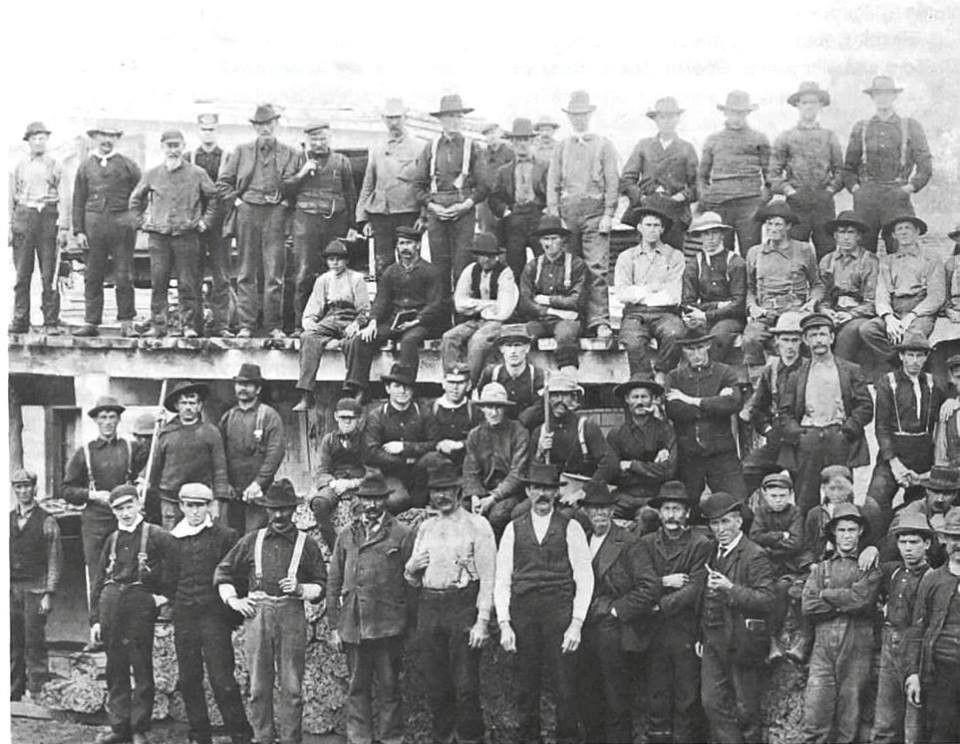
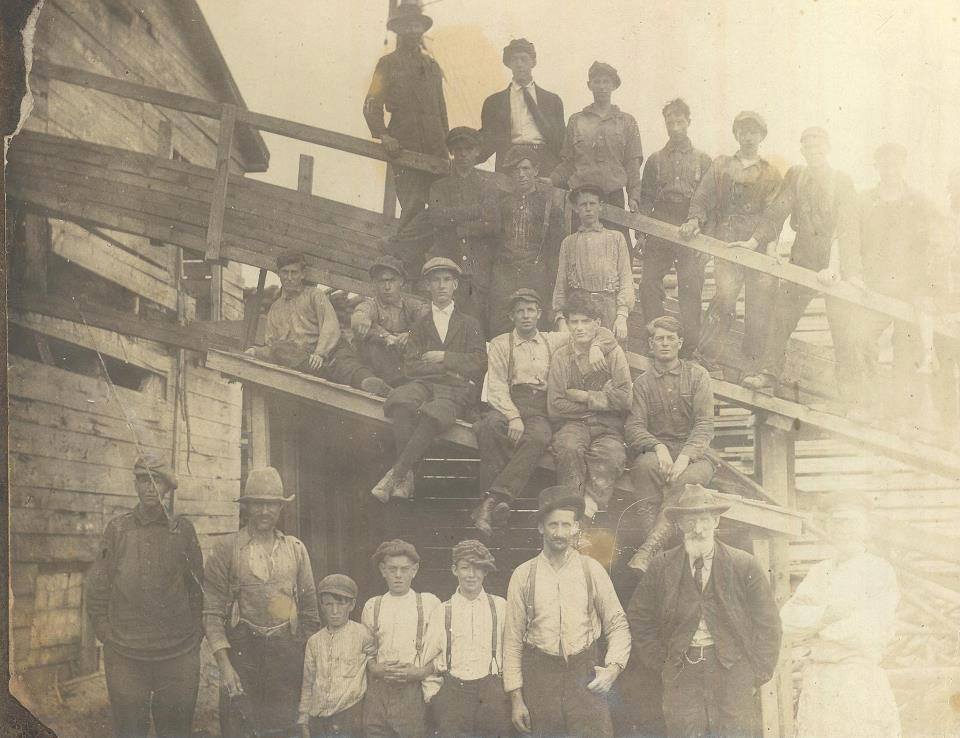
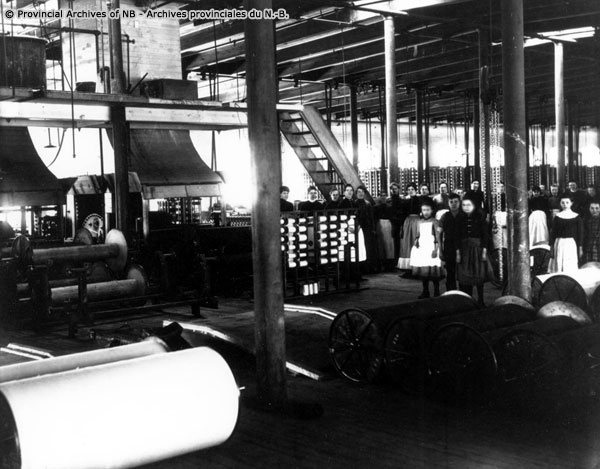
Miramichi Mill workers at Burchills Mill, c.1890 Photo courtesy of Our Miramichi Heritage Family FB site.

Irish settlements appeared across region, as Irish immigrants settled on available and largely less desirable land than earlier settlers. The transition was not an easy one, life in the timber camps was a distinct change from the largely farming life they had known in Ireland. But these families and communities grew, adapted and flourished, creating life in a new land for generations to come.

When exactly potatoes arrived in the region is not known, some credit the Scots2, others say the Irish served to bring them to Atlantic Canada. Regardless, potatoes arrived and became a staple in the diet of the region.

It seems the cool, damp climate of Atlantic Canada is just similar enough to the plant’s native climate in the Andes, for potatoes to do well. Potatoes would feed generations of New Brunswick families and become a major food crop, eventually becoming the significant industry of today in areas of New Brunswick and Prince Edward Island.

Because potatoes do well in the region, they were and are grown in household gardens. Catherine would have depended upon potatoes to feed her growing family. But it would be another woman of Irish ancestry, Esther Rebecca Brown O’Donnell, who would ultimately raise Catherine’s children. Sadly, Catherine’s life was brief, when she died in 1861, she left four young sons, William, James, Francis and Robert.

Catherine Hurley O’Donnell and her sons Frank and Phillip C. 1917 Photo courtesy of the Our Miramichi Family Heritage FB site.

By the mid 1800’s when Catherine and Esther were preparing meals for their families, potato salad was becoming increasingly popular. There are as many versions of potato salad as their are families, some made with mashed potatoes, others use diced; some contain peas or other vegetable; some salads are made with a vinaigrette dressing, others with creamy dressing. Potato salad made most in our house was made with homemade salad dressing, and tossed with mashed potato and other ingredients.

Miramichi descendants of Irish Settlers. C1930 Photo courtesy of Our Miramichi Heritage FB site.

My Mother’s Cookbooks Homemade Potato Salad

Dressing Ingredients:
1/2 cup white sugar
1 tsp dry mustard
1/2 tsp salt
1 Tbsp flour
1\4 cup + 2 Tbsp white vinegar
2 Tbsp water
2 eggs beaten
1/2 Tbsp butter
Dressing Method:
1) In a small bowl mix sugar, mustard, salt, flour and set aside;
2) Combine vinegar, water, beaten eggs and butter in a saucepan;
3) Bring to a boil over medium heat;
4) Slow add flour mixture, stir constantly to avoid lumps
5) Cook until it thickens.

Potato salad Ingredients:
2 pounds potatoes, peeled, boiled, mashed and allowed to cool;
4 hard boiled eggs, 3 diced, 1 sliced;
1/2 cup finely diced mild onion;
2 tsp of celery seed;
1 tsp salt;
1/4 tsp freshly ground black pepper
Paprika.
Potato salad Assembly:
1) Place cooled potatoes in a large bowl;
2) Add diced egg, onion, celery seed and seasoning to the bowl;
3) Mix to combine, transfer to a serving dish;
4) Garnish with sliced egg and paprika.
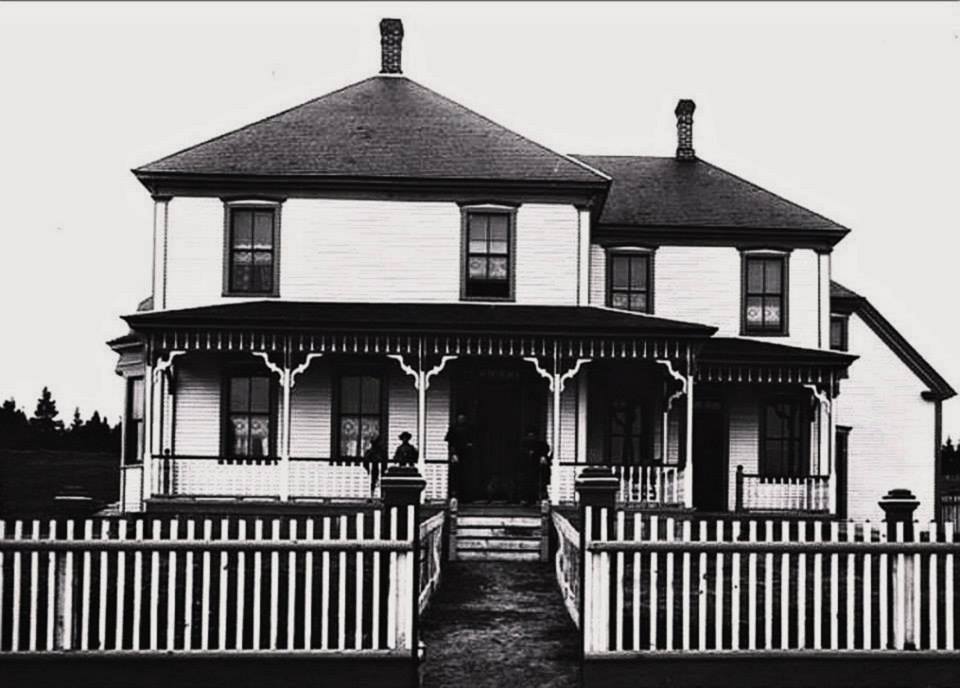


Gill Family residence, Miramichi, NB C.1910 Courtesy of the Our Miramichi Family Heritage FB site.

Explanation and Resources:
1. Potato famine – also known at the Great Hunger began about 1845, and lasted until about 1850, with infection of potato blight in potato crops across Europe. The blight caused the potatoes and plants to die and rot.
2. Prince Edward Island where potatoes have been grown since prior to 1805 attribute the introduction to Scots, who grew the first PEI potatoes. By 1805 potatoes were already becoming an important crop accounting for more than 15% of crops grown in PEI.
3. The Harvest of Prince Edward Island the Island potato. http://www.virtualmuseum.caedu/ViewLoitLo.do;jsessionid=943DF0CAA87B997576E475F2A022C7AA?method=preview&lang=EN&id=16533
4. Irish portal Provincial Archives of New Brunswick https://archives.gnb.ca/Irish/databases_en.html
5. New Brunswick Potatoes –https://www2.gnb.ca/content/gnb/en/departments/10/agriculture/content/crops/potatoes.html
Strawberry fields and pit heads…

There are certain recipes in the My Mother’s Cookbook recipes which can be altered to create what Mum called “Best” versions, made with ‘rich’ ingredients, margarine replaced with butter, milk with cream, increased sugar and fat. These ‘best’ versions appeared only on special occasions…like the first spring strawberries marked with the ‘best’ strawberry shortcake.

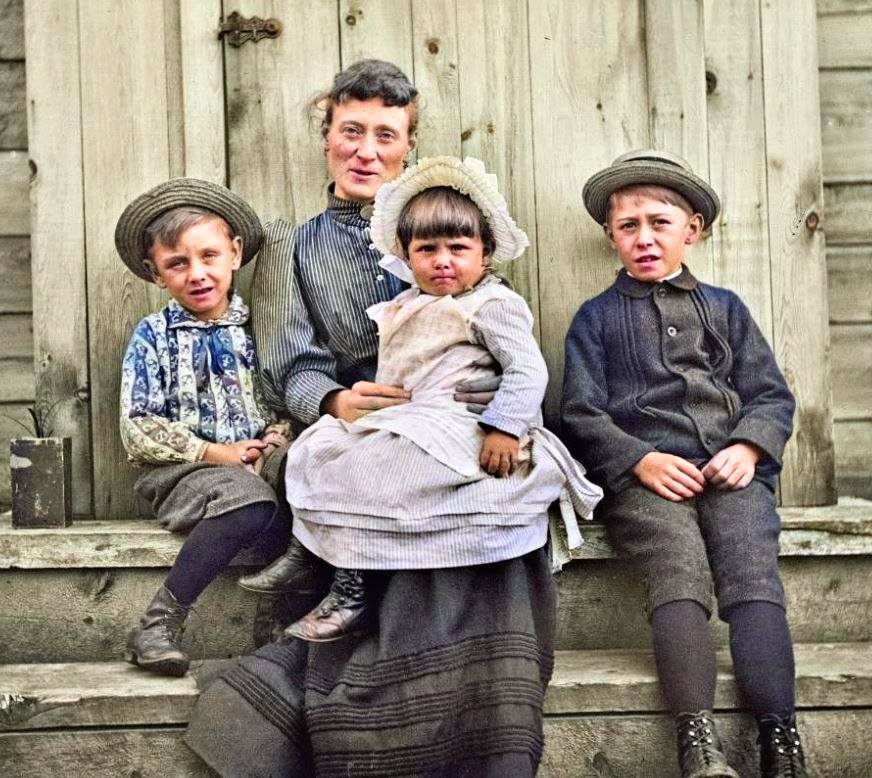
c. 1890 Mother and children – Photo courtesy of Our Miramichi Heritage Family FB site.

Alma Myrtle McPherson was born in Springhill, NS in October of 1889, her father Angus was second generation Cape Breton born coal miner of Scottish ancestry. Annie B. Coleman McPherson, Myrtle’s mother was also of mining stock, she was born in Albert Mines, NB1 where her Yorkshire mining family settled during the 1850’s. The Coleman family mining roots extend back beyond the family’s immigration from England first to Nova Scotia then to New Brunswick. Generations of women after women raising their families in coal mining towns, in company towns.

Company town, single industry, model town, planned town, workers town were towns and infrastructure built to serve the workforce of a single industry, often a single company. It was especially common in ‘boom’ towns, where local infrastructure was inadequate to meet the needs of a burgeoning population.

Boom town Glace Bay, NS c.1900 Photo courtesy of the Nova Scotia Archives.

Textile mills, sawmills, mines, pulp mills, and many other mines, and factories had towns develop around them to serve their workforce. Company owned houses for rent, company stores supplied staples, everything a family needed, shoes to flour and oatmeal, all conveniently docked from the miners pay envelope.

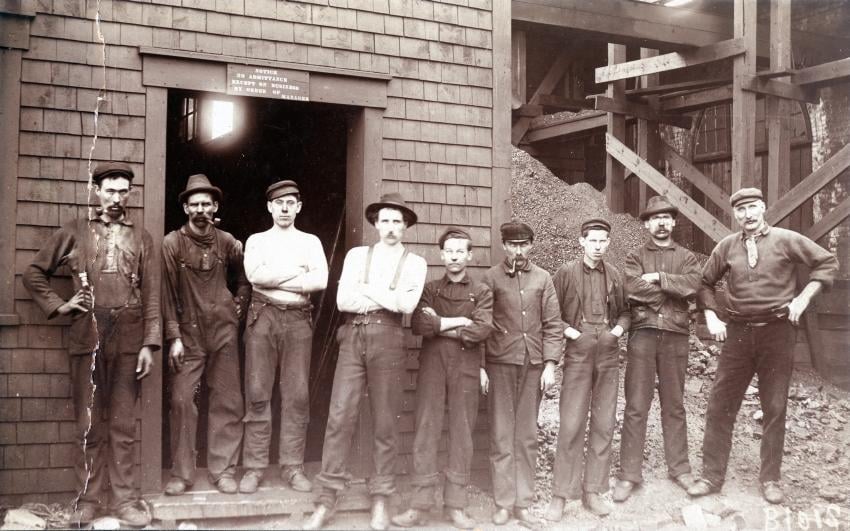
Miners at the No 1 colliery Dominion Coal Company c.1920 Photo courtesy of the Nova Scotia Archives.

Company owned towns quickly became the business model of choice, one typified by abuse of power and financial gain on the backs of people with little or no choice. A ‘company town’ represented a financial opportunity for company owners, debt and poverty for workers and their families.

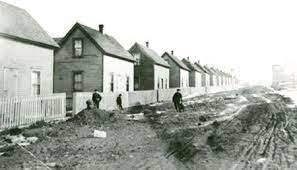
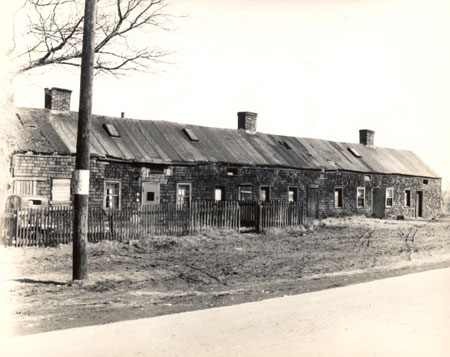
Miner company homes c.1900 in the Sydney Coal fields Photo courtesy of the Nova Scotia Archives

Albert Mines, NB; Springhill, NS and New Waterford, NS were company towns in the truest sense. All three owed their existence to mining and the miners who toiled underground in dangerous conditions.

Albert Mines, NB c.1860 Photo courtesy of the Provincial Archives of New Brunswick P1-21

Conditions in company rental homes were over crowded, the houses had no sanitation, no insulation and limited heat. The water source was some distance and in the case of areas of Cape Breton shared with the mine stables.

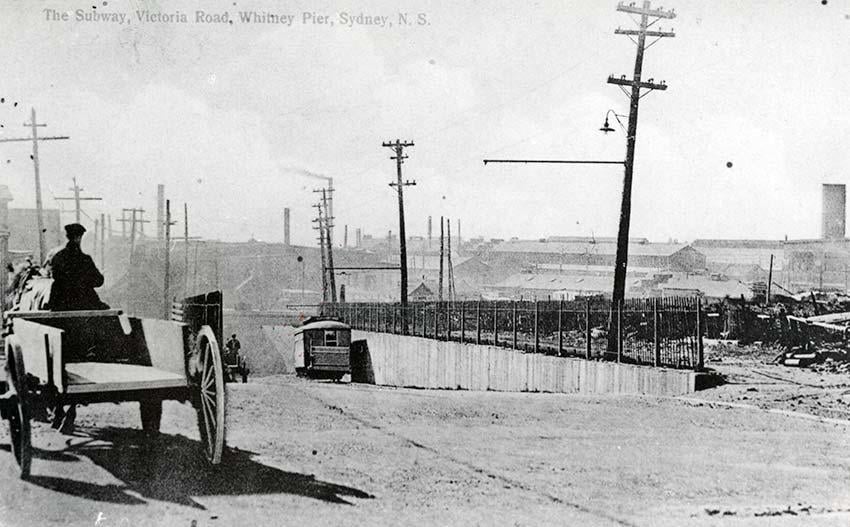
Whitney pier, Cape Breton Steel plant c.1900 Photo courtesy of the Nova Scotia Archives.

Myrtle and her Mother Annie were expert at keeping starvation at bay. Depending upon bread, porridge, potatoes, and a short supply of protein. Small amounts of protein were stretched with pork fat in stews and other dishes. Fish, also appeared in various forms fresh, smoked, salted depending on availability and ability to pay. The diet of mining families was limited and repetitive.

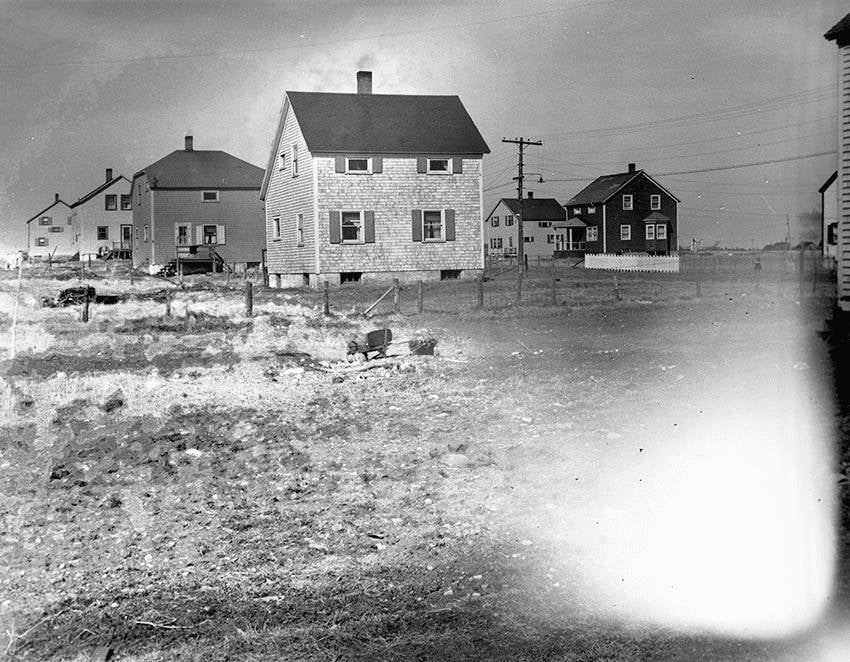
Coal mining town, Reserve Mines, NS c1920 Photo courtesy of the Nova Scotia Archives.

Most families grew potatoes in their limited back yard. Local harvest of wild game and fish was difficult except during production shut down periods. Miners worked 10 hour days 6 days a week, but production shut downs occurred frequently, leaving families without income. Mining families like the McPherson and Coleman families did not have farms to return to during shut down periods as some miner/farmers had.

In June and July wild strawberries and woodland strawberries ripen across Canada. They can be found in most areas, at the edges of roadways and even in poorly kept lawns. The tiny fruit are well worth effort of the tedious picking, sweet and tasty they lend themselves to enjoyment in a variety of forms… served with cream and sugar, preserved as jam but most frequently as strawberry shortcake.

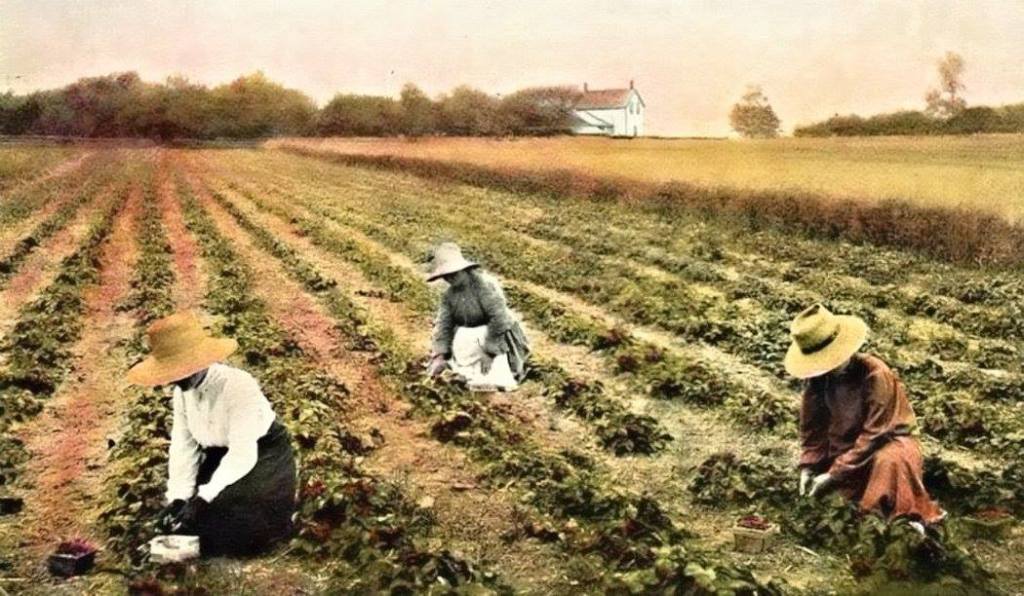
Strawberry fields c1890 Photo courtesy of the Our Miramichi Heritage Family FB site

Strawberry shortcake2 first appeared as early as 1588, but it would take until the 1850s for it to experience widespread popularity. Myrtle and Annie might well have saved a bit of wheat flour, sugar and fat to make shortcake.

Myrtle married William Davis in 1904, and settled in New Waterford, NS. Bill a Glouchestershire, England born multi generational miner worked for the British Empire Steel Company (BESCO). Myrtle’s parents Annie and Angus McPherson also moved to New Waterford during the early boom years to work in the some 16 collieries owned by the company.

Miners at shift end c.1930 Photo courtesy of the Nova Scotia Archives

Labour disputes between miners and British Empire Steel Company (BESCO), were frequent as wages began a downward trend. BESCO, began their ownership with an intention to break the miners solidarity to the United Mine Workers of America. In January 1925 at the end of the current contract BESCO refused to negotiate with the union. On 2 March, BESCO stores refused all credit to miners. This act effectively served to starve miners families out, putting pressure from families on miners to cease their support of UMWA. By June mine families were in dire straits, food was scarce.

Spring trout, clams, smelts, etc which could be harvested locally by women and children would have supplemented the family’s food resources. Berries, particularly sweet strawberries would have been scooped up and eaten by the hand full. Those which made it home might just have had a dusting of sugar, and if they were fortunate maybe accompanied by a bit of whole milk, from a generous neighbour’s cow. 1925 would not be a year for celebrating strawberries…

On the morning of 11 June 1925, a riot erupted, provoked by well armed company police force. Just shortly before noon during a rush of the crowd by company police, a private police officer took direct aim at Bill Davis’s chest, killing him instantly.

Bill Davis’ murder was met by renewed resolve by fellow miners, the events would eventually see the government side with the company ordering troops on to the streets of mining communities across the region. Miners set up a fund for Myrtle and the family but her oldest son Thomas3 would seek work in the mine to provide for the family. In September of 1925 Myrtle gave birth to her 10th child a boy, she would eventually use some of the money from the fund to purchase a stone grave marker for her husband Bill Davis.

When I prepare Mum’s best Strawberry shortcake recipe, which I do at least once each season, I use the sweetest local commercially grown berries available. Harvesting wild strawberries is a thing of the past just as boy miners and company homes are of the past. But the hard won improvements in safety, working conditions and fair wages endure…

Best Strawberry Shortcake

Ingredients
2 cups of All purpose flour
1/4 cup of sugar
4 tsp baking powder
1/4 cup vegetable shortening
1/4 cup plus 2 Tbsp (reserved) cold butter
1 tsp salt
1/4 tsp soda
1 cup Buttermilk or soured milk
1 qt strawberries hulled and clean
2 Tbsp sugar
1/2 c Whipping cream
pinch of salt
1/2 tsp sugar
1/2 tsp pure vanilla extract

Method:
1) Add 2 Tbsp sugar to prepared berries, and toss gently set aside to mascerate.
2) Preheat oven to 425 degrees F.;
3) Sift flour and other dry ingredients together in a mixing bowl;
4) Cut shortening and cold butter in to the dry ingredients using a pastry blender, until mix reaches a med crumb.
5) Add buttermilk and mix gently. Place on a lightly floured surface, and shape into a 9 in x 9 in square of dough.
5) Cut in to pieces, and place in a 9in x 9in square pan;
6) Bake 20 minutes until slightly golden brown on top.
7) Whip cream, add salt, sugar and vanilla continue beating until soft peaks form.
8) Once the short cake is cooled, serve with berries and cream.

Explanations and Resources:
1. Albert Mines, NB was a mining community which developed at a site in Albert county NB, where Abraham Gesner, used a recently identified ore called Albertite. Albertite is a black shiny rock comprised of hydrocarbons which Gesner was able to use to discover kerosene. Kerosene was the first replacement for whale blubber as lamp oil. From 1854 until 1884 Albertite was mined and sent to Boston for use as lamp oil. Albertite was the beginning of petroleum extraction which would ultimately lead to the oil and gas industry of today.
2. Strawberry shortcake appeared first in an English Cookery book of 1588 according to industry sources.
3. Thomas Davis the oldest son of William Davis and Alma Myrtle McPherson Davis, was named for the older brother of William Davis who died in one of the worst mine disasters in Canadian history. Thomas Davis died on 21 February 1891 in the Springhill mine explosion. Thomas was one of 17 boys under 16 years killed that day, a total of 125 men died in the explosion.
4. Albert county Museum https://www.albertcountymuseum.com/mining
5. Glace Bay’s Miners Museum at https://www.minersmuseum.com/

Miner’s Wives and Mothers…

There are a number of recipes in My Mother’s Cookbooks which are traditionally associated with mining and mining communities…Welsh cakes, Cornish pasties, Welsh pasties, hand pies, etc.

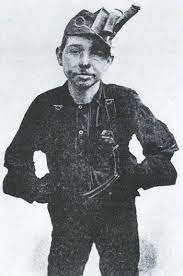
Child Miner c.1890 Photo courtesy of the Public Archives of Canada

Canadian mining communities which thrived during the early 1900’s and even during the depression, attracted skilled workers and labourers from Europe and beyond. A ready supply, miners from Wales/ Cornwall, tradesman from Italy, Lebanese merchants, labourers from Poland, the Ukraine, the Caribbean etc. filled the need in mining towns. The communities which became home to these diverse populations developed food traditions which combine all of the community’s offerings. Polish sausage, Italian cured meats and mid-eastern flatires combined with the more prevalent northern European traditions to create a diverse diet.

For country born women like Margaret McDougall McNeil Morrison in Glace Bay, NS and Jessie Blanche Vye Gaudine(i) in Minto, NB cooking on a coal fired stove would have required a new skill. Coal fired stoves were the norm in communities like Glace Bay and Minto, unlike the surrounding rural farm communities where wood remained the primary fuel source.

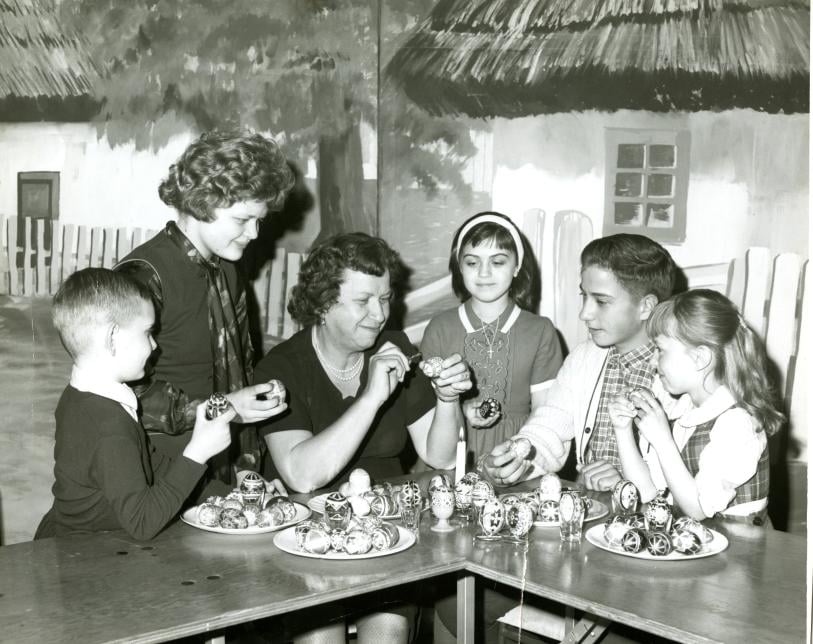
A group of Children learn the traditional craft of egg decoration Ukrainian style c. 1950

Wood stoves were more predictable, coal stoves notoriously difficult to control. So much so a tradition of “Roof Coal Bread”1 developed in some communities. The bread which is scorched and heavy crusted on top (sometimes all over) is still made at local bakeries in Cape Breton. Many mining town cooks have been heard to exclaim…”Oh No, the bread burned…Oh well good it’s enough for the pit.” Alluding to the coal dust which contaminates everything in the mine.

Miners, men and boys entering the pit for their shift in Cape Breton C. 1890 Photo courtesy of the Nova Scotia Archives

Jessie Blanche Vye Gaudine(i) was born on her family farm in South Nelson, Northumberland county, New Brunswick. Jessie’s husband Domenico Gaudini2, a machinist took work with the mine owned by Miramichi Lumber Company3 bringing the family to Minto.

Mining company towns were not easy places, although the coal seam at Minto, NB was considered a stable seam, risk of injury and death was ever present, this in addition to risks posed by poor housing, poor sanitation, and poverty. The Sydney coals fields were more gassy, and with greater overburden issues, the living conditions were similar although more crowded.

Company homes in the Sydney coal fields c1890 Photo courtesy of the Nova Scotia Archives

For Flossie Jane Williams Stackable, coal was a familiar fuel. She also understood better than some the risks inherent in coal mines and coal mining towns. In her home country of Wales coal was a major industry. Flossie would have prepared foods in her Welsh tradition pasties, and Welsh Cakes, possibly combining them with her husband John’s family’s Finnish traditions.

14 year old boy miner Photo courtesy of Public Archives of Canada C. 1900

For Maggie’s whose career as a miner’s wife would turn to miner’s widow and almost immediately to miner’s mother, what she baked would have been dictated by what she had. Flour, oats, lard, sugar were available from the company store and other stores provided of course one had the money.

Flossie’s choices would have been even more restricted after her husband John Stackable4 was killed in the mine in 1925. The challenge facing widows like Flossie and Maggie was daunting… they had little choice, take in laundry, open their modest home to borders and send boy children to the pit to work.

Pit pony, driver and miners in Cape Breton Coal mine c.1890 Photo courtesy of the Nova Scotia Archives

Young boys were valuable as trappers 5 and drivers6, jobs which did not ‘require’ adult strength could be done by boys whose families were desperate for their meager wages. Wages less than half that of adult miners. Bartholomew Stackable and Allan McDougall would enter coal mining early, their boyhoods cut short by the need to feed their family.

Young boys who spent 10 hours a day six days a week in the dark, wet, dusty, rat infested pit opening ‘traps’ and driving ponies instead of attending school and enjoying the sunshine… young boys sustained and comforted by the food lovingly prepared by their Mother’s despite meager means…oatcakes, hand pies, maybe even a slice of Bonnach sweetened with molasses or Welsh Cakes.

My Mother’s Cookbooks Welsh Cakes

Ingredients:
1/4 cup each butter and lard (or shortening)
2 cups Flour
1/3 cup Sugar
1 tsp baking powder
1/2 tsp of nutmeg or mace
pinch of cinnamon
1 egg at room temperature
1/2 cup currents
2 to 3 Tbsp milk
Method:
1) Combine dry ingredients in a bowl and add fat, working it into a fine crumb with your fingers;
2) Add currents;
3) Add slightly beaten egg and only enough milk to create a soft dough;
4) Wrap the dough in plastic and place in the refrigerator for at least 30 minutes;
5) Remove the plastic, roll out dough to about 1/4 inch thick, cut into 11/2 to 2 inch rounds;
6) Fry in a small amount of butter, until slightly browned on each side and cooked through about 3-4 minutes;
7) If desired the cakes can be cooled slightly and then rolled in sugar for added sweetness.

My Mother’s Cookbooks Bonnach

Ingredients:
6 cups of flour
6 level tsp baking powder
1 tsp salt
1 tsp soda
1/2 cup sugar
3/4 cup of melted lard/butter or oil
3 eggs at room temperature
2 cups buttermilk or soured milk
Method:
1) Preheat oven to 350 degrees F.
2) Mix together sugar, oil and eggs;
3) Assemble dry ingredients in another bowl
4) Add dry ingredients to the sugar / fat mix, alternating with the milk until incorporated.
6) Place in a greased 8 inch x 11 inch baking dish and bake 35 -45 minutes until done.

Minto, Sunbury County, NB – Miramichi Lumber Company Mine Shaft # 10 Tragedy

28 July 1932 – Three young boys ranging in age from 9 to 12, lay motionless at the pit bottom, some 35 feet from the surface. A forth child fled back up the wooden latter at the sight of his three friends passing out and falling. He raised the alarm and within minutes help began to arrive.

Sadly, there were no plans for such an event. Instead a haphazard rescue fueled by concern for family and close friends was mounted. Miner after miner attempted to enter the pit only to be over come, 11 in total, only 9 would be successfully retrieved.

Five died at the bottom of the #10 shaft on that warm July morning…

three curious children:
1) Allan Gaudine, s/o Domenic and Jessie Gaudine, 9 years old;
2) Vernon Stack (able) s/o John Stackable and Flossie Williams Stackable Gormley, 10 years old;
3) Cyril Stack(able) s/o John Stackable and Flossie Williams Stackable Gormley, 12 years old

and their attempted rescuers:
4) Thomas Gallant 43 year old miner originally from Summerside PEI
5) Vernon Betts 32 year old miner from Hardwood Ridge, Sunbury county, NB.

The events of 28 July 1932 in Minto would begin the transformation of safety in New Brunswick coal mines and lead to the establishment of long over due safety improvements. June 11th mining communities in Canada mark Miner’s Memorial Day…May they rest in peace.

Explanations and Resources:
1) Roof Coal Bread is available at Ropak’s bakery in New Waterford, NS.
2) Domenico Gaudini born Italy would change the spelling of his name to the more familiar sounding Gaudine after he and Jessie married.
3) Miramichi Lumber company owned by US based International paper operated a mine in Minto which served various pulp mills and factories in New Brunswick.
4) James Stackable was born in Hardwood Ridge, Sunbury county, NB of Finnish ancestry, after his death the family would shorten the name to Stack.
5) Traps are doors used to control the ventilation in the mine. Trappers were employed to open and close these doors as the mine operation required. It involved long hours in the cold, dark, wet and rodent infested pit
6) Older boys moved from trapper to pony driver, slightly better pay but even greater risk. Pit pony’s were key to removing coal from the mine to the surface and materials to the working face. Drivers were responsible for their pony, assuring it was fed and watered. Pit pony’s were more valuable than miners, and better fed. A hungry driver caught eating his pony’s oats was fired without investigation.

Recipe for a lunch can…

Ask any adult whose parent was a working Joe and you will probably hear stories about lunch can treats. Eating a diet limited by the confines of a metal can is notoriously monotonous and yet…

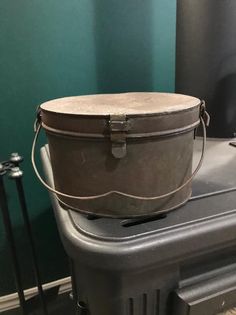
A miner’s can – photo courtesy of Alvina Ann Walker

The practice of packing food for a day’s toil predates the industrial revolution but the rush to mines, mills and factories transformed the practical need to provide sustenance. As the industrial revolution progressed baskets were replace by assorted cans and buckets made mostly of metal.

Workers at O’Brian’s Mill Chatham, NB c. 1900 Photo courtesy of Our Miramichi Heritage Family FBsite

Metal containers1 served to protect the food from rodents, particularly rats which became more prevalent with increased urbanization. Miners in particular needed to protect their day’s food from the underground or pit rats2 which lived off of their scraps and waste.

Lobster factory workers c. 1910 Photo courtesy of Our Miramichi Heritage Family FBsite.

Eating at work in the early days of the industrial age was fraught with risk. Early industrial environments were inherently unsafe. Working and eating conditions were shared, food, hands, and mouths all adulterated by the constant dust, and fumes.

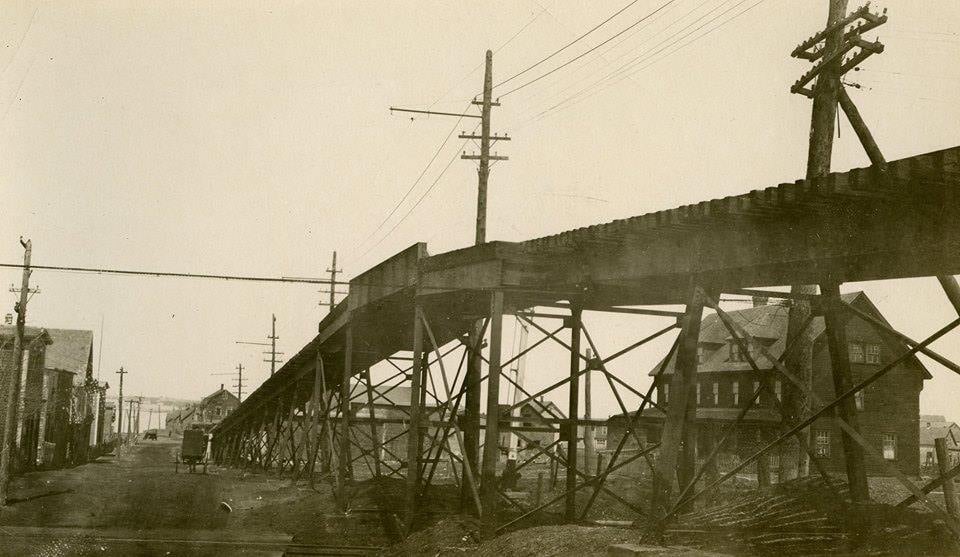
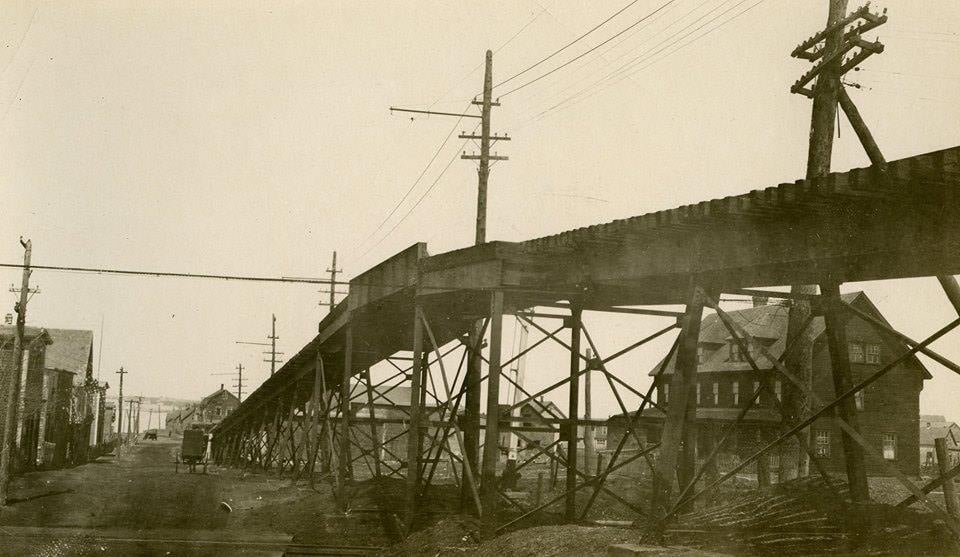
Train trestle Little Glace Bay c.1890

Variety and novelty in a lunch can meal was and remains a practical impossibility… many workers simply resorted to eating the same working meal everyday. For the coal miners of the region this often meant sandwiches made with molasses, jam, or meat spread, sweets (often prepackaged) and a bottle of tea.

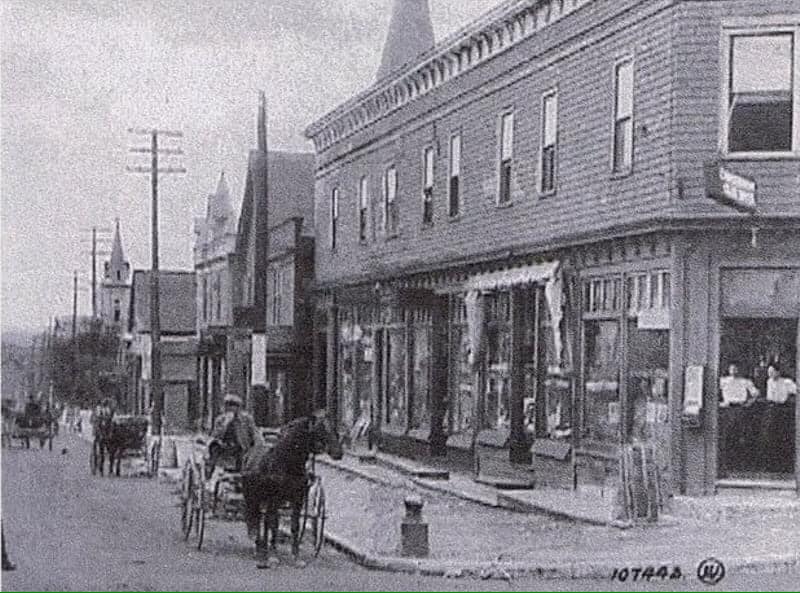
C 1890 Commercial street, Glace Bay, NS
Early Miner’s can c. 1900 Photo courtesy of Frankie Andrews

Monotony, and work dust aside lunch cans and lunch can memories endure… monotony replaced by memories of little girls and boys running to meet their Dad returning from the day’s toil. Children savouring their father’s leftovers…treats flavoured with their hard work, by the unceasing dust and dirt and by a healthy dusting of relief at their loved one’s safe return.

The recipe for a lunch can is simple… lots of high carbohydrate and high fat foods… a refreshing drink, and lots of love.

Explanations and Resources:
1. Assorted metal containers and glass containers were used in the early days as lunch cans, often materials originally manufactured for other purposes. Glass bottles originally made to hold chlorine bleach were a popular choice for holding tea.

2. Pit Rats were and are common in mining environments. The rats live underground and their only source of food is the waste left by workers. Pit rats are notoriously aggressive. During mine shut downs pit rats would leave the mines in search of food.

Brown bread vs Porridge bread… were the Scots involved?

The Pond family home, Porter Cove, NB c.1900 Photo courtesy of the Miramichi Heritage family FB site.

There are few things more evocative than the smell of freshly baked bread… in Atlantic Canada that quite often means ‘brown bread’. Ask any home cook in Atlantic Canada good chance they will have a favourite brown bread recipe. There are several in the My Mother’s Cookbook collection, some versions are baked, others steamed, some with raisins, etc.

In Atlantic Canada and in the New England states ‘brown bread’ refers not to ‘whole grain’ breads of other regions, but instead applies to yeast raised bread made with wheat flour (in some cases with other grains) and sweetened with molasses (often Blackstrap1).

Farm house c.1900 Doaktown, NB Photo courtesy of the Miramichi Heritage family FB

The relationship between molasses and the region is a well known legacy of the Triangular trade2 links with the West Indies. Wheat production in the region began almost as soon as Europeans began to arrive, the first cultivation occurred in Port Royal, NS about 16053. It would take until the late 1800’s for wheat to become consistently available.

For farm women like Elizabeth McKinnon Carroll and Elizabeth (Lizzie) Campbell McDougall preparing food for their families, would require flexibility and experimentation particularly during the period before 1900. Although, Thomas Carroll would certainly have grown buckwheat, and oats he might also have tried a small crop of wheat on his farm in Carroll’s Crossing, New Brunswick. It would not have supplied enough to meet their large family’s needs. Elizabeth would have depended upon buckwheat, and oats, as well as other seeds and grains to augment the wheat flour she could afford to purchase.

Bra D’Or Lakes c. 1940 Photo courtesy of Cape Breton Island – the Other Scotland Across the Atlantic FB site

Lizzie’s and her husband Allan McDougall would not have been able to grow wheat on the farm in Bhreac Brook, a backland community of Cape Breton. The McDougall’s would have grown oats and raised sheep, along with other crops and animals, but wheat was not at all suited to the steep slopes and poor soil of their farm. Any wheat flour Lizzie had access to, had to be purchased with their limited financial resources.

The physical demands of farming, lumber harvesting, fishing and mining all required a diet high in energy. Although Elizabeth and Lizzie’s husbands were ‘farmers’, they also worked off the farm. Thomas Carroll was a woodsman and Allan McDougall worked in the mining industry. Requiring both men to leave their farm for extended periods, women and children would have taken up the farm work, placing additional physical burden upon them.

Farm family haying in Nelson Miramichi c. 1940 Photo courtesy of the Miramichi Heritage family FB

For much of the 19th century both Lizzie and Elizabeth would have relied heavily on other non-wheat offerings in their bread, as well as molasses. Only after Canadian prairie wheat was available around 1900, did the versions of ‘Brown Bread’ we most commonly think of today, containing only (or primarily) wheat flour and molasses began to appear regularly.

The change faced by the two women was not limited to the ingredients in their pantry. They would see family, friends and neighbours leaving their communities lured by work in the boom towns/ company towns like Marysville and Glace Bay. Some further a field, to places like Minnesota to harvest timber or to work in the factories of New England. Soon the former communities like Bhreac Brook were all but abandoned.

Reserve Mines c. 1930 Photo courtesy of Cape Breton Island – the Other Scotland Across the Atlantic FB site
Train Trestle Glace Bay c.1900 Photo courtesy of Cape Breton Island – the Other Scotland Across the Atlantic FB site

Eventually, Lissie and Allan joined the exodus of families moving off farm. Transition to living in the Boom town of Glace Bay would have been strange and intimidating for Lizzie, who had been born and lived her entire life in the rural Scottish Gaelic enclave of Bhreac Brook. She would settle in to modest house in the bustling town as Allan took work as a brakeman on the rail system, serving the collieries and workers. Allan, and Lizzie would finish out their lives in Glace Bay, leaving their name on the street where they lived.

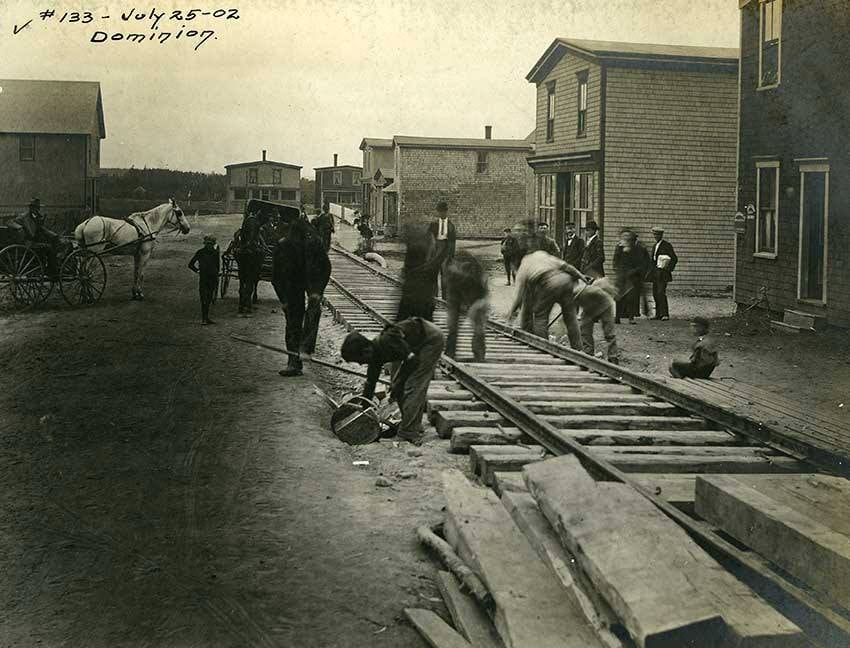
Dominion, NS c.1902 Photo courtesy of Cape Breton Island – the Other Scotland Across the Atlantic FB site

Similar forces were at play in Carrolls Crossing, the once thriving community with a church, school, stores, etc. was all but abandoned as many left to find work and lives elsewhere. Suddenly, workers needed for timber harvest, and cultivating crops were thin on the ground, forcing investment in technology. Although Elizabeth and Thomas would see family and friends leave the area, they would continue, eventually establishing their family and farm as a mainstay in the community. It endures today.

So what about the bread… Brown bread always includes molasses but only oatmeal (not buckwheat, or flax seed) makes its appearance today in some versions of Brown Bread. Porridge style Brown breads probably originally contained buckwheat as well as oatmeal, but only oatmeal endures…

Both Elizabeth Carroll and Lizzie McDougall descended from Scots who settled Eastern Canada. Elizabeth’s Grandfather Gregor McKinnon was born in the Isle of Skye, Lizzie’s parents were born and raised in the Highlands of Scotland. There is little doubt Lizzie would have made the style of Brown Bread, known also as ‘porridge bread’. Oats have long been a mainstay in the Scottish diet. Elizabeth would have used buckwheat and other wheat alternatives including oats…did her Scottish ancestry influence her choices? I suspect so…here is the My Mother’s Cookbooks Porridge style Brown Bread recipe:

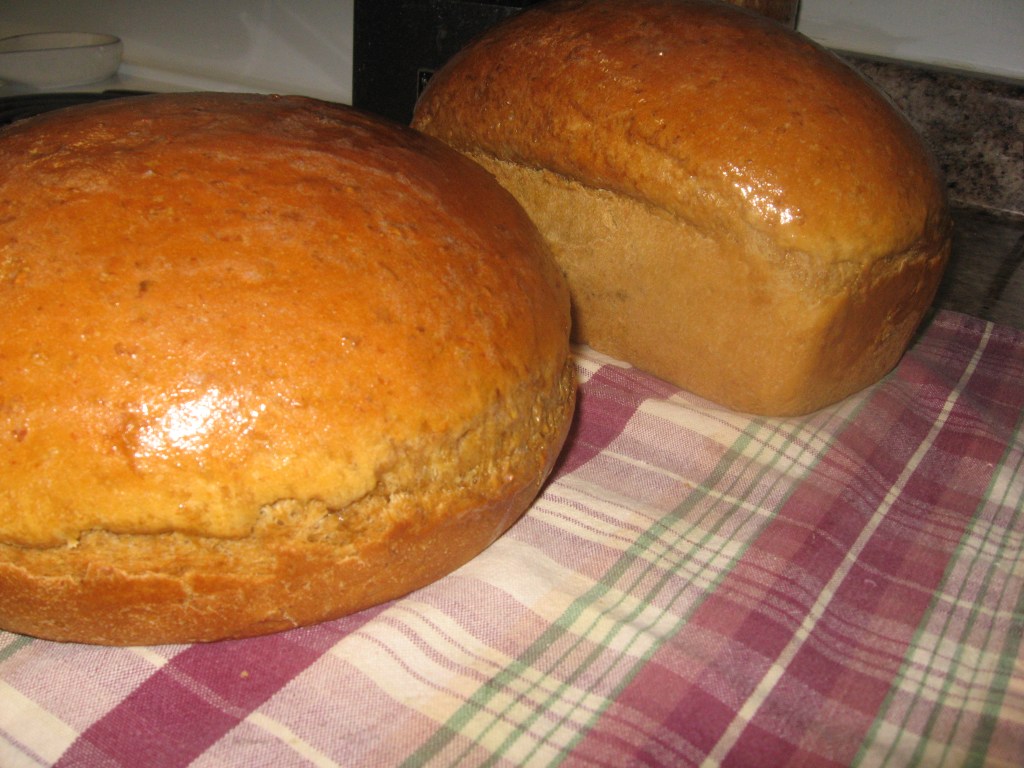
Porridge Bread – Photo Elizabeth Lyons Morrison 2023

My Mother’s Cookbooks…Brown Bread (Porridge)

Ingredients:
3 cups boiling water
2 cups oatmeal
3 Tbsp dry yeast
1 Tbsp sugar
1 1/2 cups lukewarm water
3/4 cup molasses
2 tsp salt
1/4 cup melted shortening
6 cups All purpose flour
Additional 2-3 cups flour for kneading to texture
Method:
1) Combine boiling water and oatmeal in a large bowl and set aside in fridge to cool;
2) Combine yeast, lukewarm water, sugar and let prove in a warm place;
3) Add yeast, molasses, salt, shortening and 6 cups of flour to oatmeal mixture, mixing well;
4) Knead in additional flour until dough does not stick to your hands and dough is smooth;
5) Place the dough in a large oiled bowl and set aside in a warm place to rise about 3 hours;
6) Punch the dough down, form in to loaves and let raise for an additional hour;
7) Bake at 325 degrees F about 1 hour or until cooked.

Resources and Explanations:
1) Blackstrap Molasses is a by product of sugar refining, the strong and cheapest grade of molasses was used for many purposes in the 19th century. Holding little value in Europe, it became a staple in the diets of Atlantic Canada.
2) Triangular trade is the trade roots which assured raw materials from the colonies to the factories of the Empire. It brought African slaves to the West Indies (to work the sugar plantations) and molasses to the Eastern region of Canada.
3) According to The Canadian Encyclopedia, the first Canadian cultivation of wheat was in 1605.

My Mother’s Cookbook’s Classics… Rhubarb pie.

Lattice top Rhubarb pie.

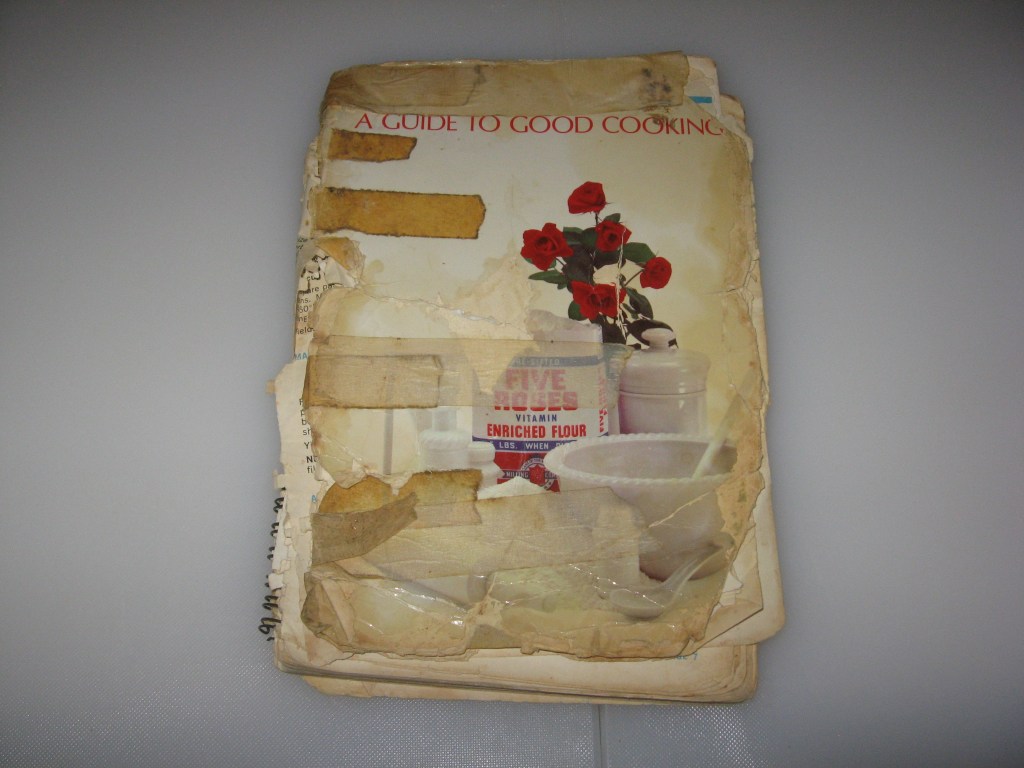
There are a number of commercial cookbooks in My Mother’s Cookbook collection, some were gifts, others Mum purchased because she viewed them as ‘important’. Some became regular reference books, and a few were the source of recipes she used regularly. This later group show their use with the drops and spatters marring their white pages. I should explain that books were generally treated with more reverence, and respect, but not cookbooks…cookbooks are tools…those few cookbooks in the collection which are missing this history of their use, are at best suspect…at worse duds.

The collection does not include the Joy of Cooking or Mastering the Art of French Cooking, instead titles such as Kate Aitken’s Cookbook; the Barbour’s Cookbook (several versions); and the Five Roses Flour’s A Guide to Good Cooking appear among others. Mum was first and foremost a Canadian woman preparing and cooking food for her family throughout the 50’s, 60’s, 70’s thru until her death in 2006. She favoured Canadian publications, and in particular regional and community cookbooks.

The 1967 version of the Five Roses Flour’s A guide to Good Cooking was one of Mum’s reference for baking, recipes for pastry’s, breads, cakes, etc. Yet not for the meal recipes it includes.

A well used copy of the 21st edition c. 1967.

Five Roses flour was produced by Ontario based Land of the Lakes Milling company beginning in 1888, they produced their first edition of this cookbook in 1914. The Five Roses brand is now owned by Smuckers Foods Canada, in 2011 they released their most recent version of the cookbook, and maintain an online recipe site today. Each version is edited and updated, reflecting the changes in ingredients and tastes of the period. The 21st version, c. 1967 is a more modern cookbook than earlier versions, more precise measurement of ingredients, temperature etc. This edition contains some of Mum’s favourite’s, containing a little more fat and sugar than those which trend today.

One of the recipes from the Five Roses cookbook is my personal go to is for Rhubarb pie. Generally, there are several major types of Rhubarb pie, those contain with other fruit, i.e. Strawberry Rhubarb; those filled with Rhubarb in an eggy custard; and a ‘true’ Rhubarb pie.

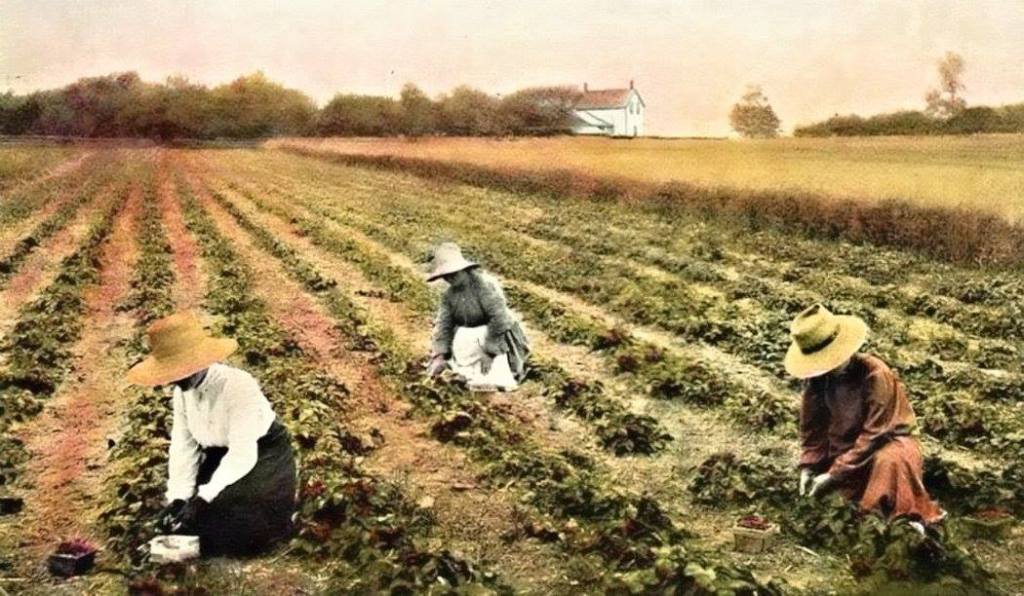
C. 198 Picking Strawberries Photo Courtesy of the Miramichi Heritage Family FB Site.

Rhubarb can be tricky, the balance of fruit and sugar is important and complicated by the variety of sweetness of Rhubarb. Filling texture is also important, the Five Roses version includes a ‘trick’ which assures a texture which is not too wet or gummy with too much flour.

My Mother’s Cookbook Classic…

Rhubarb Pie …From Five Roses: A Guide to Good Cooking

Ingredients
2 cups Rhubarb
1 cup Sugar
2 Tbsps Flour
1/2 tsp Salt
1 unbeaten egg
Your favourite Pastry for double crust (or My Mother’s Cookbooks Pastry recipe follows)
Method
1) Preheat oven to 450 degrees F
2) Prepare Pastry and line a 9 inch pie plate
3) Cut up rhubarb place in a bowl and set aside
4) Assemble the sugar, flour and salt together in a small bowl, add the unbeaten egg
5) Add the sugar, egg mixture to the rhubarb
6) Pour fruit mixture in to the pie plate and top with crust ( I use the lattice top, I find it produces a consistent filling)
7) Place in the oven for 15 minutes, reduce temperature to 375 degrees, for an additional 45-50 minutes or until done.

My Mother’s Cookbooks double crust(generous) pastry


Ingredients:
1 cup cold shortening
1/2 cup cold butter
3 cups flour
1/2 tsp salt
1/2 cup cold water
Method:
1) Assemble dry ingredients and fat, using a pastry blender cut the fat into the flour mixture.
2) Add only sufficient water to bring the dough together.
3) Let rest in the refrigerator for at least 20 minutes before rolling out.

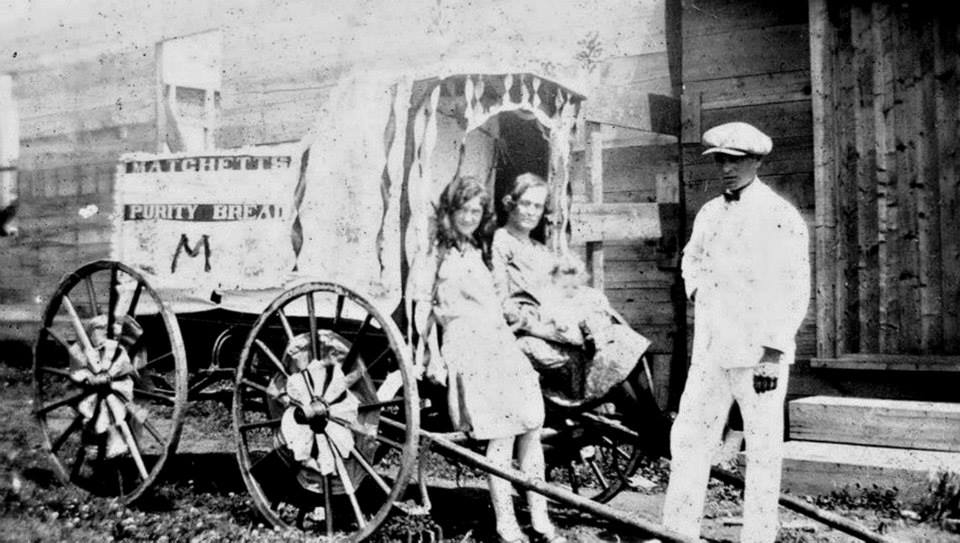
Matchett’s Purity Bread delivery wagon c. 1930’s Photo courtesy of the Our Miramichi Heritage Family FB site.


Victoria day, excursions and picnics!

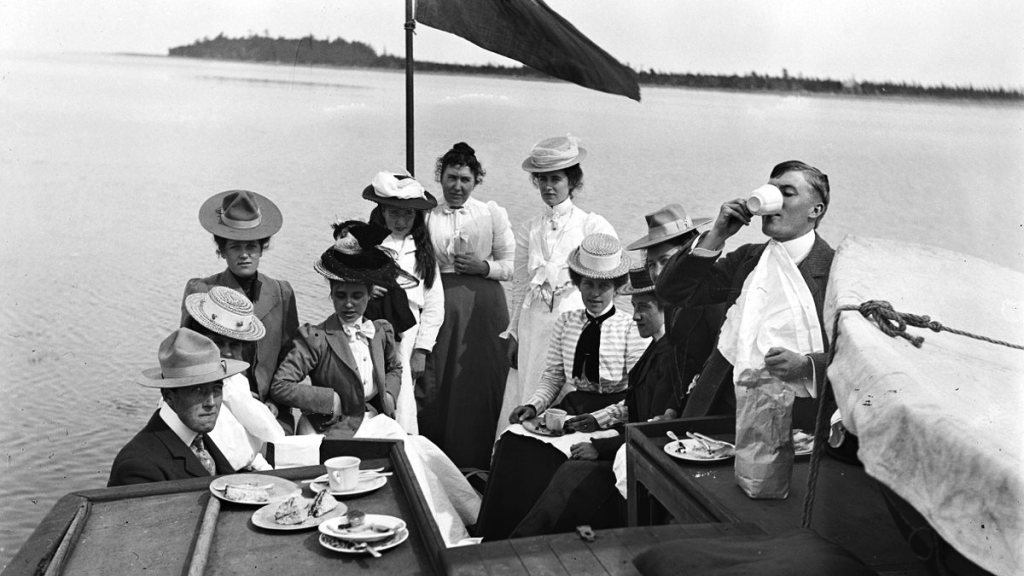
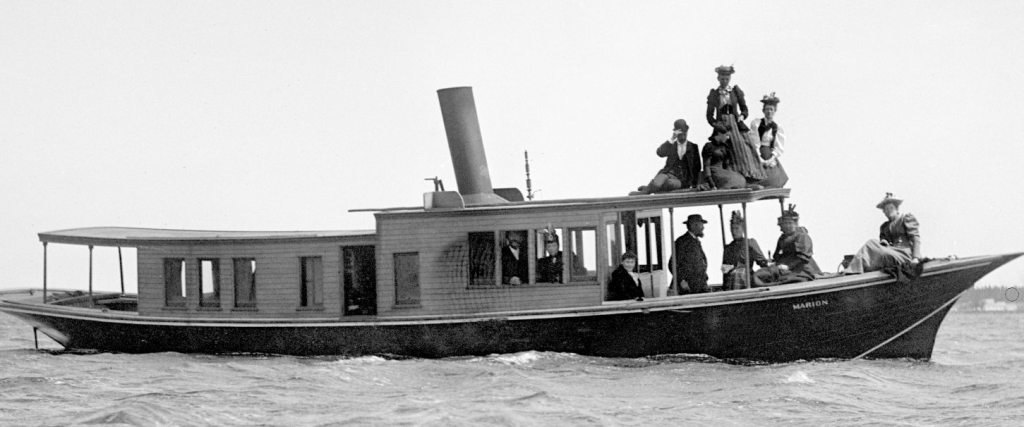
A group of well to do Miramichi residents enjoying a excursion on the Miramichi river and Bay. c. 1890 – Photo courtesy of the Our Miramichi Heritage Family FB site.

It would be wrong to think because the holiday is called ‘Victoria Day’, that only royalists participate. Although originally developed as a tribute to the long serving monarch, the day is well timed. As comedian Robin Williams observed “Spring is nature’s way of saying “Let’s party””. Of course William’s was not talking about Queen Victoria’s birthday, but it’s Spring timing and it’s long association with excursions and picnics, has done a lot for how and why the day (and the Former Queen) still gets celebrated in Canada.

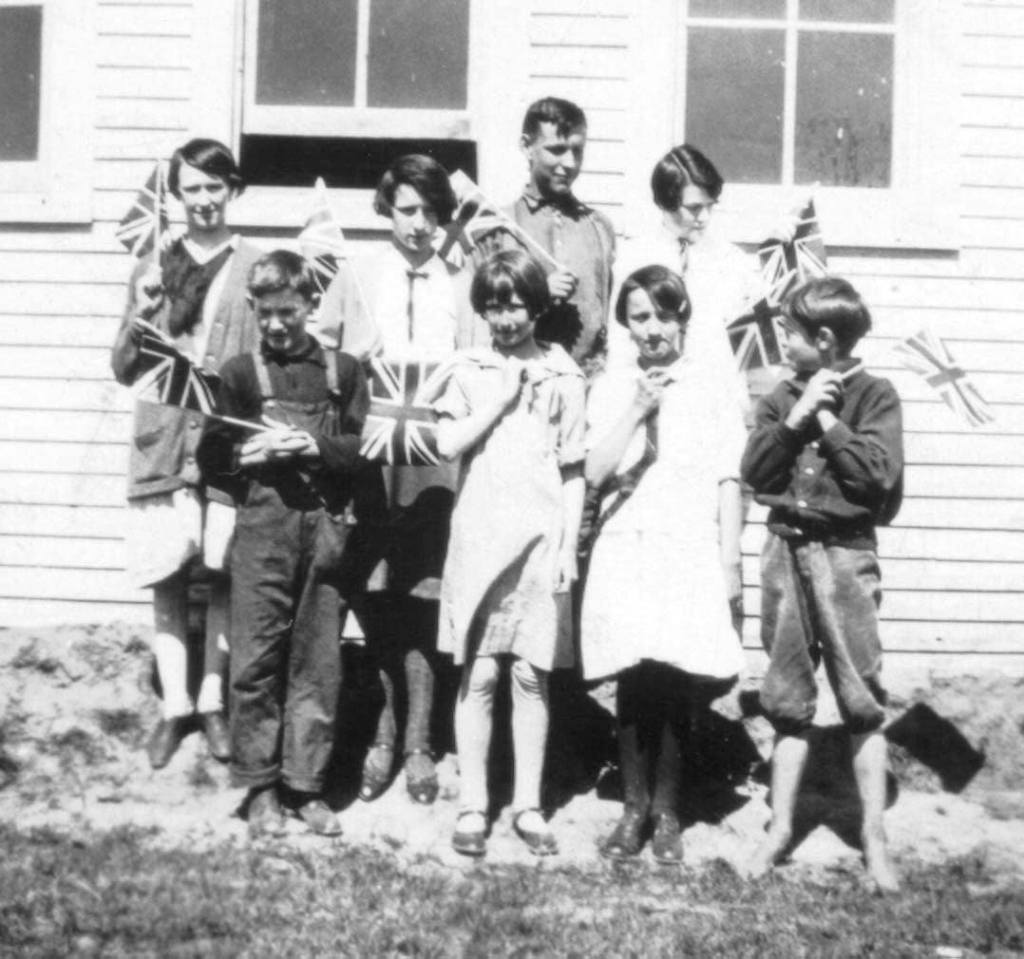
A group of school children waving the Union jack. c. 1939 Royal Tour. Photo courtesy of the Our Miramichi Heritage FB site.

Our Canadian winters are long and difficult, by the 3rd week of May, winter’s grip on the country has all but gone and we are in dire need of some fun in the warm spring sunshine. Although our celebrations have changed from picnics and excursions, to cottages and back yards, the need for a Spring break remains the same.

Originally celebrated on the 24 May, Victoria’s actual birthday, today the holiday falls on the Monday prior to the 25 May each year. So why the lingering relationship?…once again timing plays a part. Queen Victoria’s reign overlapped with the industrial revolution, and the resultant widespread modernization and change. During this period many Canadians moved from living in rural communities to urban life and work in the country’s factories.

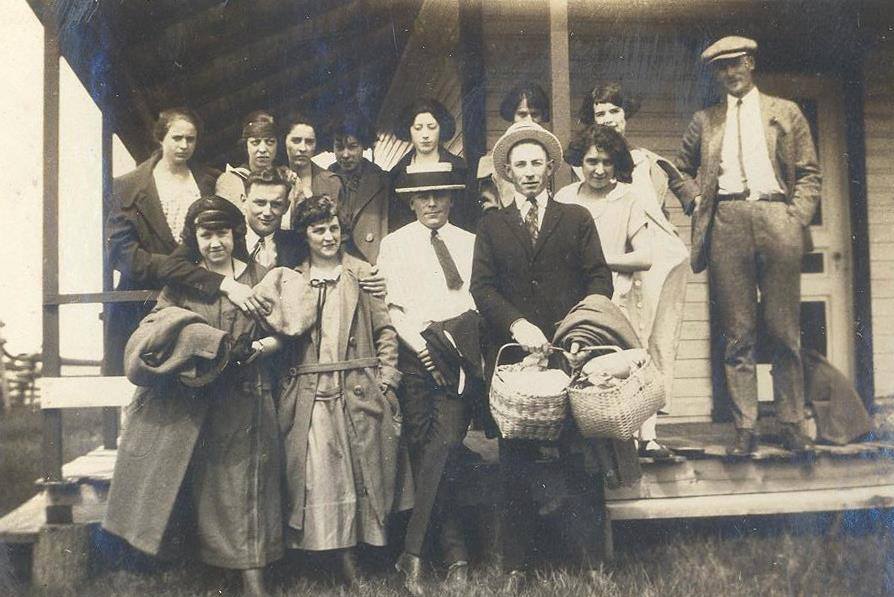
c. 1920 A group of family and friends prepared for a picnic excursion.

For ordinary Canadians the first few years of the official celebration of Victoria’s birthday went without notice, but by the 1880’s that had changed. As modern technologies became more widespread, a bit of time taken in pursuit of pleasure became the norm, including for the working class both rural and urban. The experience of Victoria day for Letitia Lyons born 1869 in Chatham, New Brunswick would probably have included a holiday excursion picnic on the river, but not on a private boat.

A private excursion and picnic on the Miramichi c. 1885 Photo courtesy of the Our Miramichi Heritage FB site.

Although picnics had been reserved for the wealthy, by the 1880s churches, and local clubs were organizing excursions for working class families. A single day in the fresh air with friends and family was possible even as a longer vacation remained beyond the grasp of most people.

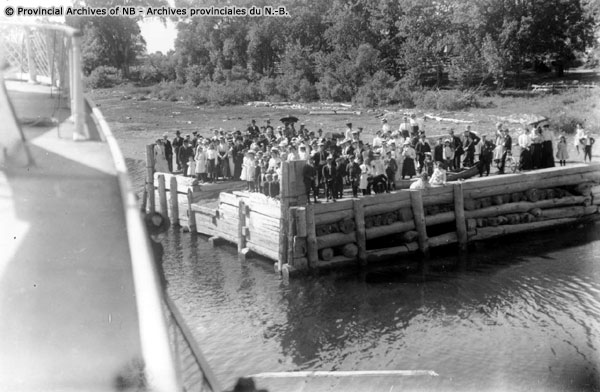
A group of families awaiting a boat to take them on their day’s excursion as part of their Church picnic. c. 1900 Photo courtesy of the Our Miramichi Heritage FB site.

For Elizabeth Groves born to a working class family in 1848 in the small island out port community of Cinque Cerf, NL1, a celebration of Empire Day2 would certainly have involved a picnic and an excursion. The collection of fishing communities on the South coast, many although now isolated and abandoned were at the time center to fishing trade and supply. The many bays, island and inlets conveniently located near the bountiful Rose Blanche fishing banks, afforded the fishing fleet a base, to land their catch, seek shelter, and supplies. During summer months, the ports and communities of the South coast were as central as any other Atlantic Canadian port.

A group awaiting their excursion on the Saint John River at Sheffield, NB c.1890 Photo courtesy of the Provincial Archives of New Brunswick, image # P13-68.

Both the Miramichi region and Newfoundland’s south coast had been linked to Triangular trade3, with Europe and the West Indies during the 18th century. They would continue to be key to Empire’s supply of raw materials to factories elsewhere in the Empire . Cheap dried salted fish from Newfoundland’s fishing banks went to feed the workers on the sugar and cocoa plantations of the West Indies. Lumber, and eventually value added products from the Miramichi went to feed mills and markets in the UK.

Like most young women of their time, Elizabeth and Letitia would likely have followed news of the Empress Queen and her family. They would have heard about the trend of picnics, for working class families like their own, sweeping England. Of course Elizabeth and Letitia’s picnic would have far more humble than that of their wealthier neighbours.

A select few dined aboard their private boats, on neatly cornered sandwiches with crusts trimmed. Sandwiches filled with meat and cheese all served on fine bone china. For dessert a selection of hand held treats, including cakes, and pies.

Elizabeth and Letitia would have prepared a picnic of thick slices of whole grain bread, filled with roast meat, fish, chicken, possibly venison. Dessert might well have been more bread spread with jam or molasses. But it might just have included a cake, something hardy but just a bit ‘special’. Their picnic was wrapped in paper and snugged next to their bottle of fruit shrub in a basket.

The ‘special’ ingredients available to Letitia and Elizabeth would have included cocoa. Grown in the West Indies, cocoa from plantations in Trinidad and Tobago4 was making its way in to the markets and diets of the East coast by the late 19th century. First introduced in Europe more than a century before, chocolate had taken a while to become available to working class families. It is possible that this cake made with cocoa and oatmeal would have appeared in Elizabeth and Letitia’s picnic baskets. Dark, rich and delicious this Chocolate oatmeal cake from My Mother’s Cookbooks, is a wonderful blend of the ordinary and the special. Its moistness and flavour does not require frosting making it a logical choice for a picnic.

Chocolate Oatmeal Cake


Ingredients:
1/2 cup rolled oats
4 Tbsps of Cocoa
1 cup boiling water
2 eggs
1/2 cup oil or melted butter (other fat)
11/2 cups brown sugar
1 cup flour
1 tsp baking powder
1 tsp baking soda
pinch of salt
Method:
1. Preheat oven to 350 degrees F.
2. Mix oats, cocoa and water together and set aside
3. Cream, sugar, eggs and oil together in another bowl
4. Combine dry ingredients and add to egg mixture;
5. Add oats and stir to combine
6. Bake in a 8 inch x 8 inch greased pan for 30 minutes or until it springs back when tested.

Chatham, Northumberland County, New Brunswick


The former town of Chatham, NB now comprises a good part of the current city of Miramichi. NB. Located on the main Miramichi river, Chatham’s location a short boat ride to Miramichi Bay, made it a prime location for wharves and other port facilities to serve the regions lumber industry. The large old growth timber once prized for its use as ship masts had served to open the area up for settlement beginning in the late 18th century.

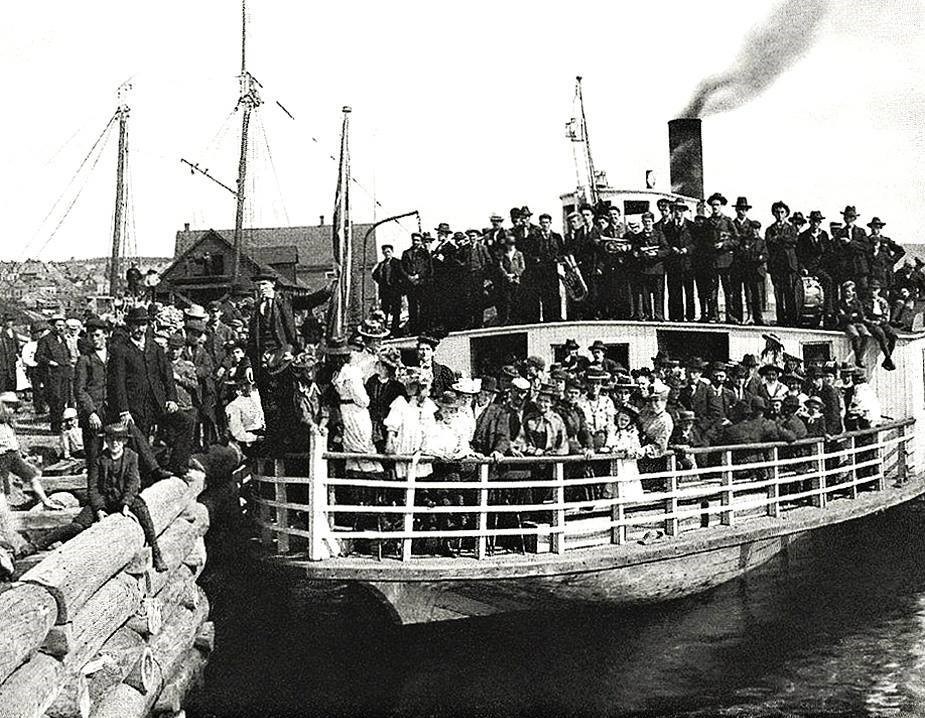
By 1900 Chatham and the region had developed and diversified, mills and manufacturing facilities were dotted along Chatham’s waterfront. Victoria Day would have seen the bustling town festooned with colourful flags and banners. Those enjoying the days festivities would have been entertained with music and other forms of entertainment, brass bands were particularly popular at the time.

The Rustler loaded with holiday revelers, at dock in Newcastle, NB. Note the brass band on the top deck, ready to entertain. C. 1890. Photo courtesy of the Our Miramichi Heritage Family FB site

Explanations and Resources:
1. Cinque Cerf, Newfoundland is an island in Cinque Cerf bay on the South coast of the Island of Newfoundland. The fishing community which in 1870 boasted a population of 30 souls, was abandoned by 1911. Located a few miles west of the small but bustling ports of Rose Blanche and Petites, the island affords, inlets with beautiful sandy beaches, rolling hills and fresh spring fed ponds. It is entirely possible that local Victoria Day revelers would have made Cinque Cerf their holiday excursion.
2. Until Newfoundland joined the Canadian Confederation in 1949, the annual celebration was known as “Empire Day”.
3. Triangular trade is the pattern of trade established by the European empires, where raw materials from the colonies were transported to Europe for processing and manufacturing. The slave trade, where Africans from West Africa were transported to the West Indies to toil in the sugar plantations, was key to triangular trade. The end of slavery did not end the lucrative trade.
4. Trinidad and Tobago, a nation of two islands in the former British West Indies, was home to both sugar and cocoa plantations. Depending first on the labour of African slaves, by the mid 19th century, indentured servants from the Indian sub continent joined former slaves, toiling in the islands’ plantations.

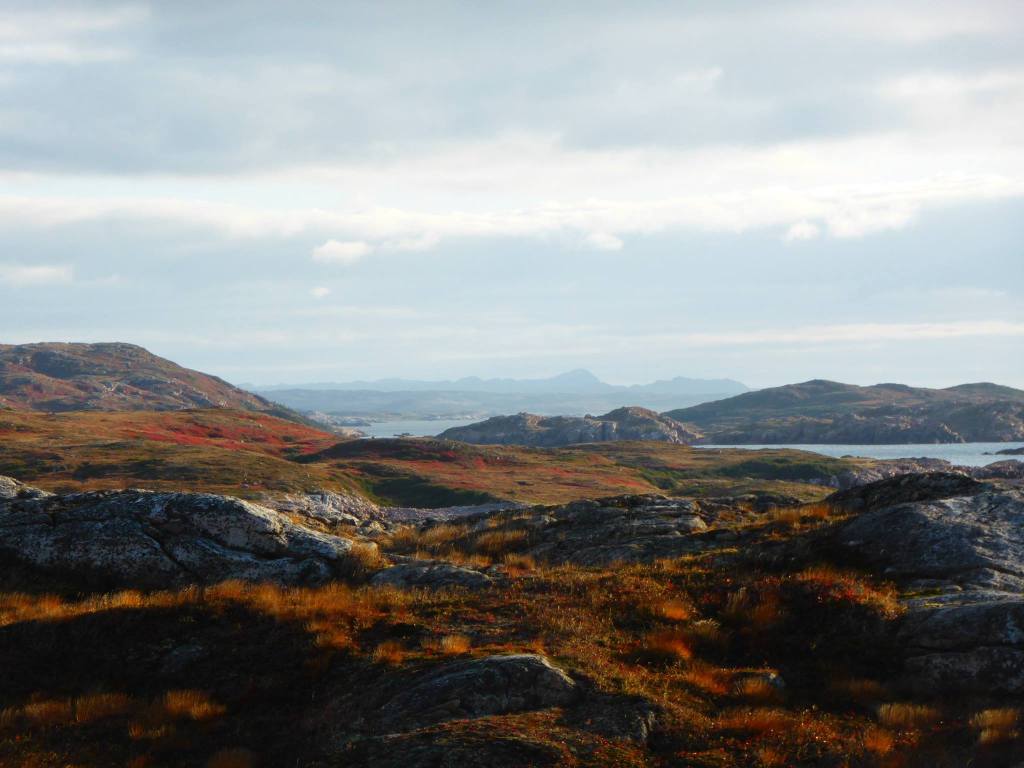
The southcoast of Newfoundland near Petites, NL, Photo courtesy of the Petites Church Restoration FB site.
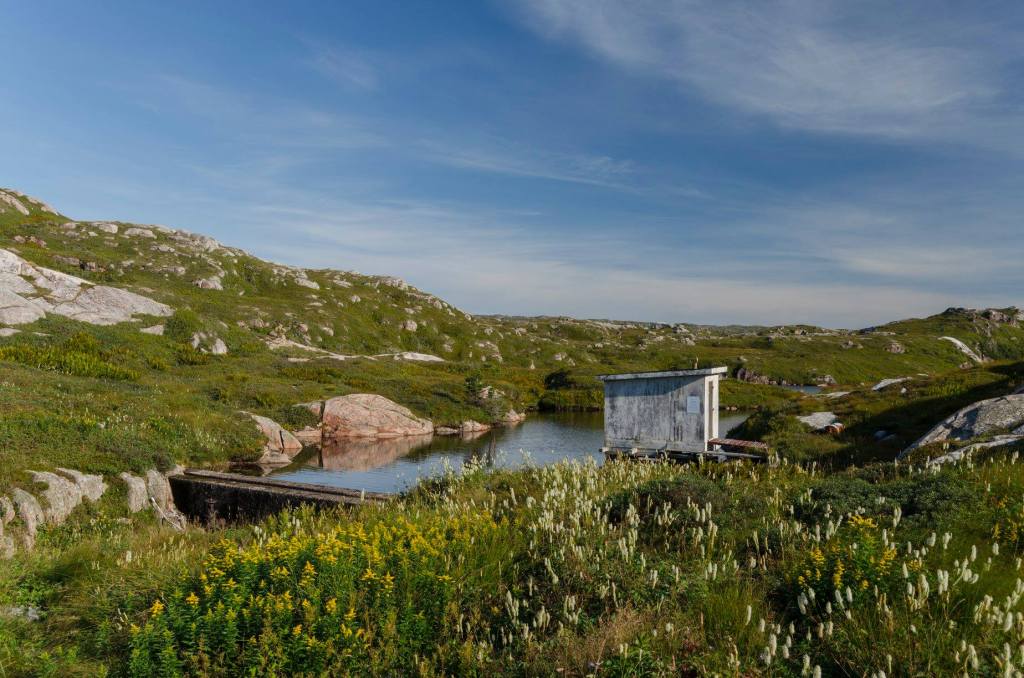
Spring fed ponds on the Southwest coast of Newfoundland. Photo courtesy of the Petites Church Restoration FB site.
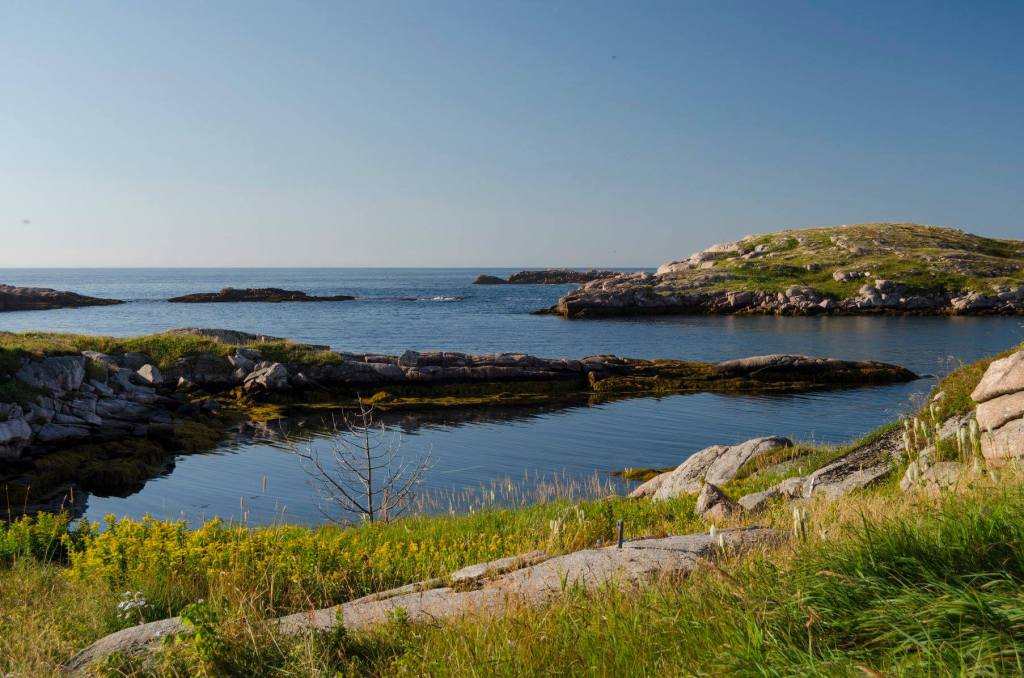
A ‘excursion and picnic’ location? The beauty of the Southwest coast of Newfoundland. Photo courtesy of the Petites Church Restoration FB site.

Vinegar, vinegar, tastes great! Vinegar, vinegar…can’t wait?

It is Spring and our winter weary souls are craving sunshine and fresh air! It’s everywhere, kids on their bikes, chomping at the bit of their parents limits. Young minds wandering from their school work at the call of the warm Spring days.

Spring hijinks in Doaktown, NB Photo courtesy of the Our Miramichi Heritage Facebook site.

There is no better way to celebrate the coming of summer, than a picnic in the sunshine. There are many kinds of picnics…but the very best are those of our childhood.

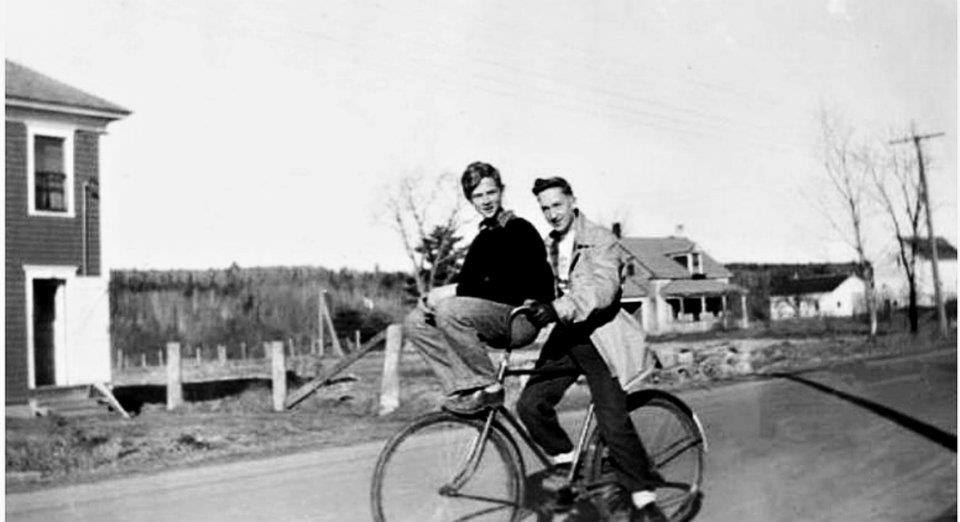
Two Miramichi lads and their borrowed bikes. Photo courtesy of the Our Miramichi Heritage site

Childhood picnics didn’t require much planning…begging a loaf of homemade bread, and some molasses for sandwiches or to accompany a freshly caught trout or mess of recently dug clams. A friend or two as company and the picnic is ready…provided of course the destination affords a source of water, fresh spring water!

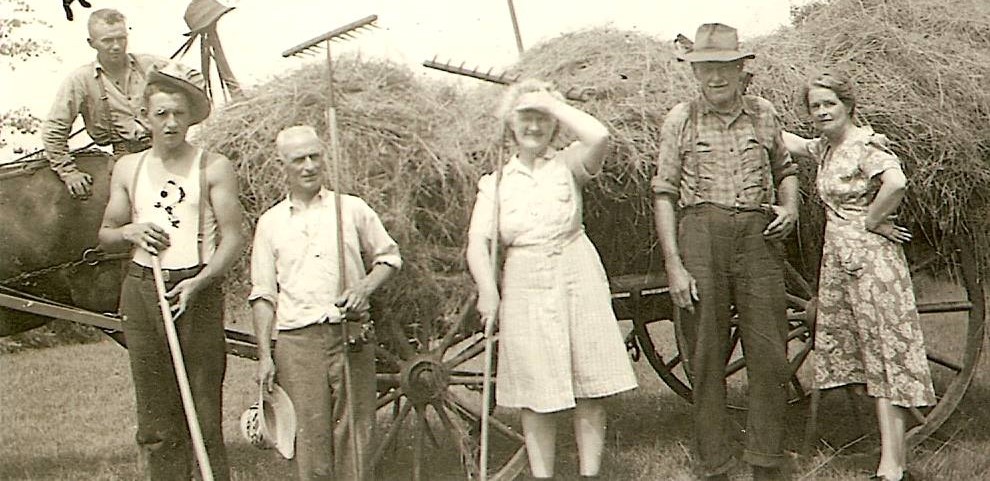
As summer progresses, informal picnics were replaced with a different kinds of days in the sunshine with friends… work parties, haying or barn raising. Everyone, men, women and children gathering to accomplish as task together. Voices and spirits raised by the sharing of work and of food.

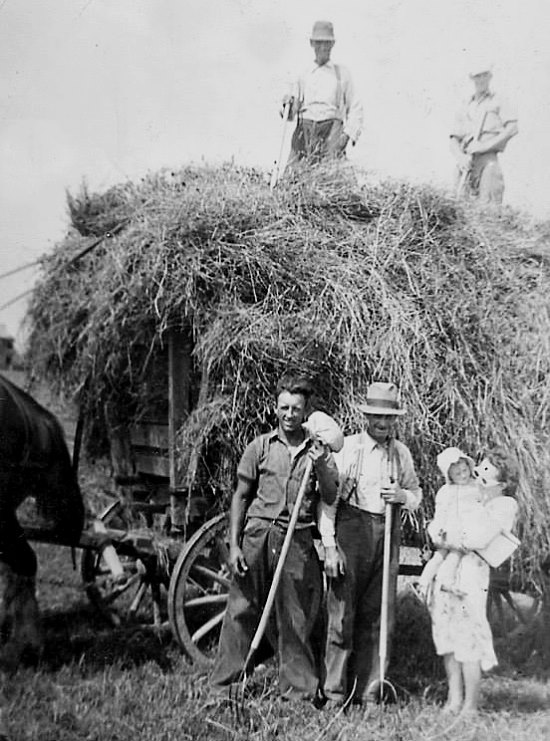
c.1945 A family haying party, rakes, wagons and forks at the ready.

No fancy clothing…no parasols or top hats…just good people working and celebrating together. And food, lots and lots of food…and drink! The preparation of food began days in advance, the baking, the roasting, the cooking all done by women, the hostess and others, family, friends and neighbours.

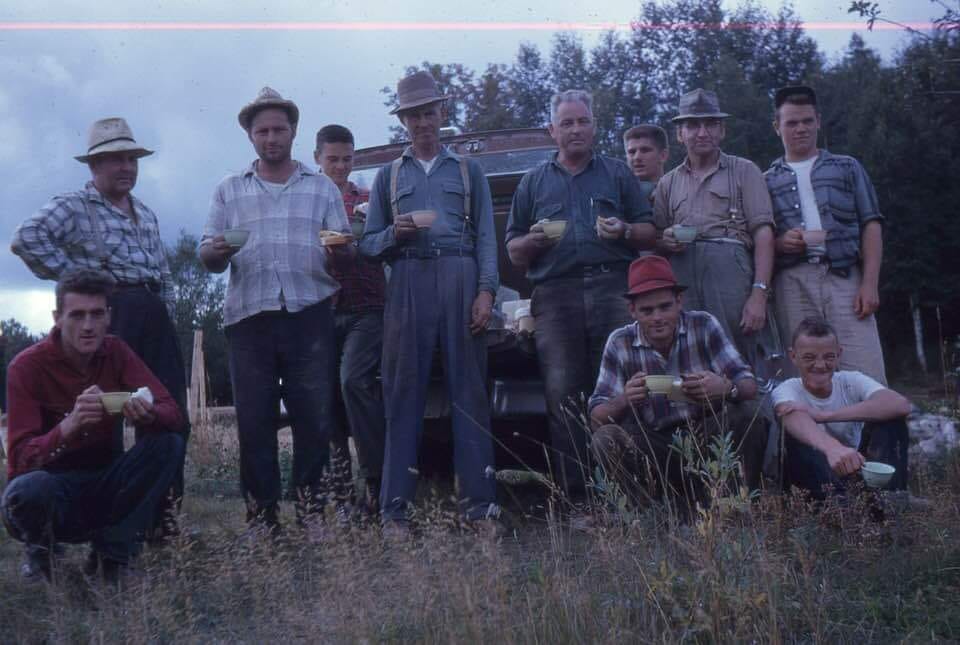
A group of Hayesville folks taking a break from haying and having their tea and sandwiches. Note the matching china tea cups! Photo courtesy of Family Connections of the Upper Southwest Miramichi site.

In past days a good hostess would have also assured workers had plenty of water… and drink to sustain them through their days effort. Some would provide hot tea, sweetened and with milked which required the effort of lugging china cups and mugs to the field. Still others would make the extra effort to prepare ‘drinking vinegars’.

While mead, beer and wine were necessary replacements for clean potable water in middle age Europe, the availability of fresh Spring fed streams, and ponds in North America provided a source of pure Adam’s Ale.

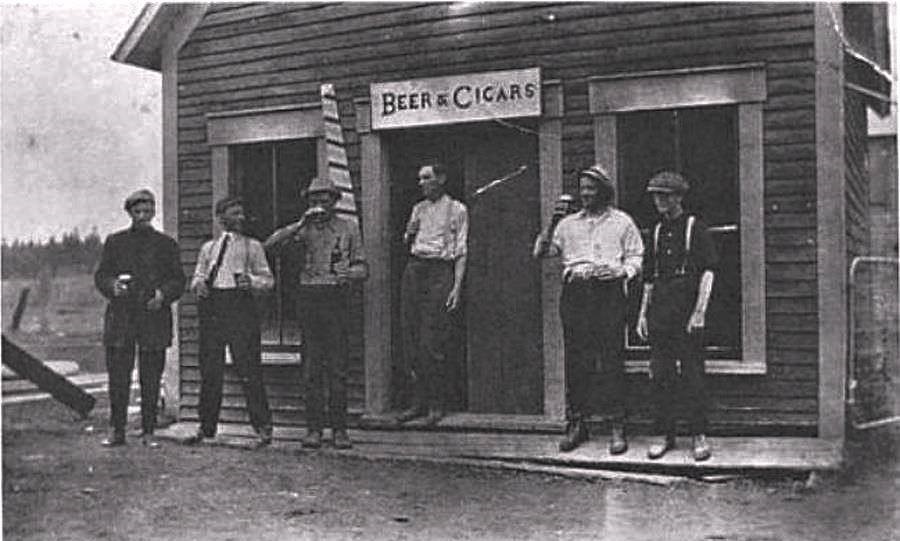
c 1921 Boiestown Beer Parlour – Even during prohibition some folks were not satisfied with Adams Ale preferring the stronger stuff instead. Photo Courtesy of the Our Miramichi Heritage site.

Childhood picnics usually included a destination with a Spring… cold clean water to scoop up with the ‘dipper’ which hung near by for all to use. Cold Spring water to mix with a pack of Kool Aid™ or to enjoy on its own.

Of course no ‘good’ hostess would ever serve Kool Aid™ to farm workers… but drinking vinegars are another matter.

So what is a drinking vinegar? It is a fruit drink fortified with vinegar, usually apple cider vinegar. Thirst quenching and fortified, drinking vinegars are a better supply of electrolytes and micro-nutrients than commercial sugary drinks… and far tastier! Here is a spring version using Rhubarb from My Mother’s Cookbooks.

Rhubarb Vinegar

Ingredients:
4 cups washed and finely chopped Rhubarb
1 cup white sugar
11/2 cups Wine vinegar or Apple Cider vinegar (divided)
Method:
1. Place fruit and half of the vinegar in a non reactive saucepan
2. Bring to a boil and cook for 10 minutes
3. Skim the foam which forms, and then strain through a cheese cloth into a mason jar, add reserved vinegar and let cool.
4. Refrigerate, until ready to use. Dilute with water (or soda water)

This vinegar is wonderful on salads and in other recipes where vinegar is used.

Stay tuned for My Mother’s Cookbooks full blog released Saturday, this week we’ll explore Victoria Day picnics and two Victorian era women.

Spring Harvest – Rhubarb…and biscuits.

My Mother’s Cookbooks contains several recipes featuring Rhubarb, pies, crumbles, cakes, buns, chutney and cordials. The first Rhubarb in our house each spring, was stewed and served with fresh Buttermilk biscuits. Sometimes, simple is best.

A patch of rhubarb growing in the back garden, and a best family ‘Biscuit’ recipe is all anyone needs to celebrate this spring harvest. Despite several versions of biscuits, the My Mother’s Cookbooks ‘best biscuit recipe’, the one Mum used most, especially over the last 30 years of her life, was supplied by her daughter in law, Darlene Horncastle Lyons.

Rhubarb although treated and viewed as a fruit, it is actually a veggie. Used for thousands of years as medicine, eventually becoming known and used for its tasty, all be it sour, stalks. Rhubarb’s early harvest and that it grows without much cultivation makes it a favourite of home gardeners today.

c. 1885 Workers including children posing by equipment in the Marysville, cotton mill, Marysville, NB Photo courtesy of the Provincial Archives of New Brunswick image # P5-416.

Darlene’s recipe, originated with her Mother Eleanor Jackson’s family. Eleanor born 1929, in Springhill, New Brunswick grew up with a keen appreciation of her Scottish roots. Her Jackson family was one of 6 families who settled Scotch Lake, New Brunswick beginning in 1820, when they arrived in the colony from Roxbourghshire and Dumfrieshire Scotland.

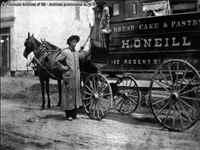
H. O’Neill Cake and Pastry delivery wagon Fredericton, NB. c. 1908- Photo courtesy of the Provincial Archives of New Brunswick Image # P119-431

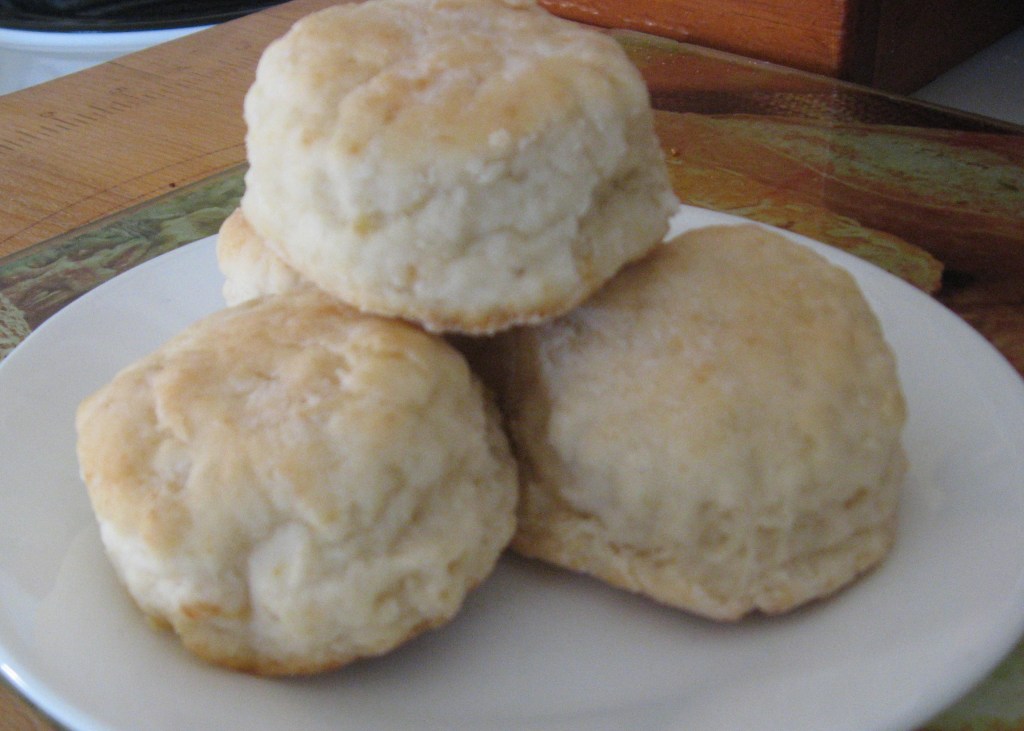
What we in North America call biscuits are really a 19th century ‘convenience’ food. The bread like savory treats, are not to be confused with ‘biscuits’ found today in the United Kingdom, which are sweet treats (cookies to us). Quick breads of this type, usually made with baking powder, and/ or soda, flour, shortening and milk, are referred to as tea biscuits, baking powder biscuits or as just plain biscuits. Those containing ‘Buttermilk’ have the additional boast of leavening and flavour tempered by the additional acid provided by the buttermilk.

So, was it Scottish and Channel Island (where they had been traditionally a favourite) immigration which served to ingrain ‘Biscuits’ in our tradition? I suspect a combination of factors, tradition certainly but in addition to their convenience (not having to wait for bread to rise), their lower cost (yeast was more expensive), the need for high energy foods, and that they appeared regularly in the logging camps of the region, all contributed to their ongoing popularity.

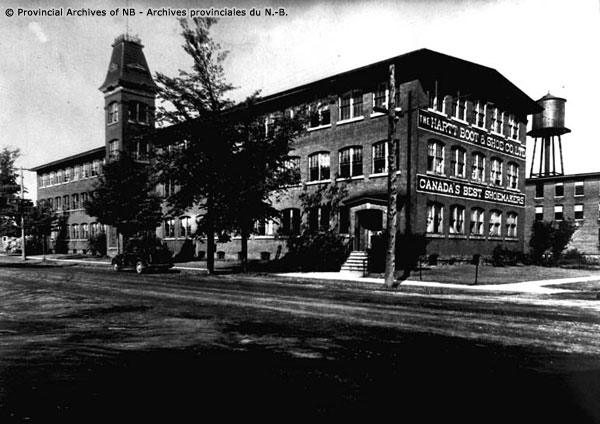
Eleanor probably chose them for their ease and speed of preparation as well as tradition. Like many other women of her generation, Eleanor worked outside of the home. She began her working career prior to her marriage in 1948. By 19 years of age, Eleanor was already a skilled factory worker, a leather (shoe) Skivor1. The choice to continue working after marriage was one unavailable to previous generations of women, but open to Eleanor. Eleanor worked at the same factory during the majority of her adult life, while she was raising her 3 children and until her retirement in the 1980s. The Hartt Shoe factory closed in the late 1990’s.

Hartt Boot and Shoe Company factory c. 1940, Photo courtesy of the Provincial Archives of New Brunswick Image Number P194-466

Florence McKinley born ~1905 in Chelmsford, New Brunswick probably began her factory work at 15 years of age, after her father’s death in 1920. Two of Florence’s older half sisters Emily and Melanie worked at the Gibson Cotton mill in Marysville as early as 1898, both Melanie and Emily would marry and return to the Miramichi to raise their families. Florence and her widowed mother Elizabeth would remain in Marysville, NB.

By 1951 when Florence, then a 44 year old cloth inspector, married Sidney Nash, Florence had enough working in a factory. 29 years, in the dusty, hot, noisy and dangerous environment of a textile mill had taken its toll, and for the first time she had a choice.

Florence’s Scottish heritage through her father’s family and the close proximity to other Scots during her childhood pretty much assured biscuits appeared on the family table. Elizabeth, Florence’s Mother might well have had a rhubarb patch in the back garden of her rented tenant company home in Marysville, NB.

Here is the My Mother’s Cookbooks ‘Best Biscuit’ recipe and one for Stewed Rhubarb too!

Buttermilk Biscuits

My Mother’s Cookbooks – Darlene’s Buttermilk Biscuits

Ingredients
2 cups of All purpose flour
1/4 cup of sugar (optional)
4 tsp baking powder
1/2 cup vegetable shortening
1 tsp salt
1/4 tsp soda
1 cup Buttermilk or soured milk

Method:
1) Preheat oven to 425 degrees F.;
2) Sift flour and other dry ingredients together in a mixing bowl;
3) Cut shortening in to the dry ingredients using a pastry blender, until mix reaches a med crumb.
4) Add buttermilk and mix gently. Place on a lightly floured surface, and shape into a 9 in x 9 in square of dough.
5) Cut in to pieces, and place on a cookie sheet;
6) Bake 20 minutes until slightly golden brown on top.


My Mother’s Cookbooks Stewed Rhubarb:

Ingredients:
1 pound of rhubarb
1/4 to 1/2 cup sugar (to taste)
1/4 cup water
***
Method:
1) In a saucepan bring water and sugar to a boil to dissolve;
2) Add Rhubarb and return to a boil,
3) Reduce heat and allow to simmer, stirring often, until the Rhubarb is soft.
4) Cool, refrigerate in a covered container.

*** I recommend adding a 1/2 tsp of ground dried ginger or 1 Tbsp of fresh ginger chopped.

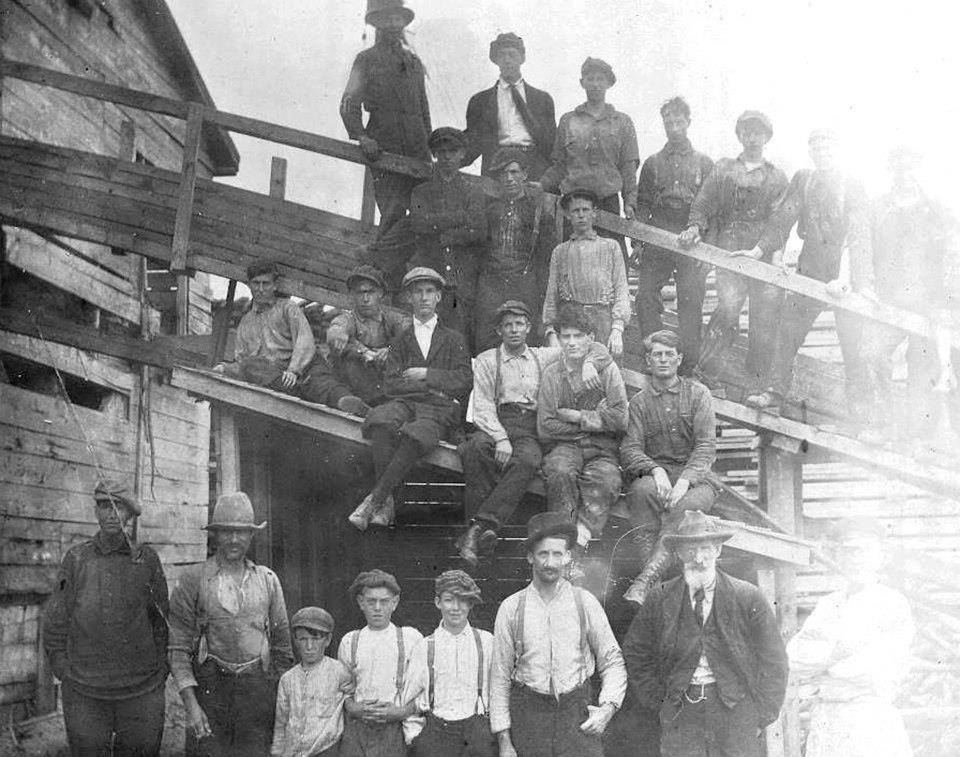
Young boys among a group of workers at the A.R. Loggie Mill c. 1900 Photo courtesy of the Miramichi Heritage Family site.

Women and children Factory workers:

From the first investment plan Odbur Hartt proposed, women and children were included in his factory’s proposed work force. His plan of a workforce comprised of 2/3 young men and 1/3 young women was both an operational and financial opportunity. Women and Children were essential to the success of factories like Hartt Boot and Shoe Company. Women and girls were needed for their fine motor skills, young boys and girls could get to places between moving machinery no adult could fit. It of course was also helpful that women were paid less than 50% of the wage of men, children less still.

The Gibson cotton mill in Marysville, NB had a similar work force from its beginning in 1885, but Gibson’s ‘model town’ meant workers could rent a house, (including a small garden), purchase clothing and food at the company store. From the wake up whistle to the shift end and beyond, the lives of factory workers of the Marysville Cotton mill revolved around the factory. 60 hour work weeks were usual for all workers, women and children included, 6 days per week, with a 1/2 day on Saturday and Sunday off.

Miramichi Mill workers including young boys c. 1900 Photo courtesy of Our Miramichi Heritage family site

Children workers were not new or limited to textile and shoe factories, young boys had been employed in saw mills and value added mills across the province since early days. The development of high technology industries, such as cloth and shoe making, changed the physical demand and permitted the addition of women and girls in to the workforce.

By 1900, social reformers, and churches had begun to complain of the working conditions, the injury, and loss of life particularly of children in factories. In 1904, after a task force to recommend changes, children under 14 years of age were not to be employed in New Brunswick factories, except under unusual circumstances. Things did not change quickly in that regard. The 1921 census reveals widow Elizabeth Ashton McKinley living in a rented brick row house in Marysville with 4 of her children, Elmer, Florence, Eldon and Burton. 13 year old Eldon, his older sister Florence and brother Elmer are all labourers in the cotton factory.

Better working conditions, air quality, washrooms, lunchrooms all eventually came to the factories but only after hard won battles, many deaths and injury of workers. Factories or as we call them ‘manufacturing and processing plants’ remained a heath and safety battle ground well into the 1960’s.

The crowded working conditions, poor sanitation, and poor ventilation in the factories of the 19th century made them public health battle grounds during the Influenza pandemic of 1918. In 2021, the issues in factories continue as Covid 19 threatens those who toil at repetitive and under valued work.

Explanations and Resources:

  1. Leather ‘Skivor’ is a worker who thins, tapers and shapes leather as part of the shoe making process.
  2. ‘New Brunswick workers in the early 20th century’ Silhouettes – Associates of the Provincial Archives 2013.
  3. LHTNB – Labour history in New Brunswick “https://archives.gnb.ca/lhtnb/Resources/Bibliographies/Articles_en-CA.aspx”

War, Women and Warcake

This blog is one of two featuring the service of Marion Leane Smith Walls, don’t miss the new release which explores Marion’s WW2 service which lead to her being awarded the Distinguished War Service Medal… Molasses Cookies and Knitted Bandages.

There are no less than three versions of Warcake in My Mother’s Cookbooks, which is not surprising since a large number of the recipes originate with women of a certain generation. Women like Myrtle Walls Leban’s and Marion Smith Walls’ who were born at the beginning of the last decade of the 19th century. Women whose lives were marked by two world wars.

Female clerks with customers in front of Blackville, NB store, c. 1900 Photo courtesy of Our MIramichi Heritage Facebook site

By 1900 the constraints on young women were loosening, with employment and educational opportunities opening up for ‘respectable’ young women. For many this afforded employment locally in shops and offices, before eventually marrying, and having a family. For others employment or advanced education meant leaving for larger centers, often to areas where other family had already settled.

In eastern Canada, the larger center often meant “the Boston states”. Marion Leane Smith, sought opportunity and education in Massachusetts. Marion studied nursing at the New England Hospital for Women and Children in Boston, then took a job in Montreal with the Victorian Order of Nurses in 1913.

By 1914, Aunt Myrt had married John Lebans, was mother of two and was living in Blackville, NB. John was a millworker, during the following 10 years, Aunt Myrt and the family would live in several Miramichi communities as John sought employment in mills across the region. Myrtle’s experience of the war was similar to most other rural Canadian women and vastly different than Marion’s.

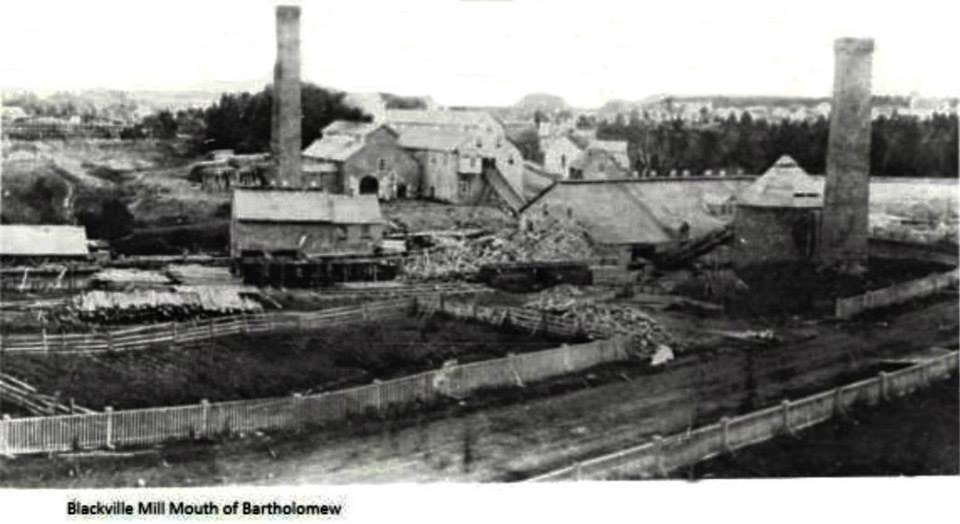
Mill at Mouth of the Bartholomew river, a tributary of the Southwest Miramichi c. 1915 Photo courtesy of the Our Miramichi Heritage site.

When the war began support for it was high, and remained so, despite sacrifice, change and loss. On the home front, Aunt Myrt dealing with restrictions, shortages and limits saw it as doing her part for the war. She probably experienced concern about the social change her country was experiencing. Change such as young women, and others previously denied access to the jobs in factories and other workplaces filling the labour shortage. Labour unrest, women’s suffrage, prohibition, and taxation were altering the lives of Canadians, even as strict moral standards remained largely unchanged.

On a personal level both Aunt Myrt and Marion experienced fear, worry and grief, as their brothers, uncles, cousins and friends went off to war, some never to return. Working as nurse in the urban center of Montreal, Marion would also have had direct involvement with those devastated by the war, those marginalized and blamed for the social ills plaguing the country, the poor, those with venereal diseases, unwanted pregnancy, etc.

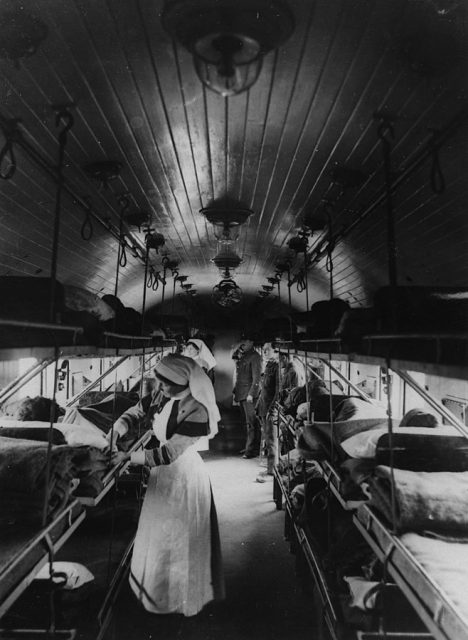
In 1917, Marion enlisted1 with the Queen Alexandra Imperial Nursing Service and saw service with the 41st Field Ambulance train2 in France. Ambulance trains were difficult and dangerous workplaces, despite their white cross designation, they were not immune to attack by enemy forces.

Nursing Sister assists a wounded soldier aboard an British Ambulance Train in France c. 1916

After completing her contract with the train ambulance service, Marion served in Italy with the Italian Expeditionary force and at the University War Hospital in Southampton UK. At some point during her work with the British forces, Marion met a young medic from back home in New Brunswick. Victor Walls, Myrtle’s brother, left his studies at Dalhousie University, putting his plans to become a Presbyterian minister on hold temporarily, to serve his country. At the end of the war, Victor returned to his studies at Dalhousie and Divinity School. Uncle Victor and Aunt Marion married in 1924.

Marion and Victor Walls c. 1924

Now about the Warcake… When things get restricted, limited and difficult, we all rely on tradition to aid and comfort us. So of course women in this region, including Aunt Myrt, used molasses when sugar was expensive, scarce or rationed (as it was during WW2). Warcakes were made throughout both wars, and appeared on tables regularly for many years after.

The ties which bind Atlantic Canada and the West Indies did not end with the disappearance of wooden sailing vessels and slavery. The connections established more than 100 years of trade were not just commercial, they were personal as well.

In the following weeks we will look again to Marion, this time to her World War 2 service which would bring her the Distinguished War Service Metal for her work in the West Indies, Trinidad and Tobago.

So here is the recipe from My Mother’s Cookbooks which Mum used most often…. And yes it does contain some sugar.

Warcake – aka Molasses cake

Ingredients:
1 egg at room
1/2 cup white sugar
1/2 cup of lard or shortening
1 cup molasses
2 1/2 cups all purpose flour
1 tsp soda
pinch of salt
pinch of spices
1 cup boiling water
1 cup raisins (optional)
Method:
1. Preheat oven to 350 degrees F.
2. Grease and flour a 9 inch x 13inch pan;
3. Cream shortening and sugar together add egg;
4. Add molasses;
5. In a separate bowl mix dry ingredients, Add raisins if using;
6. Add flour to shortening sugar mix, combine thoroughly;
7. Add boiling water, beat well;
8. Pour into pan and bake until cake tester comes out clean. About 45 to 50 minutes.

Marion Elizabeth Smith

Marion Elizabeth Smith was born in Liverpool, New South Wales, Australia on 12 Mar 1892. Her parents George Smith and Elizabeth Leane Smith welcomed Marion to their family of two. When Marion was two years old her parents took their growing family first to England then to Canada, finally settling in Fredericton Junction, New Brunswick.

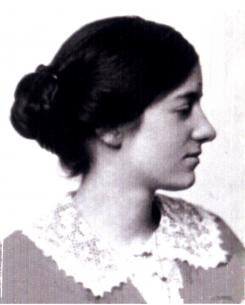
Marion Elizabeth C.1913

George Smith was a native of Hambledon, Hampshire, England and Elizabeth Leane Smith was born in Liverpool, Australia to William Leane and Lucy Walker Leane. It is with out doubt Elizabeth’s parentage through her Mother Lucy, was a major part of the family’s decision to leave Australia.

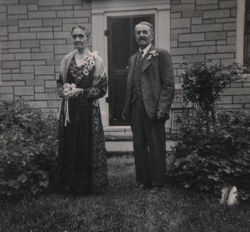
Elizabeth Leane Smith and George W. Smith c.1910

The Dharug peoples traditional lands are in what is now known as New South Wales, in the immediate area of Sydney, Australia. All Aboriginal nations in Australia have been negatively impacted by European settlement, but none more than those of the south including the Dharug clan.

The traditional way of life of the Dharug was hunting and gathering, lacking the necessary ‘farming’ relationship to the land to be viewed by European settlers as owners. Disease, violence, displacement and famine during and after colonization decimated first nations clans, including the Dharug. The social and political environment for a couple of mixed race was characterized by discrimination and violence. These conditions experienced first hand by Marion’s mother Elizabeth would have impacted the family’s decision to relocate.

William Leane and Lucy Walker Leane – Marion’s Grandparents. c. 1890

Mixed race children like Elizabeth were caught between two worlds, never really being fully a part of either. The decision to leave Britain after several years and the arrival of several more children was also very likely driven by opportunity for their family. The legacy of Elizabeth’s Mother Lucy’s Dharug heritage would follow the family, particularly Marion, as she and Victor set out on their lives together as Presbyterian missionaries in the West Indies.

There is little doubt had the Smith family remained in Australia, Marion would never have been able to complete school and train as a nurse. Australia’s only known Aboriginal woman to serve during the first world war, Marion Elizabeth Smith would not have been.

Explanations:
1. In 1917, George H. Smith, Marion’s younger brother was killed in France while serving with the Canadian Expeditionary force.
2. Ambulance Trains – or mobile hospitals, saw service in conflicts before 1900, and would continue service through both World Wars. The trains were staffed by 3 medical officers, 3 nursing sisters and a large number of orderlies. Ambulance trains could transport as many as 500 wounded. The trains contained not only stretcher wards but operating theaters.

Resources:

  1. http://www.thecanadianencyclopedia.ca/en/article/wartime-home-front
  2. https://www.warhistoryonline.com/world-war-i/recovery-on-rails-ambulance-trains.html
  3. https://www.railwaymuseum.org.uk/objects-and-stories/ambulance-trains-bringing-first-world-war-home
  4. https://www.deadlystory.com/page/culture/articles/anzac-day-2018/marion-leanne-smith