
There are a number of recipes in My Mother’s Cookbooks which are traditionally associated with mining and mining communities…Welsh cakes, Cornish pasties, Welsh pasties, hand pies, etc. Although mining of various minerals is very much a Northern Appalachian/ Acadian regional reality, in some areas coal was king.

Canadian mining communities which thrived during the early 1900’s and even during the depression, attracted skilled workers and labourers from Europe and beyond. A ready supply, miners from Wales/ Cornwall, tradesman from Italy, Lebanese merchants, labourers from Poland, the Ukraine, the Caribbean etc. filled the need in mining towns. The communities which became home to these diverse populations developed food traditions which combine all of the community’s offerings. Polish sausage, Italian cured meats and mid-eastern flatires combined with the more prevalent northern European traditions to create a diverse diet.
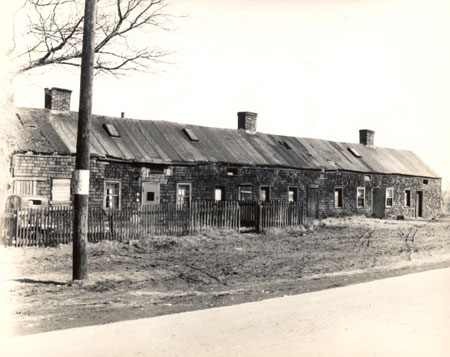
For country born women like Margaret McDougall McNeil Morrison in Glace Bay, NS and Jessie Blanche Vye Gaudine(i) in Minto, NB cooking on a coal fired stove required a new skill. Coal fired stoves were the norm in communities like Glace Bay, NS and Minto, NB unlike the surrounding rural farm communities where wood remained the primary fuel source.
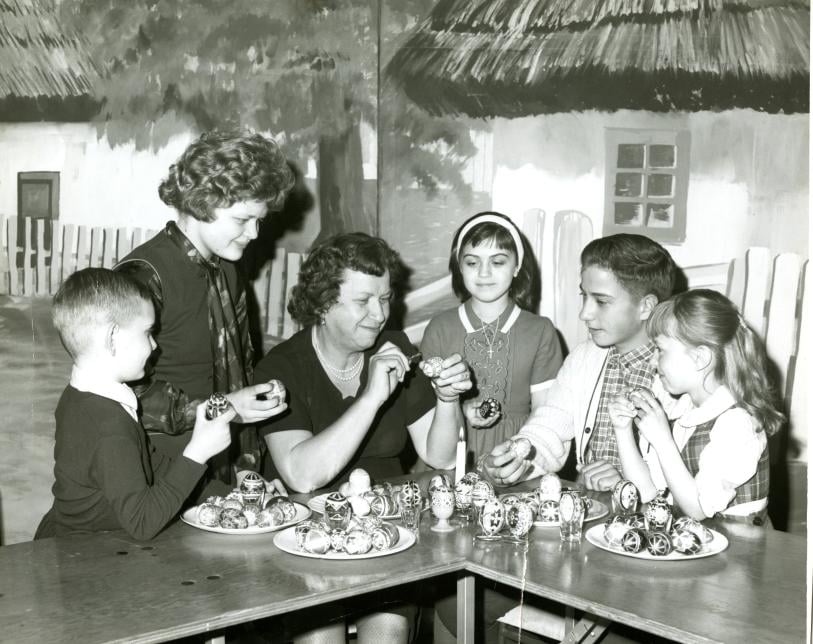
Wood stoves were more predictable, coal stoves notoriously difficult to control. So much so a tradition of “Roof Coal Bread”1 developed in some communities. The bread which is scorched and heavy crusted on top (sometimes all over) is still made at local bakeries in Cape Breton. Many mining town cooks have been heard to exclaim…”Oh No, the bread burned…Oh well good it’s enough for the pit.” Alluding to the coal dust which contaminates everything in the mine.

Jessie Blanche Vye Gaudine(i) was born on her family farm in South Nelson, Northumberland county, New Brunswick. Jessie’s husband Domenico Gaudini2, a machinist took work with the mine owned by Miramichi Lumber Company3 bringing the family to Minto.
Mining company towns were not easy places, although the coal seam at Minto, NB was considered a stable seam, risk of injury and death was ever present, this in addition to risks posed by poor housing, poor sanitation, and poverty. The Sydney coals fields were more gassy, and with greater overburden issues, the living conditions were similar although more crowded.
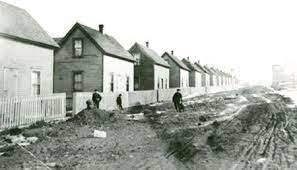
For Flossie Jane Williams Stackable, coal was a familiar fuel. She also understood better than some the risks inherent in coal mines and coal mining towns. In her home country of Wales coal was a major industry. Flossie would have prepared foods in her Welsh tradition pasties, and Welsh Cakes, possibly combining them with her husband John’s family’s Finnish traditions.
For Maggie’s whose career as a miner’s wife would turn to miner’s widow and almost immediately to miner’s mother, what she baked would have been dictated by what she had. Flour, oats, lard, sugar were available from the company store and other stores provided of course one had the money.
Flossie’s choices would have been even more restricted after her husband John Stackable4 was killed in the mine in 1925. The challenge facing widows like Flossie and Maggie was daunting… they had little choice, take in laundry, open their modest home to borders and send boy children to the pit to work.

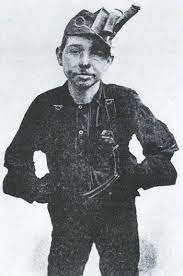
Young boys were valuable as trappers 5 and drivers6, jobs which did not ‘require’ adult strength could be done by boys whose families were desperate for their meager wages. Wages less than half that of adult miners. Bartholomew Stackable and Allan McDougall would enter coal mining early, their boyhoods cut short by the need to feed their family.
Young boys who spent 10 hours a day six days a week in the dark, wet, dusty, rat infested pit opening ‘traps’ and driving ponies instead of attending school and enjoying the sunshine… young boys sustained and comforted by the food lovingly prepared by their Mother’s despite meager means…oatcakes, hand pies, maybe even a slice of Bonnach sweetened with molasses or Welsh Cakes.
My Mother’s Cookbooks Welsh Cakes
Ingredients:
1/4 cup each butter and lard (or shortening)
2 cups Flour
1/3 cup Sugar
1 tsp baking powder
1/2 tsp of nutmeg or mace
pinch of cinnamon
1 egg at room temperature
1/2 cup currents
2 to 3 Tbsp milk
Method:
1) Combine dry ingredients in a bowl and add fat, working it into a fine crumb with your fingers;
2) Add currents;
3) Add slightly beaten egg and only enough milk to create a soft dough;
4) Wrap the dough in plastic and place in the refrigerator for at least 30 minutes;
5) Remove the plastic, roll out dough to about 1/4 inch thick, cut into 11/2 to 2 inch rounds;
6) Fry in a small amount of butter, until slightly browned on each side and cooked through about 3-4 minutes;
7) If desired the cakes can be cooled slightly and then rolled in sugar for added sweetness.
My Mother’s Cookbooks Bonnach
Ingredients:
6 cups of flour
6 level tsp baking powder
1 tsp salt
1 tsp soda
1/2 cup sugar
3/4 cup of melted lard/butter or oil
3 eggs at room temperature
2 cups buttermilk or soured milk
Method:
1) Preheat oven to 350 degrees F.
2) Mix together sugar, oil and eggs;
3) Assemble dry ingredients in another bowl
4) Add dry ingredients to the sugar / fat mix, alternating with the milk until incorporated.
6) Place in a greased 8 inch x 11 inch baking dish and bake 35 -45 minutes until done.
Minto, Sunbury County, NB – Miramichi Lumber Company Mine Shaft # 10 Tragedy
28 July 1932 – Three young boys ranging in age from 9 to 12, lay motionless at the pit bottom, some 35 feet from the surface. A forth child fled back up the wooden latter at the sight of his three friends passing out and falling. He raised the alarm and within minutes help began to arrive.
Sadly, there were no plans for such an event. Instead a haphazard rescue fueled by concern for family and close friends was mounted. Miner after miner attempted to enter the pit only to be over come, 11 in total, only 9 would be successfully retrieved.
Five died at the bottom of the #10 shaft on that warm July morning…
three curious children:
1) Allan Gaudine, s/o Domenic and Jessie Gaudine, 9 years old;
2) Vernon Stack (able) s/o John Stackable and Flossie Williams Stackable Gormley, 10 years old;
3) Cyril Stack(able) s/o John Stackable and Flossie Williams Stackable Gormley, 12 years old
and their attempted rescuers:
4) Thomas Gallant 43 year old miner originally from Summerside PEI
5) Vernon Betts 32 year old miner from Hardwood Ridge, Sunbury county, NB.
The events of 28 July 1932 in Minto would begin the transformation of safety in New Brunswick coal mines and lead to the establishment of long over due safety improvements. June 11th mining communities in Canada mark Miner’s Memorial Day…May they rest in peace.
Explanations and Resources:
1) Roof Coal Bread is available at Ropak’s bakery in New Waterford, NS.
2) Domenico Gaudini born Italy would change the spelling of his name to the more familiar sounding Gaudine after he and Jessie married.
3) Miramichi Lumber company owned by US based International paper operated a mine in Minto which served various pulp mills and factories in New Brunswick.
4) James Stackable was born in Hardwood Ridge, Sunbury county, NB of Finnish ancestry, after his death the family would shorten the name to Stack.
5) Traps are doors used to control the ventilation in the mine. Trappers were employed to open and close these doors as the mine operation required. It involved long hours in the cold, dark, wet and rodent infested pit
6) Older boys moved from trapper to pony driver, slightly better pay but even greater risk. Pit pony’s were key to removing coal from the mine to the surface and materials to the working face. Drivers were responsible for their pony, assuring it was fed and watered. Pit pony’s were more valuable than miners, and better fed. A hungry driver caught eating his pony’s oats was fired without investigation.
 My Mother's Cookbooks
Ropek’s store and bakery is no longer operating. The space has been taken over by Parisottos Pizzeria and bakery. https://www.facebook.com/photo/?fbid=122173362362467654&set=a.122102791586467654 I have not seen any rooftop bread there.
LikeLike