
Atlantic Canadian Women of the Cloth 19th century and beyond…Homebased textiles
And Fanny’s Frugal Food Hack – Planned leftovers: Mashed Potato Pancakes.
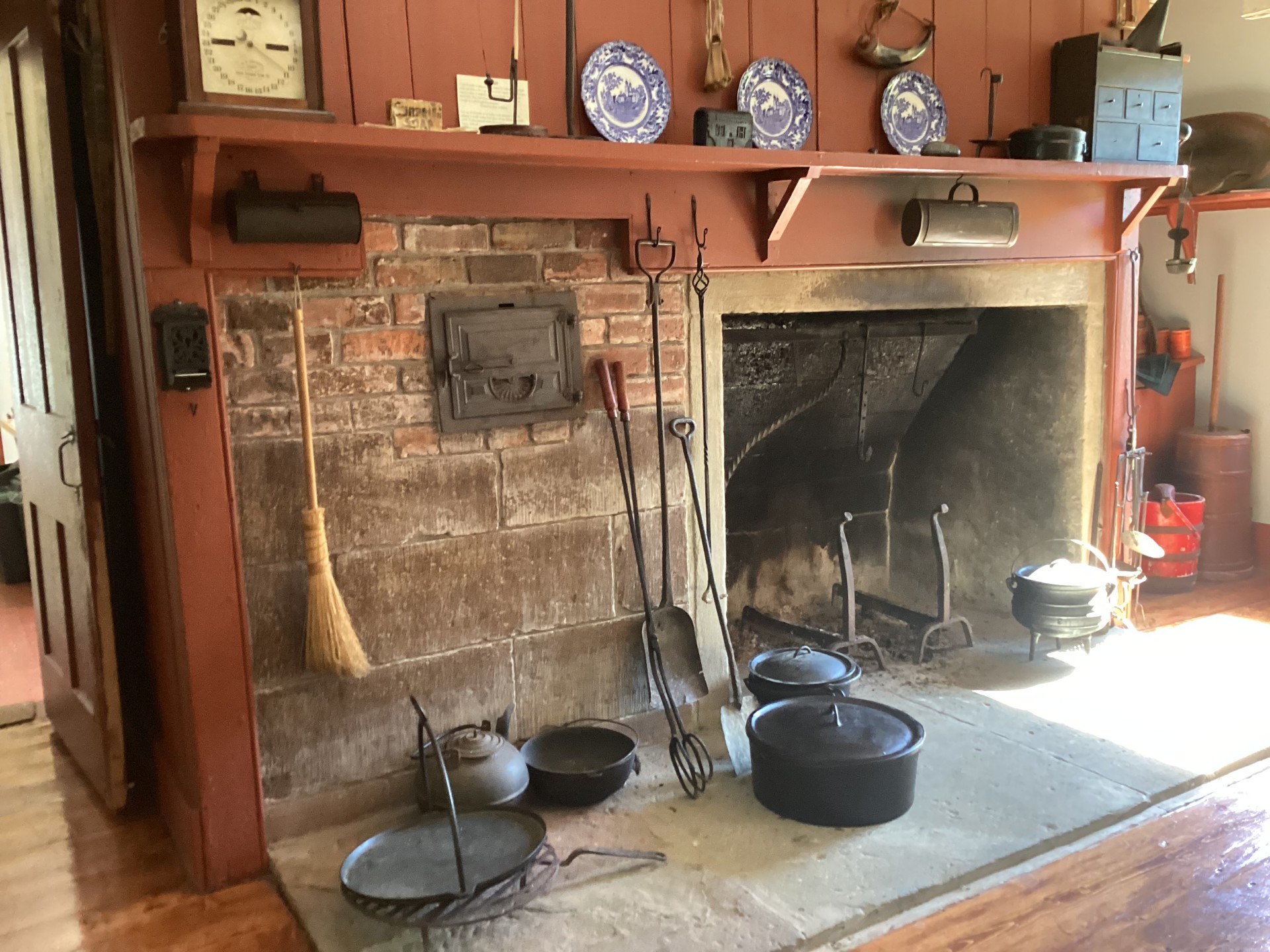
I consider myself a cook, not a crafter. Oh, I know the basics of knitting and crocheting, I have successfully made a few garments from scratch, but they were one ofs. Despite my lack of crafting credibility, I do appreciate beautifully handcrafted products and marvel at those who produced them. So, I began the research for the series I am calling Atlantic Canadian Women of the Cloth – 19th century and beyond, on homebased textile producers as a complete novice, with virtually no background in textiles, beyond living with them.
Of course I am used to information about ordinary people being very limited in the official record until recent years. However, the complexity of homebased textile production, made this research especially challenging. The lines between production of textiles for home use by women and production for sale usually attributed to men are blurry at best. For example how do we explain census takers recording thousands of yards of homespun produced on a single farm where no one is described as weaver1? The weaving was likely not done by Farmers, more likely by their wives and daughters. During this period the product of a woman’s effort, which was exchanged for money, was more likely than not, attributed to her husband or father2.
Often the only glimpses I get into a specific woman’s life come as a result of hardship and tragedy. A second wife and family might hint at the date of a woman’s death, a second child with the same name might indicate an early death of the older child. Sometimes, even tragedy does not loosen the grip of anonymity. The life of Mrs. John Campbell of Big Pond, Cape Breton, is a case in point3.
Saturday, 3 February 1856
A weary sigh of satisfaction left her lips, as she threw the shuttle a final pass through the shed4. It had taken her longer to finish than she’d planned, but her winter’s work was all but complete. Just tying and winding off, and of course the luadh5 left to do. Becoming aware of the dim coolness of the tiny attic loft, she lifted the candle from its place on the loom, and stepped quickly to descend the ladder.
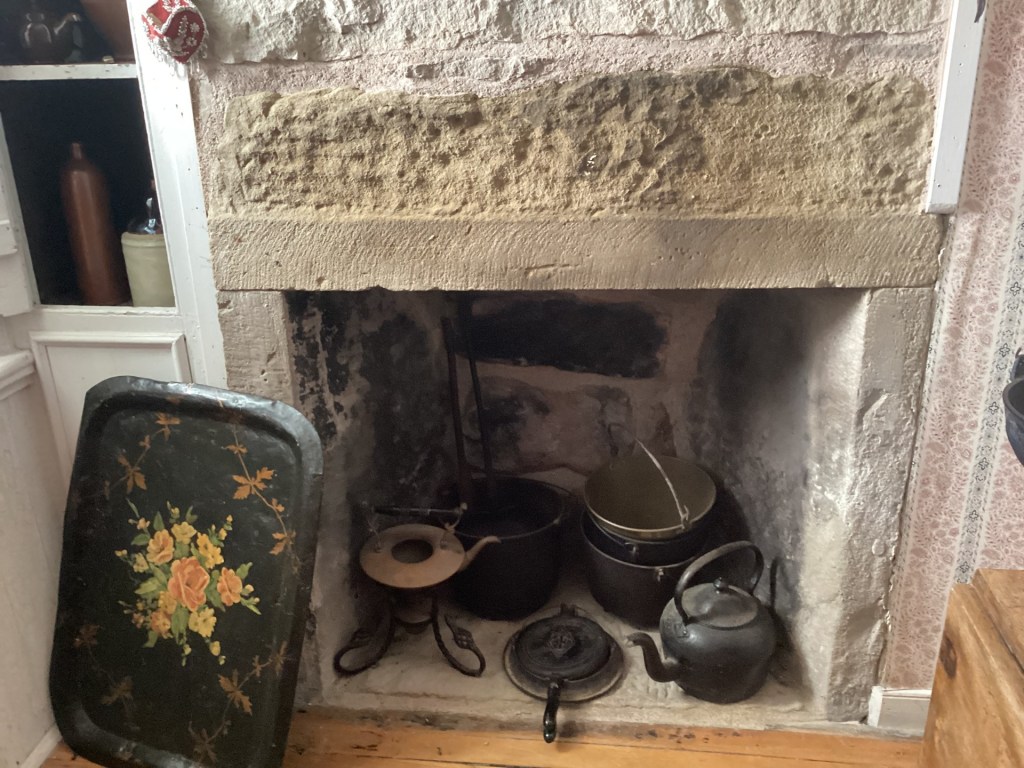
Clucking at her absent mindedness, she drew her shawl around her body and set to raking the embers. Her carelessness had nearly cost her the fire, a shudder passed through her at the thought of John having to make a trek to MacDougall’s for embers on a cold wet Sunday morning. Placing 3 strips of birch bark on the withering coals followed by small branches of meadow spruce, she rocked back on her heels, waiting for the fire to catch.
Yawning tiredly, she pondered the fulling frolic to come. It would be nice to see family and friends, but this mid winter thaw worried her. The unusually warm temperatures and rain made the heavy snow sloppy, and sledding difficult, although the lake ice had not yet weakened. Who knew what it would be like by Monday, if this thaw continues. Everyone was looking forward to the last chance to gather before the Lenten fast began on Wednesday. John’s sisters, and nieces would arrive just before noon on Monday, bringing the food for their kin. The men would come after their day’s work was done. Hopefully, MacDougall would be in fine form, and her cloth would be smooth and well milled Clo mor6. John promised to keep the frolic dry, but it was a good bet the extra batch of spruce beer he’d made would make an appearance. Adding two large pieces of hardwood on to the fire, she set the guard, and rising to her feet made her way to the crowded bedroom where her small family slept…
This fictionalized account is a departure for me, and is inspired by Mrs. John Campbell and other women who lived, laughed, died, and whose memory lingered only until, those who felt their loss were themselves gone.
I hope you will join me in this peek into the lives of spinsters, dyers, weavers, knitters, dressmakers, quilters, milliners, tailoress, among others and My Mother’s Cookbook Recipes their lives inspire. The first blog in the series Spindles, Spinning wheels and Potato Farls will be released 21 Sept 2024; with other articles appearing regularly. The blog featuring more of Mrs. Campbell’s story Work, Frolics, and Tragedy will be released on 19 Oct 2024.

Fanny’s Frugal Food Hacks… Planned Leftovers
Mrs. Campbell and Fanny never met, and yet they had things in common. One of the things Fanny and Mrs. Campbell shared was the task of planning and preparing meals for their family, and leftovers played an important role. The term leftovers is largely inaccurate, oh sure I make meals from what is in the fridge that must go…but intentional leftovers are another matter entirely. Fanny and Mrs. Campbell like most women of their time were masters at avoiding food waste, they had to be, and planned leftovers played an important role, on days when finishing other work was a priority or on the day of rest.
On Sunday, 4 February 1856 Mrs. Campbell and Fanny could well have planned leftovers as a part of the advanced meal preparation. I know Sunday supper often has me making use of this recipe for ‘Mashed Potato Pancakes’. Squishy, crispy and delicious.
My Mother’s cookbook…Mashed Potato Pancakes
Ingredients:
2 cups of mashed potatoes (Mashed potatoes which are enriched with butter and cream make especially delicious pancakes -I often add garlic to my cooking water to an additional burst of flavour)
1/3 cup + 1 T of all purpose flour
1 tsp salt
1/2 tsp fresh cracked black pepper
1 egg
3 green onions chopped (or chopped spring onion, or finely chopped yellow onion)
1/2 c. Shredded cheddar (or other melting cheese) OPTIONAL
1 cup of panko, dried bread crumbs or cornmeal for dredging before frying.
Oil for frying
Method:
1. In a bowl assemble ingredients except bread crumbs, mix well;
2. Using a 1/3 c measure portion the potato mixture and form in to flattened rounds;
3. Dredge in bread crumbs or corn meal;
4. In a non stick, (cast iron is ideal) fry until brown in just enough oil to assure the pancakes do not make dry contact with pan, flip and fry on second side to an internal temperature of 165F /74C, keep warm until ready to serve.
Serving suggestions: Potato pancakes can be served as a side with any protein or if using cheese, serve with a salad and you have a complete meal. A favourite in our house is homemade cabbage rolls accompanied by My Mother’s Cookbooks… Mashed Potato Pancakes.

- The tradition of professional weaving being a male occupation was challenged by the reality of paid work in Atlantic Canada. Most immigrants who were professional weavers did not remain in the trade once they arrived in Canada. There is little doubt some of these men taught their daughters to weave and allowed them to take over the professional weaving role. However, while this was happening home weaving, knitting, etc. for home use and for barter was common place, much if not all of this textile production was done by women. We know this not by virtue of what the records explicitly say, but what they imply. Industry and agriculture schedules from census takers demonstrate farms producing far in excess of the amount of homespun needed for a single family, with no one attributed as weaver. One of the few distinctions between professional weavers and homebased weavers was that professional weavers produced cloth from yarn, thread and linen provided by their client. Homebased weavers who bartered their cloth, used fiber produced /raised on their home farm. During the years before carding mills, fiber preparation, spinning and finishing were the preview of women regardless of who did the weaving. ↩︎
- Victorian Era Newspapers provide interesting insight into the ‘ownership’ claimed by those keeping score at agricultural fairs. i.e. 3 January 1853 W.R. Price of Ludlow parish Northumberland county realized Best in All wool homespun; 2nd best in flannel cotton; best mitton Sample; 2nd best mitton sample; best woolen gloves; 4th best butter sample; 2nd best white beans, etc. The inclusion of butter is interesting and raises the obvious questions…we know women made butter, and their husbands and fathers took the credit, it is not a stretch to believe the entire list is comprised of the work of many including WR’s wife and children. ↩︎
- There are of course millions of human beings who have lived and died leaving no written record. It would be easy to tell ourselves that that was the way it was done. Yet, records do exist marking the birth and death, land transfers, etc. for ordinary people, from far earlier than 1856. So, was Mrs. John Campbell less deserving or were there other factors in play? That she was female, of Scottish immigrant stock, Gaelic speaking, Roman Catholic and living in a Highland Scottish enclave all served to assure, that even dying in tragic circumstances did not raise the vail of anonymity. ↩︎
- Shed – A loom is a tool for weaving fiber, it permits the weaver to efficiently pass the shuttle containing the weft fiber over and under the warp threads to create cloth. The shed is the temporary area created by raising and lowering the warp fibers, thru which the shuttle containing the weft is passed. ↩︎
- Luadh – Scottish Gaelic term for Fulling or milling fabric which is the process of shrinking and tightening the wool fibers of woven cloth. The freshly woven cloth is first moistened than beaten to shrink and interlock the warp and weft fibers. ↩︎
- Clo Mor – Scottish Gaelic for big cloth, was produced and used for outdoor clothing. Clo Mor as it was known to Mrs. Campbell was far superior in warmth and comfort to other fabrics, particularly those produced in early textile mills. Atlantic Canada’s cold climate, and resource industries assured homebased textile production continued well into the early 20th century. ↩︎
Atlantic Canadian Women of the Cloth – Homebased textile producers 19th century and beyond Reference list:
- Bitterman, R. “Farm households and wage labour in the Northeastern Maritimes” Canadian Committee on Labour History, 1993. https://www.erudit.org/en/journals/llt/1993-v31-llt_31/llt31art01.pdf
- Rygiel, J. A “Women of the cloth – weavers in Westmorland and Charlotte Counties New Brunswick 1871 -1891”; Carleton University Press, 1998.
https://repository.library.carleton.ca/concern/etds/37720d - Rygiel, J.A. “Thread in Her Hands –Cash in Her Pockets; Women and Domestic Textile Production in 19th-Century New Brunswick” Carleton University Press,
- MacLeod, E. and MacInnis, D.; “Celtic Threads: a journey in Cape Breton Crafts”; Cape Breton University Press, Sydney, NS. 2014
- Introduction to the Spinning Wheels collection in the National Museum of Scotland https://blog.nms.ac.uk/2020/12/14/introduction-to-the-spinning-wheel-collection-in-national-museums-scotland/
- Goodrich, W.E. “DOMESTIC TEXTILE PRODUCTION IN EARLY NEW BRUNSWICK” Keillor House Museum.
Acknowledgement: I acknowledge that the land on which I live and write about is the traditional unceded territory of the Wolastoqiyik (Maliseet) and Mi’kmaq Peoples. This territory is covered by the “Treaties of Peace and Friendship” which Wolastoqiyik (Maliseet) and Mi’kmaq Peoples first signed with the British Crown in 1725. The treaties did not deal with surrender of lands and resources but in fact recognized Mi’kmaq and Wolastoqiyik (Maliseet) title and established the rules for what was to be an ongoing relationship between nations.

 My Mother's Cookbooks
Hi there Elizabeth: So happy to see the arrival of this new series. I have been recommending it to many friends and see that you are getting lots of play on various heritage FB pages. I was the supervisor for Judith’s PhD thesis at Carleton and was chuffed to see you refer to it. I am sure she would be thrilled to see you referring to it.
Good luck with the series;
Del
LikeLike
Thank you so much. I have so enjoyed digging in to this fascinating topic. My real issue now is where it will end…so rich a topic. E
LikeLike