
Homebased textile production 19th century and beyond…
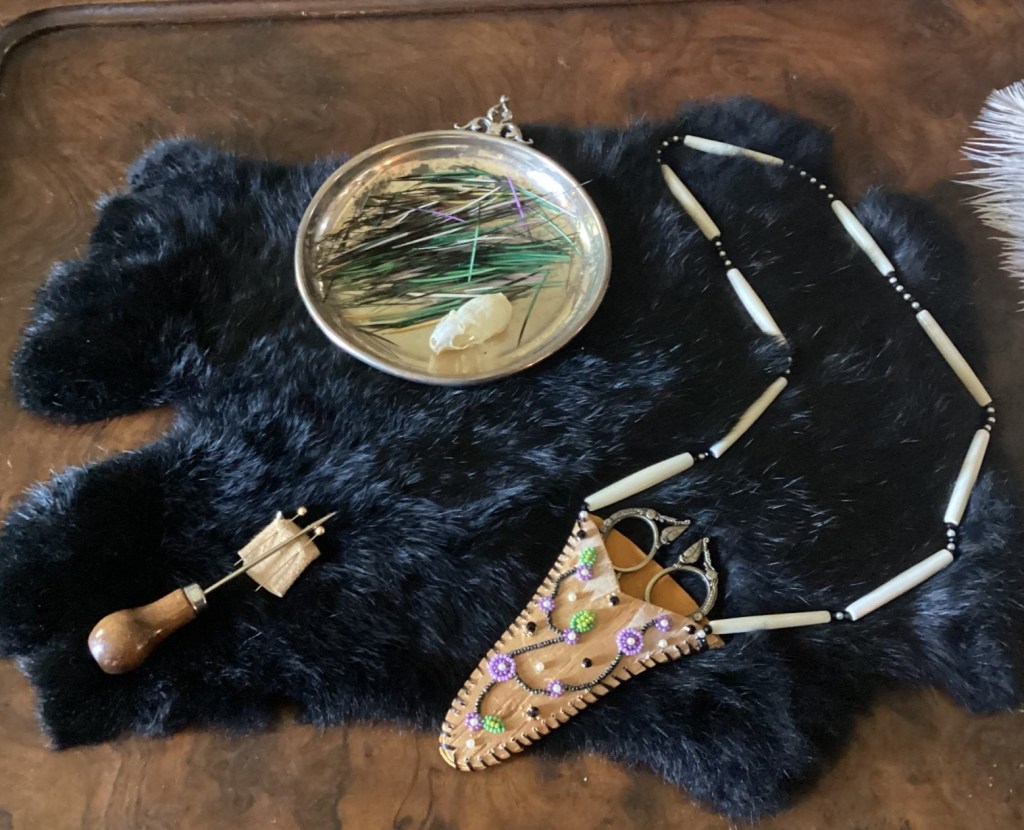
Series Introduction Homespun and Mrs. Campbell
#1 – Spindles, Spinning Wheels, and Potato Farls
#2 – Work, Frolics and Tragedy
#3 – War, lobster and Lottie
Atlantic Canadian Women of the Cloth – Homebased textile Series Reference list:
- “Flax, Farming and Food: How Scottish – Irish Immigrants Contributed to New England Society in the 18th Century”, Worcester Historical Museum, Worcester, Mass. https://worcesterhistorical.com/worcester-1718/flax-farming-and-food-how-scotch-irish-immigrants-contributed-to-new-england-society-in-the-18th-century/#:~:text=Accustomed%20to%20spinning%20wool%20and,fever’%20in%20the%20local%20population
- Bitterman, R. “Farm households and wage labour in the Northeastern Maritimes” Labour/LeTravail, 1993. https://www.erudit.org/en/journals/llt/1993-v31-llt_31/llt31art01.pdf
- Rygiel, J. A “Women of the cloth – weavers in Westmorland and Charlotte Counties New Brunswick 1871 -1891”; UNPUL thesis Carleton University, 1998.
https://repository.library.carleton.ca/concern/etds/37720d - Rygiel, J.A. “Thread in Her Hands –Cash in Her Pockets; Women and Domestic Textile Production in 19th-Century New Brunswick” UNPUL thesis Carleton University,
- MacLeod, E. and MacInnis, D.; “Celtic Threads: a journey in Cape Breton Crafts”; Cape Breton University Press, Sydney, NS. 2014
- Introduction to the Spinning Wheels collection in the National Museum of Scotland https://blog.nms.ac.uk/2020/12/14/introduction-to-the-spinning-wheel-collection-in-national-museums-scotland/
- Goodrich, W.E. “DOMESTIC TEXTILE PRODUCTION IN EARLY NEW BRUNSWICK” Keillor House Museum.
- Toal, Ciaran “Flax to Fabric – The history of Irish linen and flax” Lisburn Museum https://www.lisburnmuseum.com/news/history-of-irish-linen-flax/
- Dunfield, R.W. “The Atlantic Salmon in the History of North America” Fisheries and Oceans Canada 1985. https://waves-vagues.dfo-mpo.gc.ca/library-bibliotheque/28322.pdf
- Wallace -Casey, Cynthia “Providential Openings – The Women Weavers of Nineteenth-century Queens County, New Brunswick” Material Culture Review. 46, 1 (Jun. 1997). https://journals.lib.unb.ca/index.php/MCR/article/view/17740/22230
- Eveline MacLeod and Daniel W. MacInnes “Celtic Threads: A journey in Cape Breton crafts” Cape Breton University Press, Sydney, NS 2014.
- MacMillan, A.J. “A West Wind to East Bay: Short History and a Genealogical Tracing of the Pioneer Families of the East Bay Area of Cape Breton.” Music Hill Publishing, Sydney, NS 2001.
- Campbell, Joseph “Information regarding the avalanche at John Campbell’s farm 5 Feb 1856”, a recording by Mrs. Archie MacDougall 25 July 1966. In the holdings of the Beaton Institute, Sydney, NS.
- Roach Pierson, Ruth. “Canadian Women and the Second World War” The Canadian Historical Association. Ottawa 1983 .
Acknowledgement: I acknowledge that the land on which I live and write about is the traditional unceded territory of the Wolastoqiyik (Maliseet) and Mi’kmaq Peoples. This territory is covered by the “Treaties of Peace and Friendship” which Wolastoqiyik (Maliseet) and Mi’kmaq Peoples first signed with the British Crown in 1725. The treaties did not deal with surrender of lands and resources but in fact recognized Mi’kmaq and Wolastoqiyik (Maliseet) title and established the rules for what was to be an ongoing relationship between nations.
 My Mother's Cookbooks